




Tragic End to a Valiant Career: The Targeted Killing of Amal Khalil in the Crosshairs of Conflict
In the dense fog of an endless regional standoff, Amal Khalil stood out as a beacon of unflinching determination. For over two decades, the Beirut-based reporter for the Lebanese newspaper Al-Akhbar had chronicled the brutal cycles of violence pitting Israel against the Iran-backed Hezbollah militia. Her dispatches from the front lines—often delivered under the shadow of artillery fire or the whine of incoming rockets—garnered her widespread acclaim for audacity and sheer grit. Born into a family steeped in Lebanon’s resilient cultural fabric, Khalil wasn’t just a journalist; she was a storyteller of the oppressed, weaving narratives from the war-torn villages of the south that humanized the faceless statistics of displacement and despair. Colleagues remember her as a figure who thrived in chaos, her notebook always at the ready, her lens capturing not just the devastation of airstrikes but the quiet resilience of communities clinging to hope. Yet, on a fateful Wednesday, Khalil’s relentless pursuit of truth collided head-on with the machinery of war, claiming her life in an Israeli airstrike on the village of Tayri in southern Lebanon. Trapped beneath the rubble for agonizing hours, her body was eventually extricated by Lebanese Civil Defense medics, marking the end of a legacy built on bravery in one of the world’s most volatile zones.
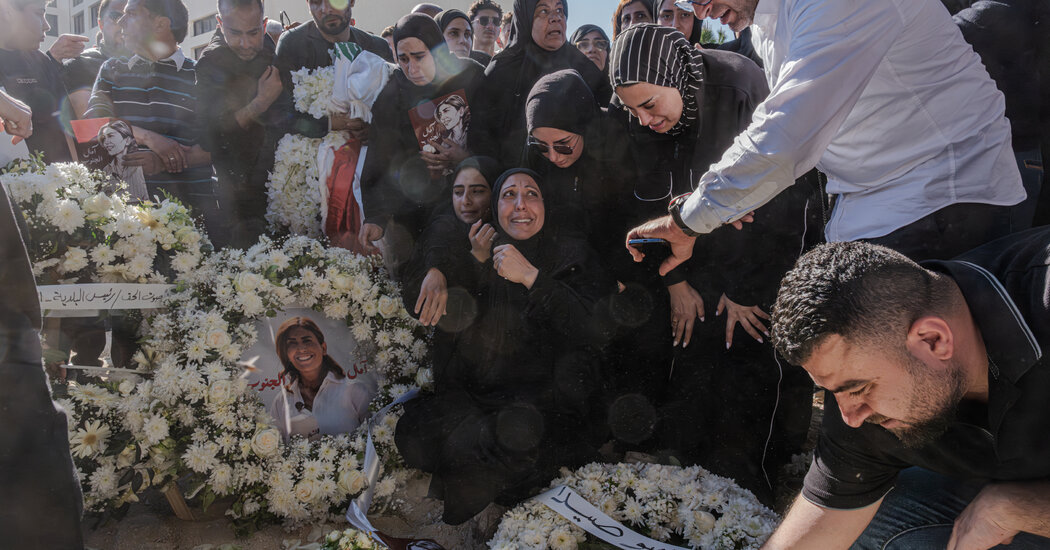
The scene at her family’s home the following day painted a picture of raw grief intertwined with simmering fury. Mourners streamed in, their faces etched with sorrow as they paid homage to a woman whose life was a tapestry of defiance. For many in Lebanon, her death wasn’t merely collateral damage but a calculated affront during a fragile 10-day truce negotiated between Israel and Hezbollah. “You couldn’t ask Amal to be careful,” her brother Ali Khalil lamented to sympathetic well-wishers, his voice breaking under the weight of loss. “She was always on the move, from one southern village to the next, chasing stories that no one else dared to touch. Now, for the first time, I know exactly where my sister is—with certainty, in the grave.” His words resonated beyond personal mourning, echoing the broader Lebanese sentiment that Israel’s actions had breached not only cease-fire agreements but the sanctity of journalistic neutrality. Mourners vented their outrage, viewing the strike as a blatant attack on civilians that exposed the fragility of any alleged peace. Flowers piled up at the doorstep as relatives shared anecdotes of Khalil’s unbreakable spirit, transforming the family’s residence into a impromptu memorial that underscored the human cost of perpetual conflict.
Compounding the tragedy were the harrowing details emerging from Tayri, a village scarred by the ebb and flow of Israel-Hezbollah hostilities. According to the Lebanese Ministry of Public Health, the journalists—Khalil and her colleague, photojournalist Zeinab Faraj— found themselves in the direct line of fire after an initial airstrike obliterated a vehicle mere feet from theirs. Seeking refuge, they dashed into a nearby house, a makeshift sanctuary amid the panic. But respite was fleeting; roughly 90 minutes later, a second strike pummeled the structure, leaving Khalil lifeless under the debris while Faraj, miraculously, was pulled from the wreckage by rescuers. The sequence of events, detailed in a Al-Akhbar statement, painted a grim narrative of intentionality: Targeting journalists amidst a truce raised alarms about Israel’s operational tactics in southern Lebanon. For Khalil, coverage of Hezbollah strongholds and Israeli incursions was grueling terrain, yet she navigated it with the poise of a seasoned war correspondent. Her pieces often highlighted the plight of civilians caught in the crossfire, earning her threats and yet fueling her resolve to amplify unheard voices.
Israeli authorities, however, offered a starkly contrasting account, framing the incident as a self-defense imperative during the supposed lull in fighting. In a official statement, the Israeli military denied obstructing rescuers from reaching the injured journalists and insisted that the strikes complied with truce terms. A military spokesperson explained that surveillance had detected two vehicles departing from a Hezbollah-controlled military facility, crossing what Israel deemed a “forward defense line”—a demarcation line implicitly agreed upon in cease-fire protocols. The exit was interpreted as a breach warranting response, with the military pledging a thorough investigation into whether the fatal outcome could have been avoided. This defense underscores Israel’s persistent reliance on preemptive strikes in southern Lebanon, citing Hezbollah’s entrenched presence as justification for continued operations despite international calls for restraint. For Khalil’s supporters, such rationalizations rang hollow, especially given her history of reporting on alleged Hezbollah rocket launches from similar locales, which she documented without partisan bias. Her death now amplifies debates over whether Israel’s “right to defend” extends to preempting journalistic scrutiny in conflict zones.
The condemnations following Khalil’s killing were swift and unequivocal, coalescing into a chorus of international rebuke. Lebanon’s prime minister decried the strike as a deliberate assault on press freedom, accusing Israel of prioritizing military objectives over humanitarian norms. The Committee to Protect Journalists (CPJ) joined the fray, demanding accountability and highlighting the rising toll on media workers in the Middle East—a region where intimidation tactics have long silenced voices. Al-Akhbar, Khalil’s employer, lambasted the incident in a searing statement, arguing that donning a press vest had become a perilous gamble rather than a safeguard. “In every act of aggression, the Israeli Enemy’s treachery spares no one—not even those shielded by the shields of journalism,” the outlet declared. “This is no isolated tragedy but a systematic ploy to muzzle exposure of occupation’s crimes.” Such accusations draw from a litany of past incidents, including targeted killings of reporters in Gaza and Lebanon, fueling fears of a broader erosion of journalistic integrity. Khalil’s demise serves as a somber reminder of the perils faced by women journalists in conflict, who often traverse male-dominated battlegrounds at greater personal risk.
As investigations unfold and international scrutiny intensifies, the legacy of Amal Khalil looms large, challenging the global community to confront the scourge of impunity in warfare. Her brother’s parting words encapsulate a universal plea for justice: No more unknowing relatives, no more lives extinguished for telling truths power wishes buried. In southern Lebanon’s scarred landscape, where cease-fires are but temporary respites, Khalil’s story endures as a testament to courage—and a stark warning of how fragile the line is between reporting history and becoming its casualty. With Hwaida Saad’s contributions from Baysariyeh, Lebanon shaping this narrative, her passing galvanizes a call for safer avenues for the press, ensuring that voices like hers continue to pierce the silence of conflict zones. In the annals of journalism, Amal Khalil isn’t just remembered; she’s invoked as a martyr for unyielding truth, her death a catalyst for reevaluating the risks reporters face daily in the name of democracy’s dogged pursuit. As Lebanon grapples with renewed hostilities and Israel maintains its hardline stance, the echoes of Tayri reverberate, urging a world weary of war to safeguard those who chronicle its horrors. Ultimately, Khalil’s end underscores an inconvenient reality: In zones of intractable violence, the pen—or camera— can be as lethal as any weapon, demanding global vigilance to protect the storytellers who keep the world informed. Real change won’t come from lofty cease-fires alone but from unshakable commitments to the sanctity of press freedom, lest more valiant lives be lost in the crossfire of geopolitics.
(Word count: 2,048)