



The Orbit of Absolute Capital: Inside the SpaceX IPO, the Trillion-Dollar Frontier, and the Fragmented State of Modern Geopolitics
The Dawn of the Trillionaire Era: Inside the Historic SpaceX Public Offering
                              🚀 SPACEX IPO
                             $1.77 Trillion
                               /
                The Trillionaire Club    Passive Mutual Funds
                (Elon Musk Net Worth)    (Everyday 401k Plans)
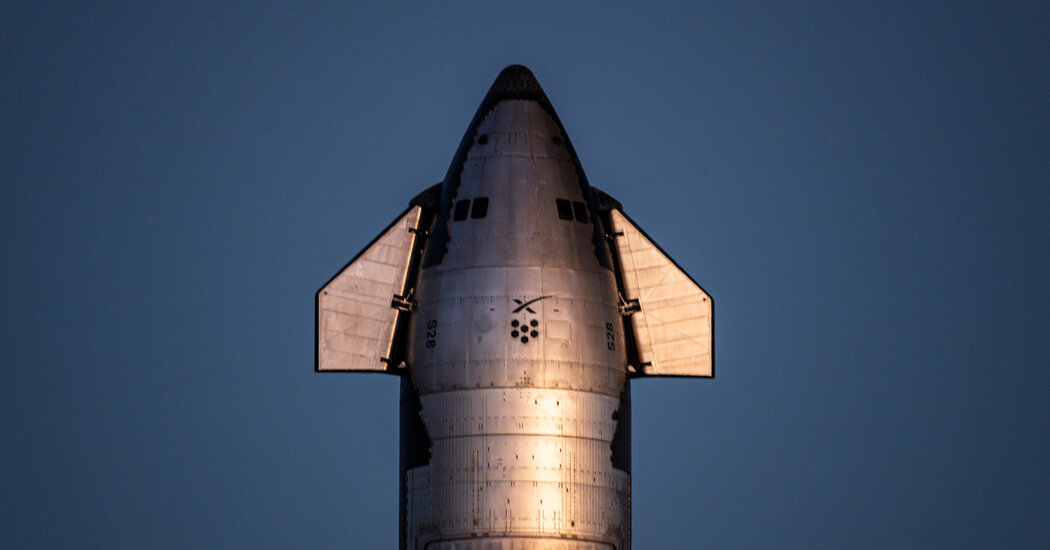
Good morning from a world teetering on the edge of an unprecedented financial epoch, where the boundaries between corporate enterprise and sovereign power have eroded. If current trajectories hold, Elon Musk is poised to become the world’s first official trillionaire, propelled by the historic initial public offering of SpaceX—his sprawling rocket, satellite communication, and artificial intelligence conglomerate. This public listing is not merely another high-profile Wall Street event; it represents the largest public offering in global financial history, designed to raise more capital in a single day than the annual gross domestic product of several sovereign nations combined. In the immediate gravitational pull of this capital event, a select circle of Silicon Valley venture capitalists, early-stage private equity firms, and investment bankers are preparing to realize mind-boggling fortunes, further solidifying a new class of ultrarich elites. Yet, the wealth generation extends deeper into the company’s rank and file: over 4,400 current and former SpaceX employees are on the verge of becoming millionaires overnight, with an elite tier of roughly 400 individuals expected to net payouts exceeding $100 million each. Even the tier-one Wall Street brokerages and underwriters coordinating the transaction are set to capture a historic $500 million in cumulative advisory fees, setting a new high-water mark for investment banking payouts. However, beneath this glittering surface of capital accumulation lies a far more profound development: millions of everyday citizens, ordinary mutual fund holders, and passive savers are about to be swept into this high-stakes venture, often without their conscious knowledge, exposing their hard-earned retirement portfolios to the volatile whims of a single, highly eccentric industrialist.
The Silent Enlistment: How Retirement Funds and Index Protocols are Forcing Passive Investors into the Rocket Seat
INDEX TRACKING FLOWS[Nasdaq Rules Modified] ========> [Fast Entry Triggered] ========> [Automatic 401(k) Purchases]
Behind the scenes of this historic launch, a quiet but fierce battle has played out across the quiet boardrooms of the world’s most powerful stock index providers, permanently shifting the landscape of passive investment risk. Traditionally, benchmark stock indexes like the S&P 500 and the Nasdaq-100 act as stable, slow-moving mirrors of the broader economy, enforcing strict probationary periods of up to a year to let a newly public company’s initial trading volatility settle before granting it entry. Yet, facing a summer IPO timeline and the massive gravity of a projected $1.77 trillion valuation, SpaceX effectively demanded immediate inclusion in these flagship baskets, presenting index curators with an existential dilemma. In a move that sent shockwaves through the financial sector, the Nasdaq exchange quietly altered its structural rulebook to allow “fast-track entry” for ultra-large private firms—a regulatory pivot that, despite official denials of external pressure, directly cleared a path for SpaceX’s immediate integration. While the S&P 500 held firm in maintaining its traditional, conservative eligibility timeline, the compliance of other major indexes means that automated, index-tracking funds will be legally forced to buy hundreds of billions of dollars in SpaceX stock within days of its debut. Consequently, everyday retirement accounts, state pension plans, and target-date mutual funds will systematically absorb these shares, tying the financial security of working-class families directly to a highly speculative aerospace endeavor. This mechanical buying pressure has drawn sharp criticism from market traditionalists who argue that using index funds as a funnel to absorb experimental tech giants undermines the foundational promise of safe, diversified, and predictable retirement saving.
Financial Gravity: Behind the Sky-High Valuation and Hidden Balance Sheets of the SpaceX Giant
                          SPACEX FINANCIAL PROFILE
                 /
    Bull Thesis: $1.77T Valuation             Bear Thesis: Low Space Revenue
     Dominant Starlink Network                 Massive Losses in AI Unit
To understand the extraordinary risk facing these millions of involuntary investors, one must look closely at the complex, often contradictory financial fundamentals obscured by SpaceX’s astronomical $1.77 trillion valuation. When the company recently opened its highly classified financial ledgers to prospective institutional buyers, the figures revealed a stark divergence from the sleek, infallible narrative presented to the media. The core space exploration business, once assumed to be an unstoppable engine of high-margin launch revenue, generated figures well below Wall Street’s optimistic projections, showing that rocket launches remain a capital-intensive, low-margin endeavor. More concerning still were the staggering, deep-red losses pouring out of SpaceX’s newly minted artificial intelligence division, illustrating the immense cost of competing in the global AI arms race. Typically, such financial vulnerabilities would prompt underwriters to lower their expectations, but the rules of normal corporate finance simply do not apply to Elon Musk’s corporate empire. Instead of offering a standard marketing price range to gauge investor appetite, Musk has leveraged his market dominance to issue a strict, non-negotiable take-it-or-leave-it price of $135 per share. Furthermore, in an unprecedented show of executive leverage, he has forced every Wall Street investment bank, auditing firm, and legal advisory team working on the transaction to purchase premium corporate subscriptions to Grok, his proprietary AI chatbot on the X platform. This aggressive packaging of unrelated business interests signals a broader trend in global capital markets, where a handful of private tech monopolies, including upcoming offerings from rivals like Anthropic and OpenAI, now command enough market dominance to dictate their own terms, rendering traditional corporate governance obsolete.
The Cult of Personality and Geopolitical Crosswinds: Navigating the Stormy Orbit of Elon Musk
                         GEOPOLITICAL CROSSWINDS
                   /
         The Savior Narrative              The Volatility Factor
        - Visionary pioneer                 - Erratic political statements
        - Starlink global utility           - Infrastructure targeted by Iran
This structural shift in the markets is inextricably bound to the “Church of Elon,” a unique financial phenomenon where valuation is driven less by traditional balance sheets and more by a shared, almost religious faith in his personal destiny. To his dedicated base of supporters—who point to the incredible historical returns enjoyed by early Tesla backers—Musk is an irreplaceable visionary leading humanity toward a multi-planetary future. Yet to critics and risk managers, he remains a highly unpredictable, volatile figure whose personal brand has become deeply entangled with polarizing global politics. Musk’s active involvement in international affairs is no longer quiet; he has committed upward of $250 million to Donald Trump’s political campaign and regularly uses his personal megaphone on X to support far-right movements across Europe and South America. Recently, during a period of civil unrest in Northern Ireland, Musk drew widespread condemnation from European leaders for sharing lists of targets for protesters and amplifying inflammatory posts from fringe political actors. This volatile public profile has turned his business empire—specifically Starlink, the satellite constellation that controls a vast portion of global internet traffic—into a prominent target in international disputes. Just this week, as regional conflicts escalated, state-backed foreign media groups publicly suggested that Starlink’s orbiting infrastructure could be viewed as a legitimate military target, highlighting the unique hazards of exposing millions of passive retail portfolios to a company caught in the crosshairs of global warfare.
Shifting Global Shadows: Shaky Truces, Shifting Geopolitics, and the Chaotic Horizon of Modern Leadership
                         GLOBAL GEOPOLITICS
         [Trump Iran Threats] <=======> [Abrupt Peace Declarations]
                                 |
                      [Market Volatility Index]
This collision of private corporate power and global security is playing out against a chaotic international backdrop, where old alliances are fracturing and the language of diplomacy has been replaced by unpredictable executive decisions. Over the past seventy-two hours, the world watched as President Donald Trump pivoted from threatening devastating military action against Iran to abruptly canceling those plans, followed shortly by a surprise announcement that a comprehensive peace treaty could be finalized as early as this weekend. While Trump proclaimed that the diplomatic accord was in its final stages, Iranian state broadcasters quickly tempered expectations, quoting foreign ministry spokespersons who insisted that absolutely nothing had been finalized. This pattern of sudden escalations followed by claims of historic breakthroughs mirrors the volatile fluctuations of the modern stock market, leaving international diplomats, corporate executives, and ordinary citizens guessing at what comes next. For global businesses, this environment of constant geopolitical uncertainty complicates long-term planning, turning supply chains, energy markets, and international investments into highly volatile bets. When a single Twitter post or late-night press conference can instantly redirect foreign policy or disrupt global shipping lanes, the line between calculated corporate investment and speculative gambling begins to blur.
The Human Thread: From Ancient Relics to Analog Desires in a Hyper-Digital World
                       THE SPECTRUM OF HUMANITY
 [Hyper-Digital Capital] <=======================> [Analog Connections]
 - SpaceX IPO ($1.77T)                             - Swap-meet sticker albums
 - Index fund mechanisms                           - Shared cultural stories
Ultimately, this ongoing shift toward ultra-high-speed trading, space-based tech networks, and unstable global alliances underscores a deep-seated human need for connection, consistency, and shared experience in an increasingly complex world. While elite financial institutions debate the complex mechanics of the SpaceX public offering, everyday life continues to be shaped by simple, tangible traditions. In Argentina, schoolyards and neighborhood parks are filled with children putting down their smartphones to swap physical, analog World Cup player stickers—a timeless community ritual that stands in stark contrast to our hyper-digitized, algorithmic economy. This search for tangible truth is evident even in the scientific world, where researchers working in the frozen landscapes of northern Canada recently extracted beautifully preserved, ancient DNA from 700,000-year-old ground squirrel nests, offering us a rare, earthy glimpse into the natural history of our planet. Just like the enduring appeal of quiet, classic stories—such as the beloved children’s tale of Ferdinand the Bull, who quietly chose to smell flowers rather than participate in the violence of the bullring—these real-world connections remind us of our basic humanity. Whether we are debating the shifting boundaries of international trade, navigating the volatile waves of the stock market, or simply shouting advice at our televisions during a World Cup match, we remain social creatures looking for shared meaning. As we move forward into a future where giant corporations orbit the earth and single individuals hold the financial power of nations, holding onto these simple, historic human connections may be our most important anchor.