




The Escape to ‘Chinese Dreamcore’: How Gen Z is Fighting Modern Anxiety with 2000s Nostalgia
The Digital Sanctuary of a Vanished Era
For millions of young Chinese citizens standing at the threshold of adulthood, the contemporary horizon appears increasingly bleak. Confronted by a grueling labor market, diminishing wages, relentless professional competition, and the exhausting social pressure to constantly outperfume their peers, Generation Z is seeking refuge in a highly specific digital sanctuary. This movement has manifested as a widespread cultural retreat to the early 2000s—a golden epoch of rapid economic expansion, technological innocence, and unbridled optimism. Across major social media platforms like Xiaohongshu and Douyin, young creators are sharing dreamlike, hazy representations of their childhoods. They post grainy snapshots of early-millennium internet cafes, looming high-rises clad in distinctive blue architectural glass, and the neon-hued, eccentric youth subcultures that defined the era. These online posts often begin with a transportive narrative, prompting the reader to imagine waking up in their childhood bedroom on a tranquil weekend in 2008, accompanied by the nostalgic hum of a dial-up connection, a family lunch at KFC, and the comforting, uncomplicated warmth of a society moving rapidly toward a brighter future.
+——————————————————————————–+
| THE ANATOMY OF CHINESE DREAMCORE |
+——————————————————————————–+
| VISUAL MOTIFS: |
| – Buildings covered in white ceramic tiles |
| – High-rises wrapped in shiny blue-tinted glass |
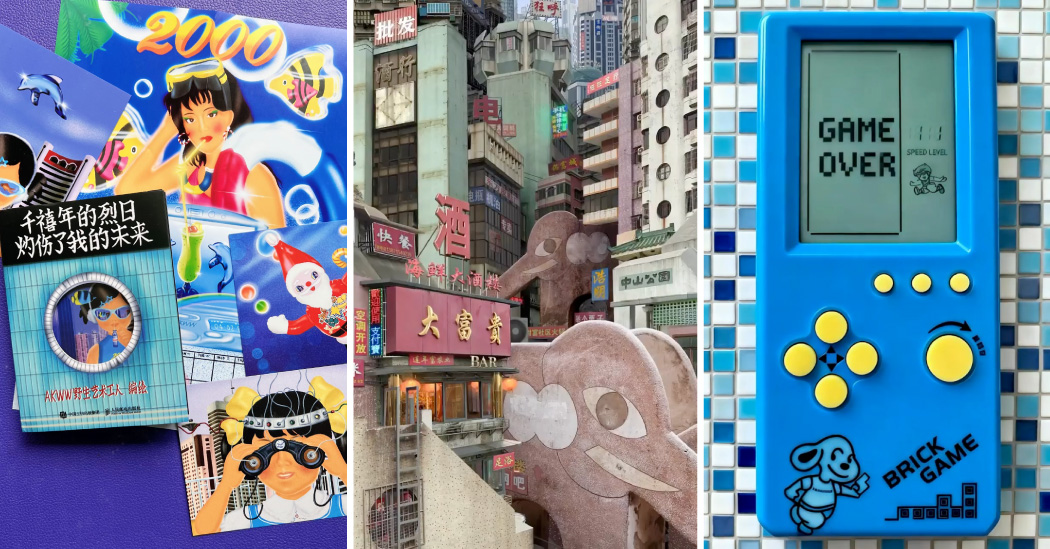
| – Retro neighborhood playgrounds (elephant-shaped slides, colorful swings) |
| – Early plastic water dispensers and household items |
| |
| AUDITORY CUES: |
| – The iconic “ping” of early QQ messaging software |
| – The Beijing 2008 Olympic theme song: “Beijing Welcomes You” |
| – The low-frequency whir of dial-up internet and desktop computer towers |
+——————————————————————————–+
Understanding the Aesthetics of Digital Pain Relievers
This rapidly growing online aesthetic has solidified into a recognized digital subculture known as “Chinese Dreamcore.” According to art theorists, digital creators, and cultural anthropologists, this phenomenon extends far beyond standard retro nostalgia. It functions as an essential “digital pain reliever” to soothe the deep-seated anxieties of modern life. Much like the Western resurgence of 1980s synth-pop and suburban neon aesthetics—popularized globally by television shows like Stranger Things—Chinese Dreamcore acts as a collective emotional coping mechanism. Historically, previous generations of Chinese artists utilized nostalgia and vintage iconography to critique severe periods of political and social upheaval, such as the Cultural Revolution. In contrast, Dreamcore focuses on mitigating the internal pressures of the present day. It provides a visual and auditory landscape of safety, characterized by traditional dark-wood living room furniture, brightly colored outdoor community exercise equipment, and the iconic alert sound of Tencent’s early messaging platform, QQ.
[Modern Economic Pressures] -------> Generates Intense Gen Z Anxiety
                                              │
                                              ▼
[Chinese Dreamcore Subculture] <--- Functions as a "Digital Pain Reliever"
                                              │
                                              ▼
[Visual/Auditory Comforts] --------> Restoration of Peace & Emotional Ease
The Generation That Witnessed a Vanishing Landscape
The primary demographic driving the Dreamcore movement is China’s Generation Z—those born between the late 1990s and the early 2010s. This specific cohort occupied a unique historical window: they witnessed the explosive rise of the domestic internet and the country’s unprecedented transformation from a developing agrarian market into an economic and technological superpower rivaling the United States. However, this dizzying rate of modernization came at a steep cultural cost, as the physical environments of their childhoods were systematically demolished and rebuilt almost overnight. To capture these fleeting memories, digital animators and artists are creating surreal, hazy mash-ups of early 2000s urban landscapes. Chengdu-based artist Ai Kewei recently published an art book illustrating elephant-shaped playground slides and monolithic high-rises topped with structures resembling alien spaceships. Her artwork captures a perpetual, sun-drenched childhood summer wrapped in shades of blue. “When our family installed our very first computer, the future felt entirely unpredictable but absolutely full of imagination,” Ai recalls. “Many young people miss the harmony, beauty, and profound sense of connection that characterized the early days of the world wide web.”
Preserving Demolished Memories Through Digital Imagery
For many digital creators, building Chinese Dreamcore content is a preservation effort to safeguard personal history from physical erasure. In China’s rapid urban modernization campaigns, entire childhood neighborhoods have been razed to make way for sleek, uniform smart cities. Animator Li Haoran, whose childhood home in Henan Province was demolished, uses her digital animations to reconstruct her early years. Her short films feature swan-shaped pedal boats drifting on quiet lakes alongside futuristic skyscrapers covered in the white glazed ceramic tiles that dominated early-2000s Chinese public architecture. For Li and her millions of viewers, these digital rendering decisions evoke a profound, physical sense of comfort. “These objects give me the direct sensation of being hugged,” she explains. Visual artist Huang Heshan, whose celebrated digital art series Too Rich City serves as a foundational pillar of the Dreamcore movement, notes that the aesthetic’s immense emotional resonance lies in its sudden, striking realization of loss. Viewers look at these lo-fi, surreal environments and are suddenly confronted with the reality of what has been permanently left behind in the pursuit of economic progress.
1998 - 2008 Era 2010s - Present Day┌────────────────────────────┐ ┌────────────────────────────┐
│ • Lo-Fi Dial-up Connection │ │ • High-Speed 5G & Algos │
│ • White Ceramic Tile Walls │ =====> │ • Brutalist Glass Towers │
│ • Swan-Shaped Pedal Boats │ │ • Uniform Urban High-Rises │
│ • Optimistic “Blue Skies” │ │ • Gig Economy & Competition│
└────────────────────────────┘ └────────────────────────────┘
▲ │
│ ▼
└───────── [CHINESE DREAMCORE] ───────┘
(A bridge back to reassurance)
From Niche Subculture to Commercial Mainstream
Since its initial appearance on social media in the early 2020s, the Chinese Dreamcore aesthetic has rapidly expanded out of niche internet forums and into mainstream commercial culture. Its signature hazy, retro-futuristic style now appears in independent video game designs, publishing projects, multinational corporate advertising campaigns, interior styling for popular hot pot restaurant chains, and even over-the-counter medicine packaging. Some creators are documenting this era through physical exploration. Liu Yujia, a 24-year-old photographer from Jilin Province, has traveled to more than 230 Chinese cities to systematically photograph surviving examples of early-2000s architecture. This was an era when municipal governments constructed eccentric, European-style castles, spinning rooftop restaurants, and sci-fi-inspired domes to project a bold, futuristic image. “I want to spend my time capturing these buildings before they are permanently demolished and replaced by modern glass structures,” Liu says, noting how one of his favorite photographed buildings featured a massive structural arrow pointing directly toward the sky—a literal monument to the era’s relentless belief in the future.
+———————————————————————–+
| COMMERCIAL ADAPTATION OF THE AESTHETIC |
+———————————————————————–+
| Sector Application / Expression |
+———————————————————————–+
| Hot Pot Diners Retro interior styling, 2000s heavy wood plates |
| Video Games Lo-fi visual novel designs, nostalgic 3D renders |
| Ad Campaigns Warm, muted pastel filters; vintage typography |
| Pharma Packaging Throwback color blocks, early-millennium designs |
+———————————————————————–+
The State’s Watchful Eye and the Search for Connection
As Chinese Dreamcore continues to capture the imagination of the country’s youth, it has drawn the attention of state regulators and media watchdogs. While the government has not banned or censored Dreamcore content, state media platforms have cautioned against the psychological dangers of romanticizing the past. An essay published by the Gansu province propaganda department’s social sciences journal warned that if Gen Z becomes too immersed in Dreamcore’s escapist fantasies, it could lead to existential crises and “hidden ideological threats” that might disrupt their personal development and commitment to core societal values. Despite these warnings, creators like Ai Kewei maintain that the subculture is not designed to criticize contemporary China or its ongoing technological progress. Instead, it serves as a healthy release valve for a generation navigating a fast-paced world. “Dreamcore is about finding like-minded individuals who are navigating the exact same feelings of vulnerability and confusion,” Ai explains. “It is about creating a temporary, virtual space where everyone can sit down and feel at ease for a brief moment. To see someone else’s quiet sadness and say, ‘I feel it too’—that is where the real healing begins.”