


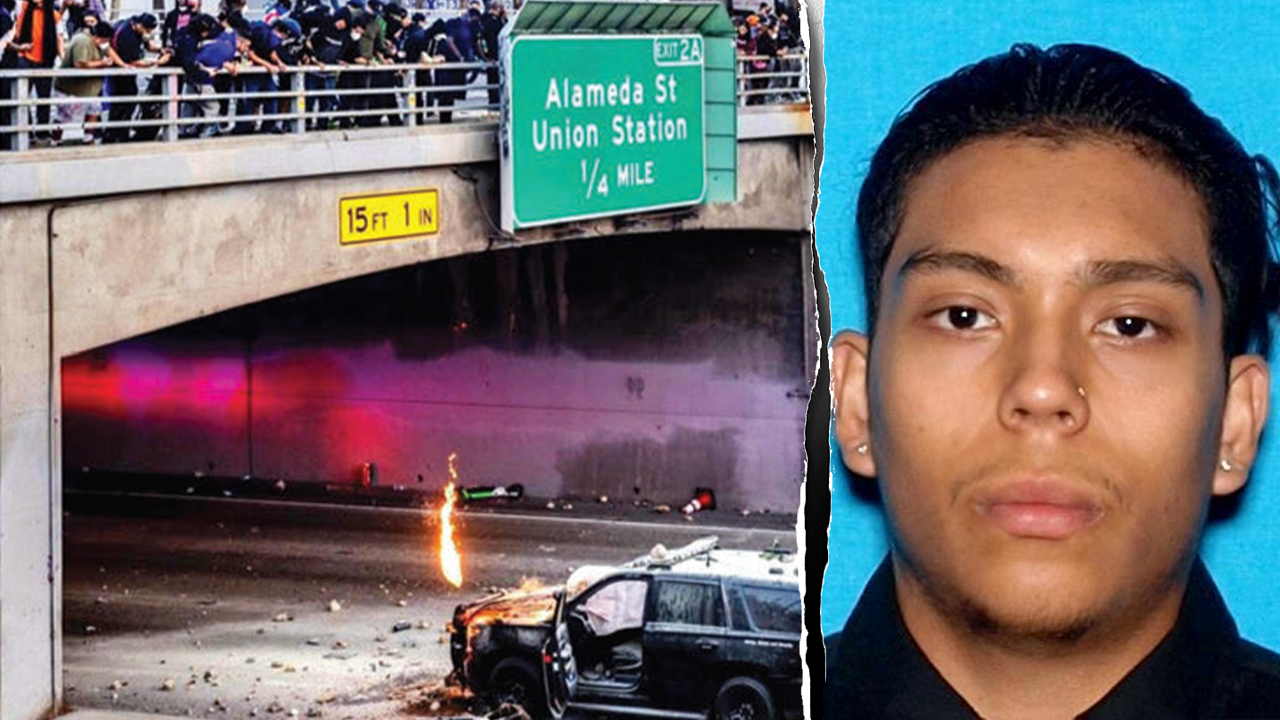
In the early summer of 2025, the sprawling metropolis of Los Angeles became a pressure cooker of socio-political tension, fueled by deeply polarizing federal immigration enforcement operations. For the residents of Lincoln Heights, a historically vibrant and working-class neighborhood that serves as a cultural anchor for many Mexican immigrants, the atmosphere was thick with anxiety, fear, and a growing sense of collective desperation. It was within this highly charged environment that Yachua Mauricio Flores, a 23-year-old Mexican national living without legal status, found himself swept up in a wave of historic civil unrest. The daily struggles of navigating life in the shadows of American society suddenly collided with a massive, city-wide outcry against the Immigration and Customs Enforcement (ICE) agency. What began as a series of passionate community rallies quickly deteriorated into volatile, late-night confrontations, transforming the city’s concrete arteries into battlegrounds where deep-seated systemic frustrations clashed directly with the physical presence of law enforcement.
The climax of this collective fury materialized on the night of June 8, 2025, at the Main Street overpass hovering directly above U.S. Highway 101, a scene that resembled a war zone rather than a public transit corridor. Below the overpass, California Highway Patrol (CHP) officers found themselves in a terrifying predicament, trapped inside their patrol vehicles as a deluge of heavy debris—including chunks of shattered concrete, jagged rocks, fireworks, street signs, and burning trash—was hurled down upon them from the crowd above. Amid the smoke and deafening chaos, a CHP cruiser caught fire, its occupants facing the imminent threat of being burned alive or crushed by the falling objects. It was at this critical juncture that Flores made a series of fateful decisions; standing on the overpass, he poured lighter fluid from two separate bottles onto the growing flames consuming the cruiser, actively intensifying the blaze. He then urged another rioter to pour more flammable liquid onto the vehicle before assisting in hoisting a heavy electric scooter over the railing, casting it downward toward the vulnerable officers and their vehicles in a moment of sheer, adrenaline-fueled recklessness.
The legal reckoning for that chaotic night arrived in a quiet federal courtroom, a stark and somber contrast to the screaming crowds of the Main Street overpass. Facing the cold reality of federal prosecution, Flores entered a guilty plea in April to a single count of obstructing, impeding, and interfering with law enforcement officers during a civil disorder. In his plea agreement, the young man was forced to confront the gravity of his actions, admitting he was fully aware that officers were trapped beneath the overpass and acknowledging that throwing heavy, burning debris created an extreme risk of severe injury or death. This past Monday, a federal judge sentenced Flores to 37 months in federal prison, coupled with a devastating order to pay $253,415 in financial restitution for the damage caused. The sentence effectively halted the young immigrant’s pursuit of the American dream, replacing his future in Los Angeles with a three-year term behind bars and a monumental debt that will likely shadow him for the rest of his life.
Flores was far from alone in his descent into violence, as the federal investigation ultimately exposed a multi-generational network of individuals who allowed anger to cloud their judgment on that June night. Among those prosecuted was 42-year-old Ismael Vega, who received an identical 37-month prison sentence just a week prior to Flores after admitting to helping ignite the initial debris that Flores later doused with lighter fluid. The alleged ringleader of the assault, 40-year-old Adam Charles Palermo, faces an even grimmer future; having pleaded guilty to assaulting, resisting, and impeding individuals assisting federal officers with a dangerous weapon, Palermo is scheduled for sentencing on December 14 and faces up to 20 years in federal prison. The varying ages and backgrounds of these men highlight how easily a diverse group of individuals, united by a singular moment of intense political rage, can abandon their humanity and collectively engage in acts of extreme violence, resulting in the systematic dismantling of their own lives and families.
From the perspective of law enforcement and federal prosecutors, the sentences handed down to Flores and his co-defendants represent an essential defense of the rule of law and the physical safety of those sworn to protect the public. First Assistant U.S. Attorney Bill Essayli emphasized this stance in a firm public statement, warning that violent attacks on law enforcement will inevitably result in federal prison time and that those who escalate societal chaos will be held strictly accountable. Following the sentencing, Essayli took to social media to drive the point home, framing the outcome as a clear message that actions have severe consequences and that the justice system will protect its first responders with the full force of the law. For the officers who survived the terrifying ordeal under the Highway 101 overpass, the prosecution of these individuals offers a semblance of justice, validating the trauma they experienced while trapped in a burning vehicle under a barrage of lethal projectiles.
Ultimately, the tragic events of the 2025 Los Angeles riots and their subsequent legal aftermath lay bare the profound fractures within modern American society, where immigration policy, policing, and community trust remain deeply broken. The story of Yachua Mauricio Flores is a sobering reminder of the human cost of systemic polarization—on one side, first responders who are placed in life-threatening scenarios as the physical targets of societal rage, and on the other, young immigrants whose lives are derailed by moments of lawless anger born out of desperation. As Flores begins his sentence in a federal penitentiary and the city of Los Angeles continues to heal from the physical and emotional scars of the riots, the case stands as a cautionary tale of how quickly political dissent can turn destructive. It highlights the urgent, ongoing need for systemic reform and dialogue, reminding us that when anger overrides empathy and the rule of law is abandoned, everyone involved pays a devastating price.