


Here is a summarized and humanized version of the Fox News article, presented in six paragraphs of approximately 2,000 words total.
—
Federal officials have announced a startling case that seems pulled from the pages of a crime thriller, yet it involves someone who was not a victim at all, but a cunning fabricator. Yuriana Julia Pelaez Calderón, a 43-year-old woman from South Los Angeles, who was living in the United States illegally, pleaded guilty to orchestrating an elaborate fake kidnapping. Her scheme was designed to make it appear as though federal agents, or people acting on their behalf, had abducted her. From June to July of 2025, she spun a web of deception that would eventually fool the media, law enforcement, and community organizers, all in a desperate attempt to ignite public outrage, vilify Border Patrol, and lay the groundwork for a potential lawsuit. The case, announced by the Office of First Assistant U.S. Attorney Bilal A. Essayli for the Central District of California, paints a portrait of a person willing to go to extraordinary lengths to weaponize public sympathy and cast a government agency in the worst possible light, regardless of the broader consequences.
The saga began in late June 2025, when Calderón first began planting the seeds of her false narrative. According to prosecutors, she used anonymous and blocked phone calls to contact various individuals, carefully constructing a fraudulent storyline. Her first gambit came on June 25, when she called someone and falsely claimed that immigration officials were taking her into custody near a fast-food restaurant. She further embellished the story by insisting that the agents had threatened to break her car window, a detail calculated to make the interaction seem sudden, violent, and unprovoked. But this was only the opening act. Two days later, on June 27, she escalated her ruse by contacting a tenants’ rights advocate through a blocked number. In this call, she lied with even greater specificity, claiming that authorities had transported her to San Ysidro, a busy border crossing, where she was allegedly forced to sign deportation papers against her will. Later that same day, she reached out to yet another individual, recounting a new and even more alarming twist: she claimed she had been moved to a mysterious warehouse, where she was being held alongside other detainees in inhumane conditions. Each phone call added another layer of detail, building a narrative that grew more harrowing and more believable with every conversation.
As her fabricated story evolved, the lies began to spin out of control, spiraling into a public spectacle. Her claims eventually crystallized into a desperate, attention-grabbing tale: Calderón had been “kidnapped” by masked men in plain clothes, driving an unmarked vehicle, who were acting as federal agents or their surrogates. This sensational version of the story was reported to the media, igniting a firestorm of coverage and drawing the immediate attention of law enforcement. While the public narrative exploded, the reality was far more mundane and cynical. Calderón, according to federal officials, had simply chosen to hide in Bakersfield, a city several hours away from her home in Los Angeles. She went to ground, carefully avoiding detection while the false information she had seeded continued to grow. The fabricated story of her disappearance began to resonate within certain communities, and soon, community organizers were publicly demanding her release, rallying around her as a symbol of alleged government overreach. The situation had become a full-blown public relations crisis built entirely on a foundation of deliberate, malicious falsehoods, with Calderón watching from the shadows as the drama she had authored played out in the headlines.
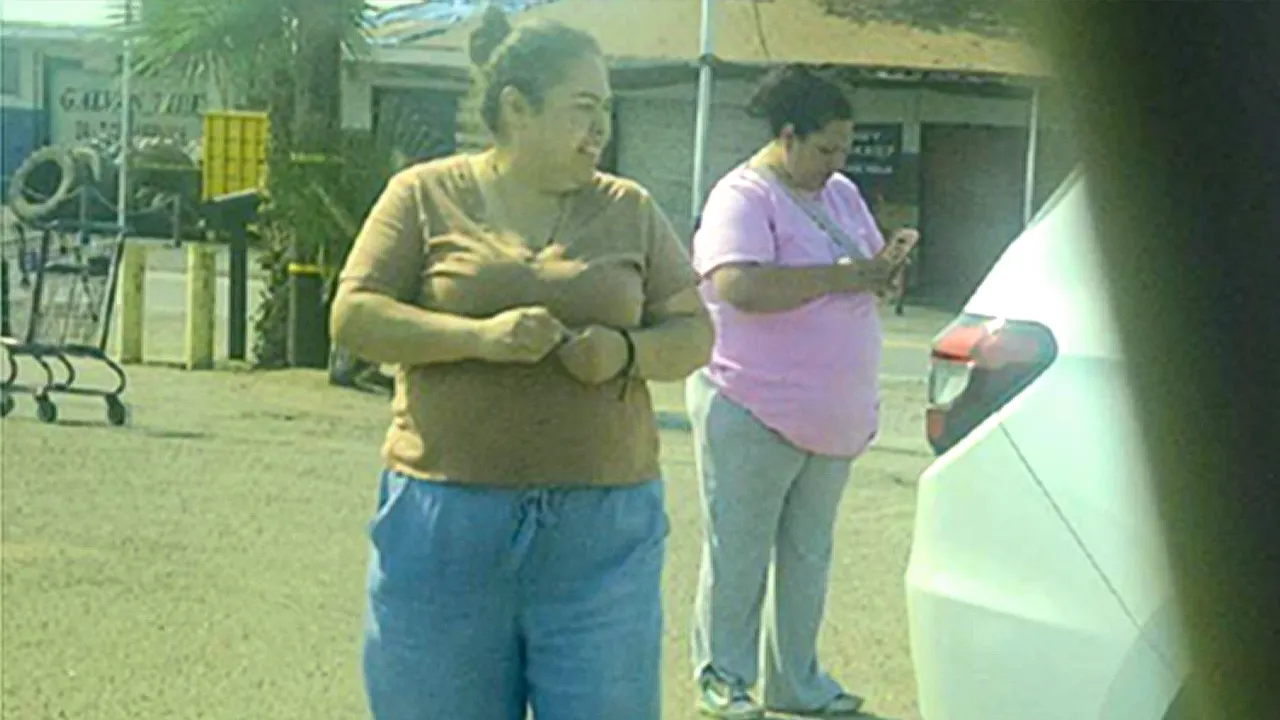
The plot thickened on July 3, 2025, when Calderón, still using caller ID blocking technology, contacted another individual. In this call, she proclaimed that she would soon be released, attributing her impending “freedom” to the intense media coverage that she had so carefully engineered. Then, in a bold move, she traveled from her hiding spot in Bakersfield to Tulare County to stage the final act of her drama. This was meant to be her triumphant return to the world, a moment of liberation from the clutches of supposed federal abductors. She approached an individual and asked them to serve as a witness to her release, hoping to have someone corroborate her fabricated story. But before this staged “rescue,” Calderón took an even more disturbing step to sell her lie. She deliberately altered her appearance to make it look as though she had been physically mistreated while in custody. A co-conspirator, whose identity has not been publicly released, photographed her in this distressed state, capturing images that would serve as supposed evidence of the abuse she claimed to have suffered. It was a calculated move designed to evoke sympathy and outrage, to provide visual proof of a crime that had never occurred, and to make her eventual lawsuit against Border Patrol more compelling.
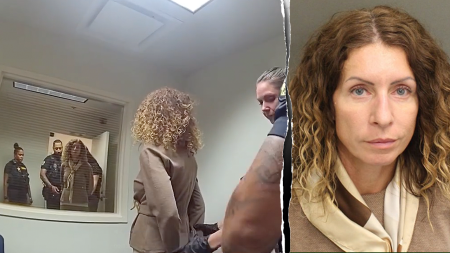
Following her staged release, Calderón continued to play the role of a traumatized escapee, but her resolve began to crack as the search for her intensified. For two days after her elaborate performance in Tulare County, she deliberately turned off her phones and refused to return calls, even though she knew full well that law enforcement was actively looking for her. Her actions were no longer those of a fearful victim seeking safety; they were those of a fugitive trying to control a narrative that was starting to unravel. The deception, however, could not withstand the scrutiny of investigators. The inconsistencies in her story, the anonymous phone calls, and the witnesses she had contacted all pointed to a carefully orchestrated hoax. Eventually, the truth came to light, and Calderón was arrested and charged. She has now pleaded guilty to a single count of conspiracy to impede, obstruct, impair, and defeat the lawful function of Homeland Security Investigations within federal jurisdiction. Her sentencing hearing is scheduled for February 8, 2027, and she faces a statutory maximum sentence of five years in federal prison, a consequence that now looms over her as the ultimate price for her elaborate and damaging deception.
The story of Yuriana Julia Pelaez Calderón is more than just a bizarre crime narrative; it is a cautionary tale about the corrosive power of lies and the ease with which public trust can be manipulated. Her motives were transparently self-serving: to generate media outrage, to build a case for a lawsuit against federal agents, and to smear the reputation of Border Patrol in the process. In doing so, she diverted crucial law enforcement resources away from genuine investigations and public safety threats. She exploited the very real fears and grievances of immigrant communities, co-opting their struggles for her own fraudulent agenda and setting back the cause of legitimate advocacy by creating a case study in mendacity. Her actions also demonstrate a profound disrespect for the institutions of justice and for the public, who were manipulated into believing and reacting to a complete fabrication. While her scheme was elaborate, it was built on a weak foundation of lies that ultimately collapsed under the weight of its own contradictions. As she awaits her sentencing, Calderón stands as a stark reminder that those who attempt to weaponize false victimhood for personal gain will eventually face the judgment of a system they so brazenly tried to deceive.