


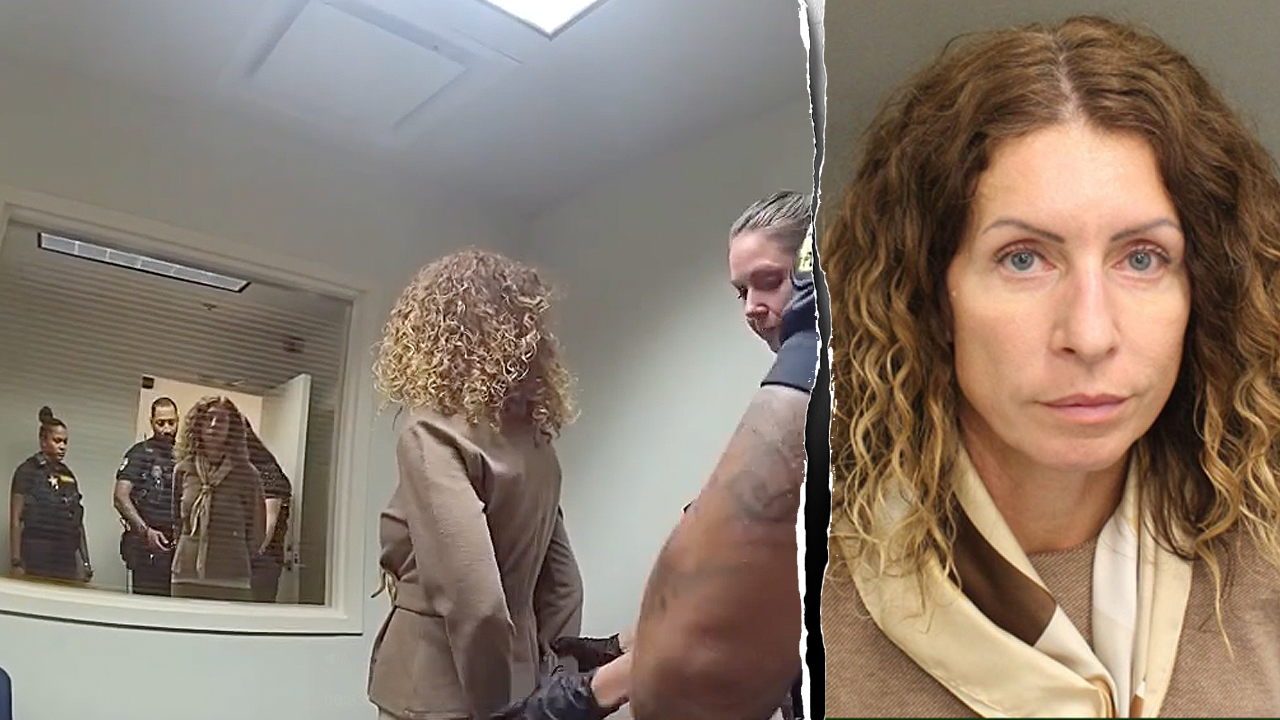
When Irene Miller stepped off the plane at Orlando’s airport on a Friday morning, she was likely thinking about home, about the flight, and about returning to her four children after several days away on a work trip. She had been in Las Vegas, a city of bright lights and constant motion, and now she was back in Florida, ready to resume the rhythms of ordinary life. But instead of a familiar face or a waiting car, she was met by deputies from the Osceola County Sheriff’s Office. Body camera footage captures the moment: deputies approach her calmly, escort her through the terminal, and place her hands in cuffs. It is a jarring transition, the kind that happens in an instant and changes everything. For so many parents, the act of working away from home is itself a difficult moral balancing act—a mixture of necessity, guilt, and hope that the arrangement they’ve made is good enough. Miller’s arrest, and the events that led to it, forces us to look at that fragile balance and ask hard questions about supervision, responsibility, and the quiet crises that unfold inside homes when no one is watching.
The story begins two days before Miller’s arrest, inside a Kissimmee home, where one of her children made a desperate call to 911. The reason for the call was alarming: a dumbbell had fallen on a nine-year-old boy’s head. It was late—just after 8:30 at night—and when deputies arrived, they found four children alone in the house, with no adult anywhere in sight. Their ages were 9, 11, 12, and 14. Fire rescue crews took the injured boy to Celebration Hospital, where he was treated and later discharged. The injury could have been far worse, and perhaps that thought is what makes this case so unsettling. A child was hurt, and no parent was present to console him, to drive him to the hospital, or to explain to medical staff what had happened. The 911 call was made by one of the children, which means that a young person had to take on the role of the adult, assess the situation, and summon help. That kind of maturity is often praised in the abstract, but when a child has to display it in a real emergency, it reveals a painful gap in care. The image of that child speaking to the dispatcher while a younger sibling is bleeding or crying nearby is difficult to shake. It is the kind of moment that no child should have to navigate alone. But these children did, and it is the reason why law enforcement became involved in the first place.
When deputies made contact with Irene Miller by phone, she was still in Las Vegas. She explained that she was there for work and that she had left Florida on October 18. Her planned return, she said, was October 23—nearly five days after her departure. By the time the 911 call was made on the evening of October 21, she had already been gone for three of those days. The family’s father was contacted by authorities and agreed to take all four children to his home, so that at least there would be some adult presence while the investigation continued. Detectives then made plans to meet Miller at the airport when her flight landed, which is how she ended up in handcuffs that Friday morning. But the most striking part of Miller’s explanation was her attempt to provide for her children in her absence. She said she had arranged for a babysitter to travel from Tampa each morning to help the children get ready for school and check on them afterward. The sitter, however, was not required to stay overnight. That arrangement meant that the children were essentially alone for the evenings and overnight hours, left to make dinner, do homework, put themselves to bed, and wake up and get ready for school until the sitter arrived. For a parent working far away, such a plan may seem reasonable on paper, especially if money is tight and childcare is expensive. But in practice, it left four minors in a house without any supervision for long stretches, including the very hours of the night when emergencies are most frightening and help is farthest away. And it was during exactly such a moment—late at night, with a nine-year-old injured by a falling weight—that no adult was there to act, to decide, or to take charge.
The Osceola County Sheriff’s Office did not treat this as a misunderstanding or a private family matter. Deputies arrested Miller, who is 50 years old, on four counts of child neglect without great bodily harm. She was booked into the Orange County Jail, and her case now moves through a criminal justice system that has little tolerance for parents who leave young children unattended, even if they believe they have made acceptable arrangements. Sheriff Chris Blackmon issued a statement that was both firm and unambiguous: “The Osceola County Sheriff’s Office will not tolerate child neglect. These cases will be investigated, and charges will be brought against the parents who are not properly supervising or caring for their children.” The words are meant to send a signal to the wider community, and they do. But they also raise a complicated thought: what counts as proper supervision, and how far does a parent’s responsibility extend? In a world where many families rely on one income, where jobs sometimes require travel, and where affordable, trustworthy overnight care is often out of reach, there may be parents who look at Miller’s story and feel a twinge of recognition, even anxiety. They may think about the times they stayed late at work, or took a trip for a job, and left their kids with a sibling, or a sitter, or simply with a list of instructions and a prayer. That momentary flicker of recognition is not an excuse for what happened, and it is not meant to minimize the seriousness of the charges. But it is part of the human dimension of this story. The line between a parent doing what they think is necessary and a parent crossing into neglect is not always clearly marked in the daily chaos of life. That is why cases like this one haunt us: they force us to see how close that line can be.
For the four children, the memory of those nights alone will not fade quickly. They had to manage without their mother for days, and at least one of them had to pick up a phone and call for help while holding fear at bay. The injured nine-year-old may heal physically, but the emotional bruise of having no parent rush in, no adult voice to reassure him, no familiar hand to hold in the hospital—that kind of absence stays in a person long after the wound has closed. His siblings, too, watched over him as best they could, but they were children themselves, navigating a situation that would be stressful even for an adult. They were not just alone; they were alone when something went wrong, when the normal order of the household was shattered by an accident and no one was there to restore a sense of safety. These are the human moments that statistics and legal filings cannot fully capture. Behind the charges and the body camera footage there is a family in pieces, a mother who tried to provide for her children by leaving them for a job, and children who, for a few critical days, were forced to parent themselves. The grandmother or friend, the babysitter who came in the mornings, was a limited presence, not a substitute for a parent’s steady watch. And yet, in a society where childcare is costly and work obligations are often inflexible, it is all too easy to imagine a mother convincing herself that a morning helper and a few phone calls were enough. That self-persuasion is the quiet engine of many tragedies—not because parents don’t love their children, but because they are caught between competing fears: the fear of not providing and the fear of not protecting. Both are real. Neither makes the choice easy.
Ultimately, Irene Miller’s story is not just about one mother’s arrest or one family’s difficult situation. It is about the broader question of how communities define and defend the safety of children. The deputies who arrested Miller were not acting on a whim; they were responding to an emergency that exposed a serious gap in care. The sheriff’s office made a decision to treat the situation as neglect, and the courts will now decide what consequences should follow. But beyond the legal outcome, there is a larger conversation worth having—about the quiet ways children can fall through the cracks, about the hidden struggles of working parents, and about the importance of building networks of support, so that no parent ever feels like their only choice is to leave children alone. Miller will have to answer for her actions, and if convicted, she may face significant penalties. But perhaps the more durable lesson lies in the image of that nine-year-old boy, hurt and scared in a house where no adult was present, and the sibling who had to make a phone call that no child should ever have to make. It reminds us that childhood is fragile, that safety is never guaranteed by good intentions alone, and that the promise to care for children is a promise that cannot be set aside, not for work, not for distance, and not for the hope that nothing will go wrong. The law drew a hard line in this case, and behind that line are real lives, real fears, and a family that will have to find its way through the wreckage.