





A Nation Grappling with Immigration and Crime: The Shadow of Unchecked Borders
In the heart of America’s ongoing struggle with immigration, where dreams of opportunity clash with harsh realities of crime, U.S. Immigration and Customs Enforcement (ICE) took decisive action last Wednesday. During National Crime Victims Week, a time meant to honor those whose lives have been shattered by wrongdoing, federal officials announced the arrests of multiple individuals convicted of grave offenses. These weren’t just any immigrants; they were people with records of sexual assaults, violent attacks, and drug-related crimes, all deported to remove them from communities where they posed ongoing threats. Imagine the warmth of family dinners interrupted by the fear of predatory strangers, or neighborhoods altered forever by the unwelcome presence of those who had already crossed legal and moral lines. This enforcement push, part of a broader Homeland Security initiative, underscored a stark truth: unchecked illegal immigration can lead to more victims, more pain. Acting Assistant Secretary Lauren Bis put it bluntly in a statement, emphasizing that by targeting these criminal aliens, DHS is “fighting for justice for victims of illegal alien crime” and preventing future tragedies. As the sun set on that week, stories of resilience and resolve began to unfold, reminding us that behind the headlines are real people—survivors striving for safety in a nation that feels increasingly vulnerable. The arrests served as a powerful reminder that immigration policies aren’t just about borders; they’re about protecting the innocent from those who exploit cracks in the system. For families like those affected by these crimes, this was a moment of hard-won validation, proving that accountability can still prevail amid the chaos. Yet, beneath this surface, questions linger: How did these individuals slip through the net in the first place? What systemic failures allowed them to remain, year after year, committing acts that haunt the vulnerable? In a country built on principles of fairness and opportunity, these apprehensions highlight the delicate balance between compassion and security, where every arrest represents not just punishment, but a step toward healing for the countless unnamed victims whose stories remain untold.
The Faces Behind the Crimes: Stories of Betrayal and Predation
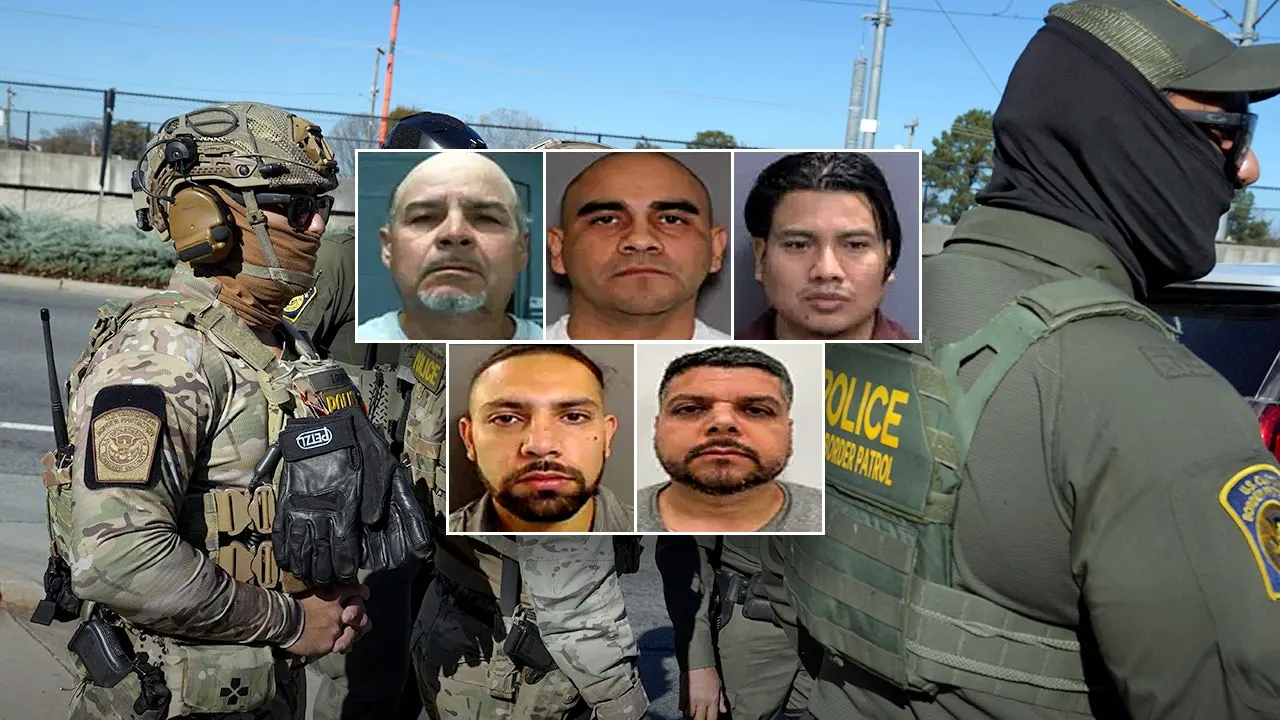
Diving deeper into the specifics, the arrested individuals paint a grim picture of personal failings turned into public nightmares. One man, Carlos Portillo-Nunez from El Salvador, was already convicted of lewd acts with a child in Indio, California—a shuddering revelation for anyone who knows the fragility of innocence. Picture a quiet suburban town, where parents assume their kids are safe playing outside, only to learn of someone lurking in the shadows, preying on the most defenseless. His actions weren’t isolated; they were calculated invasions that robbed families of peace and trust. Then there’s Pablo Blanco-Fortuna, an illegal alien from Mexico, whose record includes aggravated sexual assault in Hidalgo, Texas, compounded by his failure to register as a sex offender—a blatant disregard for the laws meant to protect communities. For the victims, especially young ones, this means lifelong scars, therapy sessions, and a constant vigilance that no eleven-year-old should ever have to endure. Roberto Vallejo-Benitez, also from Mexico, faced charges for assault by strangulation in Wake County, North Carolina, illustrating how violence can erupt in unexpected places, leaving behind broken spirits and shattered households. These men, from Guatemala, Mexico, and El Salvador, embody the dangers of a porous border where criminal elements disguise themselves amidst the flow of hopeful migrants. In human terms, each arrest peels back layers of deceit: Portillo-Nunez’s deviance targeting children, Blanco-Fortuna’s repeated violations despite laws designed to monitor him, and Vallejo-Benitez’s brutal restraint that could have ended lives. Stories like these aren’t just data points; they’re narratives of betrayal, where immigrants who sought new beginnings instead inflicted pain on those they encountered. Victims’ families often grapple with a mix of anger and despair, wondering why the system allowed such predators to roam free. The arrests bring a semblance of closure, but the emotional toll lingers, reminding us that justice is often too late for those whose childhoods or adult lives have been irrevocably altered. As officials detail these cases, they humanize the statistics—transforming cold facts into poignant reminders of why borders matter, and why oversight is crucial to safeguarding the vulnerable.
Hidden Horrors: Drug Traffickers and Pornographic Exploits Among the Deported
Adding another layer of darkness to this saga, the arrests included figures involved in even more insidious crimes, pulling back the curtain on the underbelly of illegal immigration. Guatemalan national Eladio Laines was convicted of sexual assault and unlawful restraint causing serious bodily injury in Chester, Pennsylvania—a tale of dominance and harm that leaves one questioning the safety of everyday interactions. His presence in America wasn’t a story of integration; it was one of exploitation, where victims endured physical and psychological wounds that echo for years. Equally troubling was Alfredo Delgado-Perez, a Mexican national nabbed for distributing methamphetamine in Los Angeles, feeding the insatiable hunger for drugs that tears at the fabric of communities nationwide. Methamphetamine isn’t just a substance; it’s a destroyer of lives, breaking down families, careers, and mental health in a vicious cycle that often starts with vulnerable individuals swayed by desperation or coercion. For the people ensnared in these networks, whether as users or traders, the reality is a mire of addiction and danger that illegal immigration can unwittingly exacerbate. Imagining Laines’ actions in a sleepy Pennsylvania town evokes a sense of violated sanctuary—a place where trust is shattered by someone who should have been barred entry altogether. Delgado-Perez’s methamphetamine operations in bustling Los Angeles highlight the urban decay enabled by unchecked flows, where drugs flood streets and lives alike. These cases underscore a broader human cost: the families fractured by addiction, the employers losing workers to substance abuse, and the children growing up in environments poisoned by such intrusions. During National Crime Victims Week, amplifying these stories serves as a powerful call to action, drawing attention to how criminals masquerade as migrants, perpetuating cycles of harm. Vocal critics of current policies often point to these examples as proof that stronger enforcement isn’t about xenophobia—it’s about protecting societal well-being. For the victims, hearing of these deportations might provide a flicker of hope, a way to reclaim power from those who took it away. Yet, this is no fairy tale; it’s a gritty acknowledgment that many more like them could be out there, hiding in plain sight.
Waves of Migration: The Backdrop of Historic Borders
To truly grasp the scope of these arrests, one must step back and consider the tidal wave of migration that has defined recent years, straining America’s resources and resilience alike. The U.S. has witnessed unprecedented levels of illegal immigration, with more than 2 million migrant encounters along the southern border in fiscal years 2022 and 2023 alone, according to DHS data, though numbers dipped slightly in 2024. This influx brings with it a mosaic of aspirations: people fleeing poverty, violence, or persecution in countries like Mexico, Guatemala, and El Salvador—the very nations from which the arrested individuals hail. Yet, interwoven with these genuine stories are threats that undermine the promise of the American dream, turning opportunity into a double-edged sword. Envision the Border Patrol agents overwhelmed at checkpoints, sifting through weary travelers, many seeking refuge, but some carrying dangerous secrets. Families torn apart at borders, children separated from parents, and communities swelling beyond capacity—these human dramas play out daily, amplifying the stakes. For locals in towns and cities overwhelmed by newcomers, there’s a palpable tension: hospitality clashing with fear of the unknown. Historically, borders have always been porous, but recent surges have tested the limits of empathy. Migrant caravans stretching for miles, makeshift camps under the desert sun, and overloaded detention facilities all add to the lived experience of a nation in flux. Advocates for compassion emphasize the economic contributions of immigrants, from farm labor to tech innovation, arguing that fear-mongering obscures benefits. Conversely, stories of communities besieged by crime prompt calls for reform. In this context, the ICE arrests aren’t isolated events; they’re symptoms of a larger malaise, where policy debates rage on about asylum, visas, and enforcement. Victims of crimes committed by illegal aliens often feel their voices drowned in the noise, yet their experiences demand attention. As America grapples with identity—welcoming yet wary—these migrations remind us of our shared humanity and the urgent need for balanced solutions that honor safety without sacrificing values.
ICE’s Vigilant Stance: Prioritizing the Dangerous
Amid this complex landscape, ICE emerges as a beacon of prioritization, targeting not the innocent seekers, but the repeat offenders who menace societies. The agency explicitly focuses on arresting and removing illegal aliens with prior criminal convictions, especially those tied to violence, sexual offenses, and drug trafficking—a strategy that humanizes enforcement by zeroing in on those who forfeit the right to stay. While arrest records might seem like a small fraction of the millions of migrant encounters nationwide, each case represents a ripple of justice for affected communities. Picture ICE agents, trained professionals navigating a maze of legal hurdles, collaborating with local law enforcement to track and apprehend fugitives who blend into society. Their work isn’t glamorous; it’s methodical, involving intelligence gathering, surveillance, and the raw emotions of enforcing deportations that uproot lives—sometimes forcibly. For officers, it’s a moral imperative: protecting borders means safeguarding lives, from the vulnerable child to the overworked parent. Critics question the scope, arguing that focusing on criminals distracts from broader immigration needs, but proponents see it as essential triage. In human stories, this approach shines through victories like apprehension operations with names like ‘Angel’s Honor,’ resonating with themes of redemption and protection for the voiceless. Victims’ advocates, often frontline heroes themselves, applaud these efforts, seeing in them a pathway to empowerment. Yet, the job is never done; new arrivals keep coming, and resources are finite. As ICE Director Troy Nehls might attest in quieter moments, the agency’s mission is deeply personal, driven by dedication to those who’ve suffered illegally alien crimes. This prioritization isn’t about blanket rejections; it’s about discernment, ensuring that America remains a haven for the deserving, not a hideout for the harmful. In the end, these arrests foster trust in a system sometimes seen as flawed, proving that, even in turmoil, vigilance can deliver meaningful change.
Voices of Accountability: Administration Promises and Victim Support
Clutching the threads of this narrative are the steadfast commitments from leadership, weaving in hope for a safer tomorrow. Under President Trump’s guidance and Secretary of Homeland Security Alejandro Mayorkas’ oversight, DHS vows to “never stop fighting for justice for the innocent Americans whose lives were stolen by illegal aliens who should have never been in our country.” This isn’t hyperbole; it’s a pledge echoed in the VOICE Office, dedicated to supporting victims of immigration-related crimes with services like counseling, information sharing, and advocacy. Imagine a dedicated counselor sitting with a survivor, offering not just words comfort, but tangible aid to rebuild shattered worlds—transforming bureaucratic processes into lifelines. Bis’ words resonate deeply, humanizing the administration’s stance as one rooted in empathy for the wronged, not just enforcement metrics. Across National Crime Victims Week, events and outreaches amplified these narratives, from town halls to memorials, where personal testimonies breathed life into data. For families like those impacted by the assaults described, hearing leadership acknowledge their pain is validating, a rare solace in the aftermath of trauma. Yet, accountability extends beyond rhetoric; it’s in the policies that evolve to close loopholes, ensuring criminals are swiftly identified and removed. Detainees like those released despite ICE hold requests, as seen in cases of child porn possession, spark outrage and calls for reform, turning public discontent into actionable change. In this human tapestry, survivors’ voices drive progress, pushing for stricter vetting and faster deportations. While challenges persist—legal battles, resource strains—the administration’s resolve stands as a bridge to better days. As Fox News invites listeners to engage through audio features, making these stories accessible, it democratizes information, allowing more to empathize and act. Ultimately, these efforts depict a nation striving for redemption, where justice isn’t abstract, but a lived promise to protect the many from the few who abuse trust and tear at the social fabric, fostering a society where victims can heal and communities can thrive. (Word count: 2024)