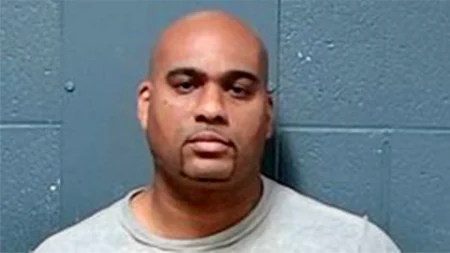







Arlington, Massachusetts, is historically celebrated for its peaceful residential streets, rich colonial history, and a tight-knit community spirit where families regularly gather in neighborhood parks and children play safely without a second thought. This deeply cherished sense of tranquility was abruptly shattered on June 25, when local law enforcement officers arrested 23-year-old Rocael Ordonez-Cruz, a Guatemalan national, on a series of profoundly disturbing sexual assault charges. The Arlington Police Department had responded to an incident that quickly escalated into a high-priority criminal investigation, culminating in Ordonez-Cruz being charged with rape, assault with intent to commit rape, indecent exposure, and indecent assault and battery on a person aged fourteen or older. For the residents of Arlington and the broader Middlesex County area, these severe allegations did not merely represent an anonymous blotter on a police log; they felt like a direct, visceral violation of the safe environment they had spent generations building. In the immediate aftermath of the arrest, neighbors began to closely examine the potential vulnerabilities within their local neighborhoods, struggling to reconcile the reality that such heinous acts could occur in their own suburban backyards. Local officers worked with great urgency to secure the area, preserve crucial evidence, and ensure that the legal process was initiated swiftly, prioritizing the physical and psychological protection of the victims. This arrest instantly transformed what began as a routine summer day into a focal point of systemic anxiety, prompting intense discussions about community safety, policing boundaries, and the measures necessary to prevent such violence. As the details of the criminal charges spread throughout New England, the community’s disbelief turned into an organized demand for justice, setting the stage for a complex legal proceeding that would soon draw national attention.
To fully understand the systemic weight of this case, one must look beyond the immediate local police reports and examine the journey of Rocael Ordonez-Cruz prior to his arrival in Massachusetts. According to official federal records, Ordonez-Cruz had entered the United States unlawfully at an unknown time and location, bypassing the formal, established ports of entry without being inspected, admitted, or paroled by a U.S. immigration official. This undocumented journey reflects a broader, incredibly complex human narrative shared by millions of individuals who flee Central American nations like Guatemala in search of better economic opportunities, often escaping poverty or violence. However, when individuals bypass the official legal framework of immigration, they exist in a shadow economy where their identities, histories, and potential risks remain completely unvetted, which complicates the ability of domestic law enforcement agencies to ensure public safety. In the case of Ordonez-Cruz, his transition from an undocumented resident to an accused violent offender highlights the critical necessity of secure borders, robust background screenings, and functional immigration systems. For many immigration reform advocates, his story represents the tragedy of a deeply broken system where individuals can live undocumented for years without supervision, while for law enforcement, it underscores the real-world dangers that unvetted entries pose to innocent communities. The ongoing debate surrounding his immigration status is not merely a political discussion; it has immediate, tangible consequences for towns like Arlington, where residents must balance their natural compassion for those seeking a better life with the uncompromising duty to protect their families.
Following his initial arrest by the Arlington Police Department, Ordonez-Cruz was held at the Middlesex County House of Correction in Billerica, Massachusetts, a regional facility designed to house individuals awaiting trial or serving shorter state sentences. It was within this secure facility that the separate legal jurisdictions of local Massachusetts criminal law and federal immigration enforcement eventually converged in a highly coordinated operation. On July 21, upon his scheduled release from state custody, officers from U.S. Immigration and Customs Enforcement and the Enforcement and Removal Operations Boston division were waiting to take him into federal custody. This direct transfer of custody is often the subject of intense political friction across the United States, particularly in regions that embrace “sanctuary” policies designed to limit local cooperation with federal immigration authorities. In this specific instance, the seamless cooperation between the Middlesex County jail staff and federal immigration officers ensured that an individual accused of egregious sex crimes did not simply walk out the front doors of the facility and disappear back into the surrounding communities. The utilization of immigration detainers—formal requests sent by ICE to local jails to hold individuals for up to 48 hours past their scheduled release—remains a highly debated tool, with critics arguing it can violate constitutional rights and proponents asserting it is a vital mechanism to keep dangerous criminals off the streets. The successful arrest of Ordonez-Cruz at the Billerica correctional center demonstrates the delicate balance that law enforcement agencies must maintain to protect the public while navigating a highly polarized legal and political landscape.
The federal intervention in this case was accompanied by a strong, public stance from immigration enforcement leadership, emphasizing the agency’s primary mission to safeguard American neighborhoods from violent offenders. David Wesling, the acting Enforcement and Removal Operations Boston Field Office Director, issued a direct statement criticizing Ordonez-Cruz for displaying a blatant disregard for American laws by entering the country illegally and subsequently committing violent sexual assaults. Wesling’s comments reflect the perspective of federal officers who view themselves as a critical line of defense against criminal threats that exploit gaps in border security and local enforcement policies. These federal agents often operate under intense public scrutiny, balancing the routine administrative processing of non-violent undocumented individuals with the dangerous, high-stakes task of tracking down and arresting violent fugitives. By highlighting the arrest of Ordonez-Cruz, the Boston ERO office sought to reassure the public that federal authorities are actively monitoring regional jail releases to prevent accused felons from returning to Massachusetts communities. This public messaging also serves as an appeal to local municipal leaders regarding the benefits of federal-state cooperation, suggesting that public safety is severely compromised when communication channels between local and federal agencies are severed. For the ICE officers involved in the July 21 arrest, the operation was a successful validation of their daily efforts to identify, locate, and detain high-risk individuals, reinforcing their commitment to preserving the safety of New England.
With Rocael Ordonez-Cruz now in federal custody, his legal journey branches into two distinct, parallel tracks within the American justice system: the state criminal court and the federal immigration court. Upon his transfer to ICE custody, he was served with a “Notice to Appear,” which formally initiates administrative removal proceedings before an immigration judge under the Department of Justice’s Executive Office for Immigration Review. These civil proceedings will determine whether he has any legal right to remain in the United States or if he must be formally deported to Guatemala. Crucially, these federal immigration proceedings do not absolve him of his criminal charges in Massachusetts; rather, they run alongside the state’s ongoing efforts to prosecute him for rape and assault. Cooperation between the Department of Homeland Security and Massachusetts state prosecutors is absolutely essential, as the state must ensure that Ordonez-Cruz remains physically available to stand trial for his alleged crimes, giving his victims their day in court before any potential physical deportation takes place. If he is eventually convicted in state court, he would likely serve his criminal sentence in a Massachusetts state prison before being returned to ICE for formal removal from the country. This dual-track process ensures that justice is pursued on multiple fronts, holding the accused accountable for his actions against local residents while simultaneously addressing his unlawful presence under federal law.
As the legal machinery slowly grinds forward, the community of Arlington and the wider Massachusetts region are left to heal from the profound trauma of these events. The human cost of this case is deeply felt, most acutely by the victims of the alleged assaults, whose lives have been permanently altered by these acts of violence. Their recovery, dignity, and search for peace remain the most important aspect of this narrative, transcending the loud political debates over immigration policies and jurisdictional cooperation. For local residents, the incident has sparked ongoing conversations about community vigilance, the support systems available for survivors of sexual violence, and the role of local government in ensuring public safety. It also serves as a sobering reminder of the complex realities of the modern world, where global migration patterns and local community safety are inextricably linked. The ultimate resolution of Rocael Ordonez-Cruz’s case will be watched closely by both immigration advocates and law enforcement supporters, each viewing the outcome through their own ideological lens. Yet, beyond the headlines and the political talking points, the primary goal of both the local police officers who made the initial arrest and the federal agents who executed the detainer remains the same: to ensure that the vulnerable are protected, the accused are held accountable under the law, and the peaceful neighborhoods of New England can once again feel secure.