



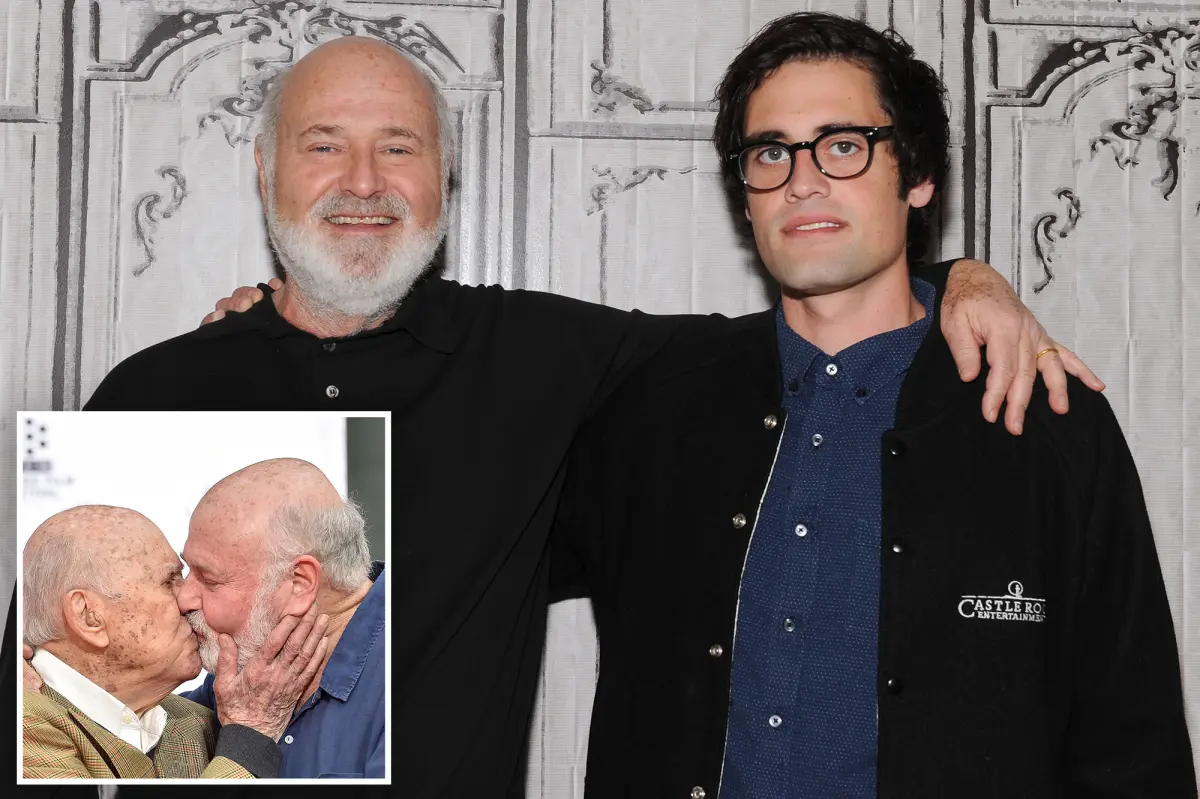
A Family Tragedy: The Complex Legacy of Rob Reiner and His Son
In a heartbreaking twist that shocked Hollywood and the world, acclaimed director Rob Reiner and his wife Michelle were allegedly murdered by their son Nick on December 14, the first night of Hanukkah. The tragedy came just three months after Rob had openly discussed his complicated relationship with his own father and his approach to parenting in an NPR “Fresh Air” interview with Terry Gross. This painful family story reveals layers of intergenerational relationships, professional legacies, and personal struggles that culminated in unimaginable violence.
Rob Reiner had candidly shared his feelings about his relationship with his famous father, Carl Reiner—the creative force behind “The Dick Van Dyke Show” and director of classic films like “The Jerk.” Rob expressed a deep-seated feeling that his father didn’t fully understand or love him during his formative years, noting, “Because loving your father and looking up to your father doesn’t necessarily mean you’re feeling that back, that you’re feeling that from him.” This sense of emotional distance apparently shaped Rob’s own approach to fatherhood, as he made a conscious decision to parent differently than Carl, who had died in 2020 at age 98. Rob emphasized that unlike his own upbringing, he prioritized being present for his children: “I was never, ever too busy… if anything, I was the other way. I was more hands-on and trying to do whatever I thought I could do to help.” This hands-on approach was particularly evident in his relationship with Nick, suggesting Rob was determined not to repeat what he perceived as his father’s emotional absence.
The father-son dynamic between Rob and Nick was further complicated by professional legacies and creative aspirations. Rob had eventually surpassed his father’s fame with his directing successes, including beloved classics like “Stand By Me” and “Misery.” It wasn’t until “Stand By Me” became a hit that Rob reported feeling “separate” from his father’s shadow—a significant milestone in his identity as an artist. Nick, meanwhile, appeared to be following in the family’s creative footsteps, with Rob heavily supporting his son’s directorial debut, “Being Charlie,” released in 2016. The film, which drew from Nick’s personal experiences with addiction, performed poorly at the box office, earning just $33,000 against a $2 million budget. This professional disappointment may have added pressure to a relationship already strained by Nick’s history of substance abuse, which reportedly began when he was only 16 years old with an addiction to heroin.
Despite these challenges, Rob had expressed optimism about Nick’s recovery journey in his NPR interview just months before the tragedy. “He’s been great. He hasn’t been doing drugs for over six years,” Rob had said, adding, “I mean, he’s in a really good place.” These statements now stand in stark contrast to the horrific events that followed. According to authorities, Nick allegedly slit both Rob’s and Michelle’s throats and stabbed them multiple times after an argument at a Christmas party hosted by former late-night host Conan O’Brien. The violence that allegedly unfolded that night has resulted in Nick being charged with two counts of first-degree murder—a devastating conclusion to a story of family struggle that had seemingly been moving toward healing.
The Reiner family tragedy resonates beyond its shocking headlines, touching on universal themes of parental relationships, the burden of family legacies, and the devastating impact of mental health and addiction issues. Rob’s conscious effort to be more present and involved than his own father highlights the way each generation often tries to correct the perceived mistakes of the one before. Yet the story also demonstrates how complex these family dynamics can be, and how even the most well-intentioned parenting approaches cannot guarantee protection from profound struggles. Rob’s attempt to be “hands-on” with Nick, particularly through their professional collaboration, may have been both an expression of love and support and, perhaps, a source of pressure for a son trying to establish his own identity in a family of successful entertainers.
This heartbreaking story serves as a somber reminder of how fame, family expectations, and personal demons can intersect in devastating ways. The Reiners—Carl, Rob, and Nick—represent three generations of a creative family whose public accomplishments have now been overshadowed by private tragedy. What makes this particularly poignant is how Rob had reflected on his relationship with his father and his son so shortly before his death, seemingly unaware of the violence that would soon befall him. The alleged events of December 14 have permanently altered the legacy of the Reiner family, leaving behind questions about mental health support, addiction recovery, and the pressures of growing up in a celebrated Hollywood family that may never be fully answered.