





The Crucible of Makerfield: How a Northern By-Election Became a National Referendum on Downing Street
On a damp, overcast Thursday in mid-June 2026, the quiet, post-industrial streets of Makerfield, a constituency nestled within the metropolitan borough of Wigan in Greater Manchester, became the unexpected epicenter of the British political universe. For decades, this northern English stronghold had been regarded by Westminster strategists as an immutable fixture of the political landscape—a reliable, working-class redoubt where ancestral loyalties to the Labour Party were passed down through generations like family heirlooms. Yet, as voters quietly filed into drafty church halls, community centers, and local schools to cast their ballots in a high-stakes parliamentary by-election, the atmosphere was thick with an palpable sense of national anxiety, carrying implications that stretched far beyond the borders of Lancashire. This localized ballot box test has rapidly mutated into an existential crisis for Prime Minister Keir Starmer, whose fragile grip on the keys to Number 10 Downing Street now hangs precariously in the balance. Across the halls of Westminster, political correspondents and anxious backbench MPs alike watched the turnout figures with bated breath, fully aware that a catastrophic collapse in the Labour vote here could ignite a swift and merciless coup against a Prime Minister increasingly accused of losing touch with the party’s traditional heartlands. The quiet scratching of pencils on paper in Makerfield’s polling booths on June 18 represented more than just the democratic selection of a new Member of Parliament; it was a collective, national intake of breath, a moment where the simmering frustrations of a fatigued electorate converged to threaten the very foundations of the incumbent government’s authority.
The Deep-Rooted Mechanics of Red Wall Despair and the Quest for Political Rebirth
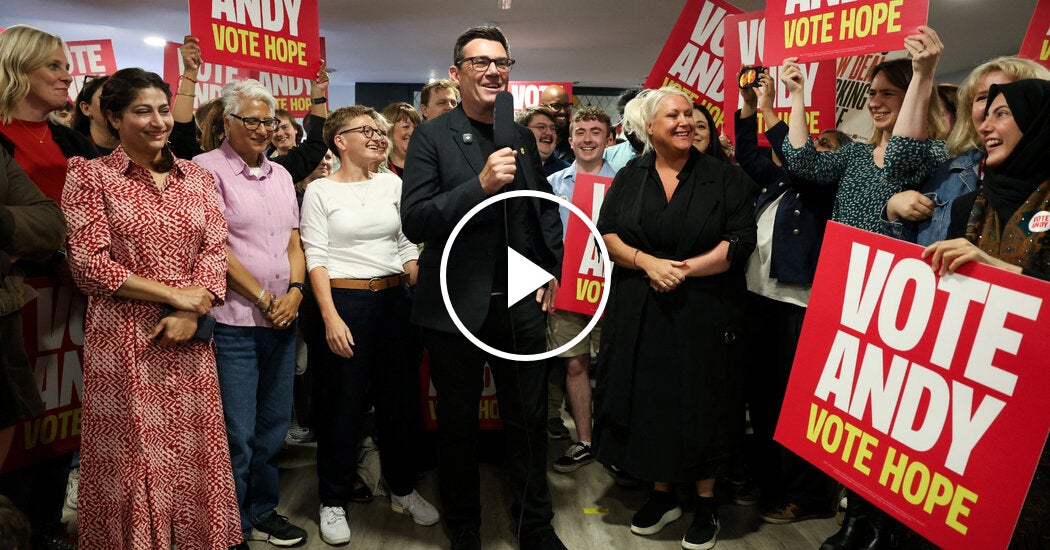
To understand why Makerfield has become the defining battleground for the future of British politics, one must look closely at the socio-economic fault lines that define this corner of the north of England. Once powered by the coal mines and textile mills that drove the Industrial Revolution, the modern constituency of Makerfield has spent the last several decades navigating the painful, uneven transition to a service-based economy, leaving many residents feeling abandoned by a London-centric political class of all stripes. This deep-seated sense of regional neglect has fueled a volatile voter volatility, a reminiscent echo of the “Red Wall” rebellions of recent general elections, where long-held partisan allegiances were cast aside in favor of populist promises of leveling up and national renewal. Throughout this intense, short campaign, the local landscape was transformed into a colorful but tense arena of political theater, dominated by a sea of bright red banners and placards bearing the words “VOTE ANDY” and “VOTE HOPE” as a local candidate sought to tap into the community’s lingering optimism. Yet beneath the high-energy rallies, where smiling candidates in spectacles spoke passionately into microphones to crowds of weather-worn locals, lay a deeper, more cynical reality. Voters on the doorstep repeatedly expressed a profound weariness with Westminster’s abstract macroeconomic targets and bureaucratic promises, pointing instead to the tangible decline of their high streets, the deteriorating state of local municipal finances, the sluggishness of regional public transport, and the skyrocketing cost of everyday essentials. By framing the election around the concept of “Hope,” the local campaign sought to bridge the widening chasm between the working-class electorate’s proud heritage and their uncertain economic future, turning a routine local contest into a crucial laboratory for testing whether mainstream political parties can still construct a narrative compelling enough to heal the fractured contract between the British state and its citizens.
The Premature Autumn of Keir Starmer: A Premiership Plagued by Internal Dissent and Public Fatigue
As the votes in Makerfield were being counted, the political vulnerability of Prime Minister Keir Starmer became the dominant topic of conversation in the tea rooms of the House of Commons and the television studios of Whitehall. Since taking office, Starmer has sought to project an image of steady, technocratic competence—a deliberate, cautious antidote to the chaotic, scandal-plagued years that preceded his administration—yet this calculated sobriety has increasingly been reinterpreted by his critics as a lack of vision, moral clarity, and reformist ambition. The initial goodwill that greeted his entry into Downing Street has steadily eroded under the pressure of prolonged public service crises, stagnant economic growth, and a series of difficult fiscal decisions that have alienated both the progressive wing of his own party and the working-class voters who demand immediate, material improvements to their lives. Within the parliamentary Labour Party, the threat of a leadership challenge is no longer whispered in dark corners; indeed, it has become a central point of strategic calculation for rival factions who fear that Starmer’s cautious stewardship will lead the party to a devastating defeat at the next general election. The by-election in Makerfield has thus evolved into a dangerous trigger mechanism; a defeat or even an embarrassingly narrow victory in a seat that should be effortlessly safe would provide the necessary ammunition for disgruntled backbenchers to coordinate a formal letters-of-no-confidence campaign. In the high-stakes arithmetic of British parliamentary politics, the PM’s survival depends entirely on his ability to convince his party that he remains an electoral asset, a proposition that the disgruntled voters of Greater Manchester seem uniquely positioned to dismantle.
The Hard Lessons of History: Why Internal Coups Rarely Deliver Electoral Salvation
Despite the growing clamor among some quarters of the Labour vanguard to oust their leader and install a fresh face in Downing Street, a powerful counter-argument has emerged from senior party figures and seasoned political analysts who warn of the catastrophic consequences of self-inflicted instability. This perspective was neatly summarized by an anxious voter interviewed on the rain-slicked streets of Makerfield, who remarked class-consciously, “Well, I don’t think there should be a leadership election; I think that the last government proved that parties that spend their whole time in leadership elections don’t go on to win the next general election.” This simple observation carries the immense weight of recent British political history, pointing directly to the self-destructive spiral of the Conservative Party between 2016 and 2024, during which a succession of internal, factional coups saw the prime ministership change hands with dizzying rapidity, ultimately alienating a public that prize stability and competence above all else. For a political party, turning inward to engage in months of bruising, self-indulgent debate over ideological purity and personal ambition is often perceived by the wider electorate as an act of profound arrogance, suggesting that the politicians are more concerned with their own careers than with the pressing challenges facing the country. The hard-learned lesson of the early 2020s is that voters swiftly punish parties that project weakness, division, and internal chaos, meaning that any attempt by Labour MPs to depose Starmer in the wake of a poor result in Makerfield could easily trigger a civil war that would doom their hopes of retaining power at the next national poll.
Red Banners in the Rain: The Visceral Campaign for Makerfield’s Fractured Soul
The campaign trail in Makerfield offered a vivid, cinematic snapshot of a nation wrestling with its identity, illustrating the profound emotional disconnect that has come to characterize modern political communication in the United Kingdom. On one hand, the official campaign was a carefully choreographed exercise in optimistic populism, epitomized by energetic rallies where supporters waved “VOTE ANDY” and “VOTE HOPE” signs under the grey Lancashire skies, trying to inject a sense of movement and pride into a community that has often felt ignored by the London corridors of power. The candidate, wearing a dark jacket and spectacles, delivered a series of impassioned speeches designed to evoke a collectivist spirit of resilience, promising to fight for local public services and to ensure that the voice of the northern working class would ring out loud and clear in the chambers of Parliament. On the other hand, just yards away from these highly controlled public relations events, the mood on the doorsteps of Makerfield’s terrace houses was markedly different—defined by a quiet, simmering disillusionment that no amount of colorful campaign literature could easily dispel. Many residents spoke of a deep-seated exhaustion with the very language of political campaigns, explaining that terms like “hope” and “change” had been cheapened by successive waves of politicians who arrived with grand promises during by-elections, only to vanish back to the capital once the ballots were cast and the television cameras had packed up and gone. This profound skepticism underscores the difficult challenge facing any representative in the area: the task is no longer simply about winning an election, but about rebuilding a basic level of trust with a community that has grown highly cynical of political theater and empty rhetorical gestures.
Beyond the Ballot Box: What Makerfield Tells Us About the Future of the British State
Ultimately, whatever the final numbers show when the returning officer steps up to the podium in the early hours of Friday morning, the Makerfield by-election has already delivered a profound verdict on the volatile and fragile state of British democracy. If the Labour Party holds the seat with a comfortable majority, Prime Minister Keir Starmer will secure a vital, if temporary, stay of execution, allowing his allies to claim that the public remains committed to his long-term program of national renewal despite the painful headwinds of economic recovery. However, should the seat fall to an opposition party or see its majority slashed to a sliver, the resulting political earthquake will almost certainly plunge Whitehall into a period of intense, unpredictable instability, forcing a reckoning over Starmer’s leadership that could fundamentally reshape the British government before the year is out. More broadly, the intense battle for this northern seat serves as a stark reminder that the old geographic certainties of British politics have permanently dissolved, leaving a highly fragmented electorate that is increasingly skeptical of centralized authority, fiercely protective of local public services, and willing to use its democratic power to punish any party that treats its loyalty as a foregone conclusion. As the dust settles over the polling stations of Makerfield, the lesson for whoever governs from Downing Street is clear: in an era of deep economic anxiety and deep social division, there are no longer any safe seats, no guaranteed majorities, and no room for complacency in the unforgiving arena of modern British politics.