


The Balancing Act of Governor Hochul: Immigration Policy, Political Alliances, and Election-Year Agendas
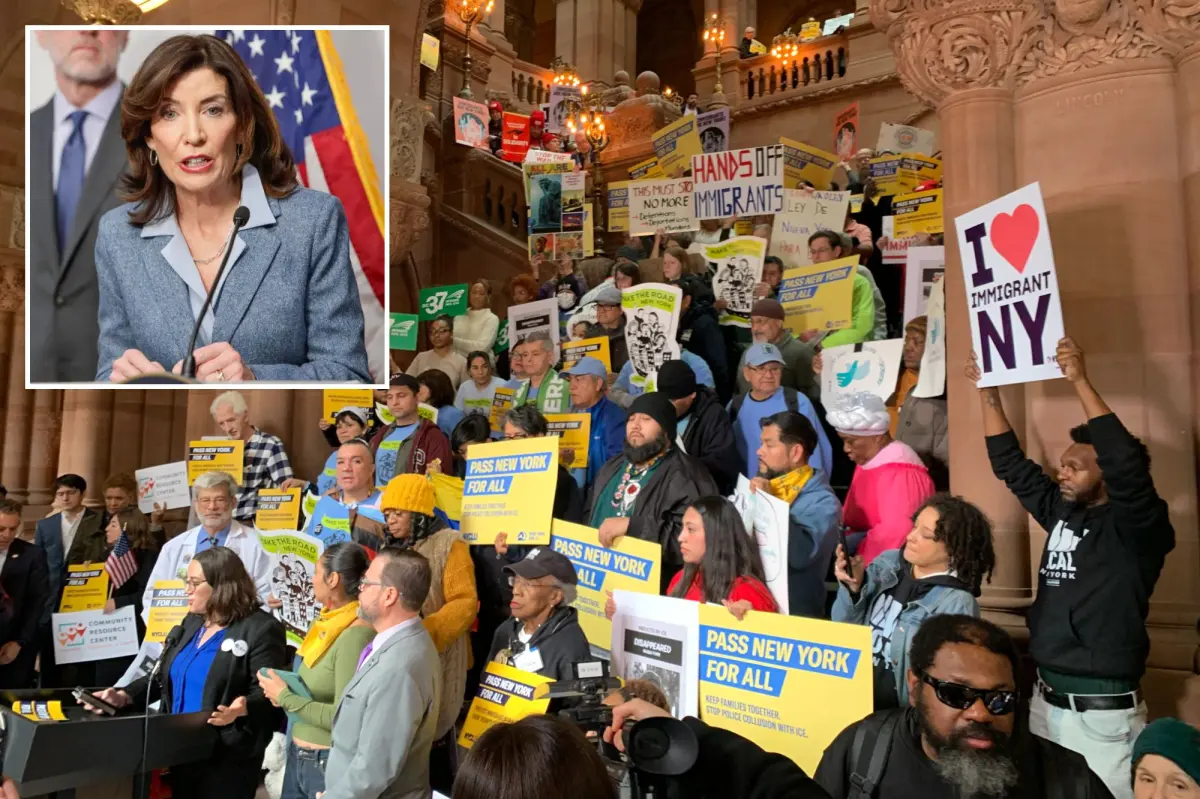
Governor Kathy Hochul finds herself walking a political tightrope as she prepares for her “State of the State” address, facing mounting pressure from progressive Democrats to endorse the “NY4All Act,” a sanctuary bill that would prevent state employees and police from cooperating with federal immigration authorities. The renewed push comes in the wake of ICE agent Jonathan Ross fatally shooting Renee Nicole Good in Minneapolis, which has galvanized anti-ICE sentiment among New York Democrats. As Hochul positions herself for re-election, she must carefully navigate between appeasing her progressive base while not alienating moderate voters who might be wary of more extreme immigration policies. State Senate Majority Leader Andrea Stewart-Cousins has already voiced support for NY4All, with Deputy Majority Leader Michael Gianaris urging swift passage and using harsh language to describe ICE agents, calling them “garbage human beings.” The timing of this pressure campaign is strategic, with advocates holding a rally in Albany just one day before Hochul’s major policy speech.
While Hochul has remained noncommittal on NY4All, she is expected to include in her agenda support for legislation that would make it easier for New Yorkers to sue immigration agents over alleged civil rights violations. Similar laws have been enacted in states like California and New Jersey, though Massachusetts and Maine faced legal challenges when courts ruled that federal agents could claim “qualified immunity.” This middle-ground approach reflects Hochul’s attempt to satisfy progressive demands without fully embracing the more controversial NY4All legislation. Her calculated positioning highlights the delicate balance she’s trying to maintain in New York’s complex political landscape, especially after backing Democratic socialist Zohran Mamdani’s successful mayoral campaign in New York City, a move that signaled her willingness to work with the progressive wing of her party.
Hochul’s upcoming address is expected to feature a unifying message designed to appeal across the Democratic spectrum. According to former state Senator David Carlucci, now a political strategist, the governor “has really got to make sure that these policies are exciting enough for the left, but also strategic and moderate enough in terms of the pocketbook for the moderates in the Democratic Party.” This balancing act will be crucial for Hochul as she attempts to build a coalition broad enough to secure re-election. One of her anticipated centerpiece proposals involves universal childcare for 2-year-olds in New York City, an initiative that could appeal to voters across the political spectrum. Additionally, Hochul is likely to advocate for legislation prohibiting protests within 25 feet of houses of worship, a response to demonstrations like the one that occurred outside Park East Synagogue in November.
Political analysts note that Hochul’s early alliance with Mayor Mamdani may prove strategically beneficial, particularly as they find common ground on broadly popular issues like childcare. Evan Roth Smith, founder of Slingshot Strategies, observed that “The needle she needs to thread is how does she maintain enough of her relationship and the political alliance with Zohran Mamdani, assuming he remains relatively popular in New York City, in order to turn out New York City Democrats, which she will need without opening her up to Republican criticism.” This assessment underscores the complex calculus Hochul faces: maintaining progressive support in New York City, which provides a crucial Democratic voting bloc, while not providing easy targets for Republican opponents who might characterize her as too extreme.
The political pressure on Hochul extends beyond immigration policy. Her Lieutenant Governor Antonio Delgado, who has positioned himself to her left and is challenging her in the Democratic primary, is openly pushing for a more comprehensive universal childcare plan, explicit support for NY4All, and restoration of health benefits to approximately 450,000 people who lost coverage under New York’s Essential Plan. Delgado’s decision to skip Hochul’s address in favor of conducting his own “State of the People” listening tour represents a direct challenge to the governor from within her own administration. His pointed comment that he’s “listening for what she doesn’t say” highlights the scrutiny Hochul faces not just from Republicans, but also from progressive Democrats who may find her centrist positioning inadequate.
As Governor Hochul prepares to deliver her election-year agenda, she embodies the challenges facing Democratic leaders across the country who must reconcile the demands of an increasingly progressive base with the electoral realities of a diverse voter population. Her approach to immigration policy—particularly her stance on the NY4All Act and her proposal to allow lawsuits against federal agents—will serve as a significant indicator of how she intends to navigate these competing pressures. Whether her strategy of selective progressive positioning while maintaining moderate appeal will succeed remains to be seen, but it certainly reflects the complicated political landscape of contemporary New York. With issues like immigration, childcare, religious protection, and healthcare access all in play, Hochul’s “State of the State” address may well define both her governing approach and her electoral strategy in the coming year.