



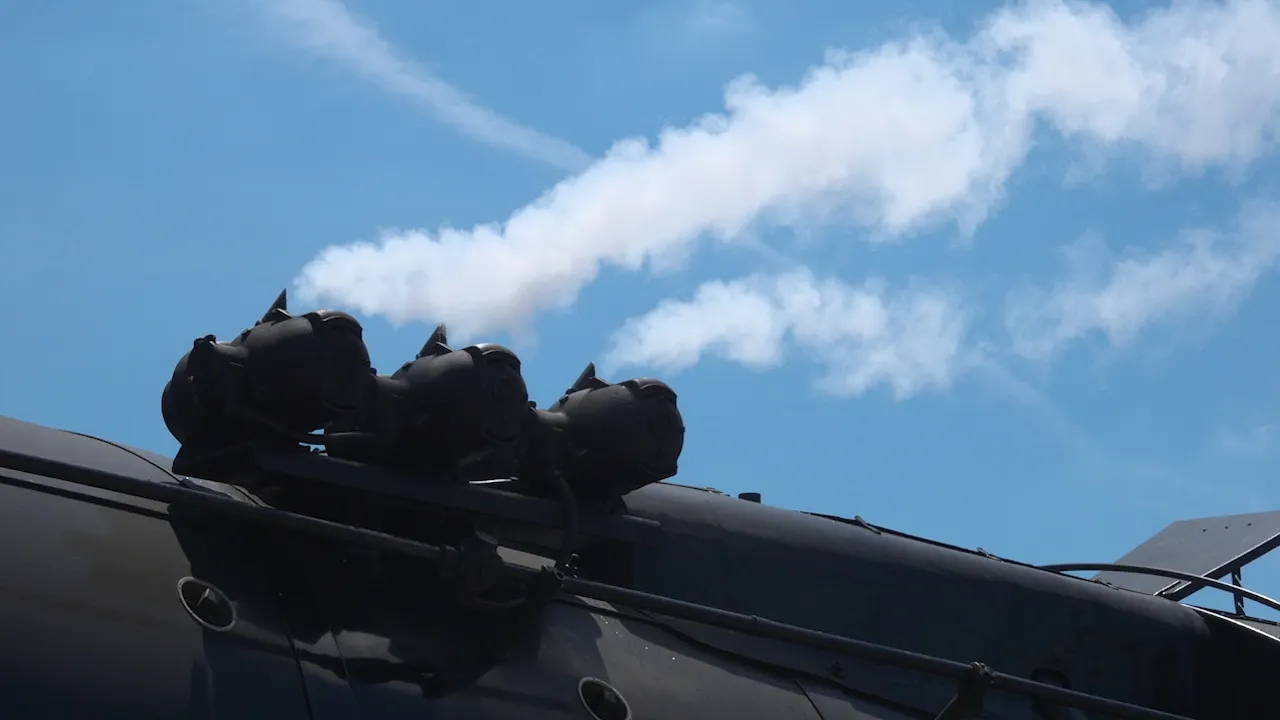
There is an undeniable magic when history ceases to be a static image in a textbook and transforms into a living, breathing, ground-shaking reality. This wondrous transition is currently unfolding across the heartland of America as Union Pacific’s legendary Big Boy No. 4014 embarked on a monumental voyage toward the East Coast. As the crown jewel of the railroad’s “America 250” tour, this mechanical titan recently rolled into the flat, expansive landscapes of Illinois, setting off a wave of excitement that captured the imaginations of thousands of spectators. The tour serves as a magnificent prelude to the United States’ upcoming semiquincentennial—its landmark 250th birthday—and the arrival of the world’s largest operating steam locomotive has turned ordinary rail lines into stages of national celebration. From the quiet whistle-stops in towns like Sterling to the bustling public display yards in West Chicago, the journey of this industrial behemoth has united communities under a banner of shared history, patriotism, and pure, unadulterated awe. To stand near the tracks as No. 4014 approaches is to feel the air pressure change, to hear a rhythmic, thunderous heartbeat of steel, and to witness a monumental chapter of American history chugging gracefully into the modern era.
The deep, emotional pull of this historic locomotive is best measured not by the miles it travels, but by the extraordinary lengths to which people will go just to catch a fleeting glimpse of it. Throughout Illinois, the tracks were lined with a vibrant tapestry of onlookers, each carrying their own personal connection to the rails. For some, like Marcia Simler, the visit was so significant that she happily took a day off from work, eager to trade the routine of her daily life for the rare opportunity to stand close to a machine that seemed to belong to another epoch. Others, driven by a deep-seated passion for living history, crossed state lines to participate in the event. Brandon Becker made the pilgrimage all the way from Wisconsin, completely spellbound by the sheer scale and majestic beauty of the locomotive as it idled in the West Chicago display yard. The crowd was a beautiful cross-section of humanity: wide-eyed children sitting on their parents’ shoulders, elderly spectators remembering the twilight era of commercial steam, and dedicated rail enthusiasts armed with cameras and vintage hats. In a modern society increasingly dominated by digital screens and fleeting virtual experiences, the physical, tactile presence of the Big Boy offered a rare moment of genuine, shared human connection, grounding everyone who stood in its shadow in a profound sense of wonder.
To truly appreciate the magnitude of this event, one must understand the astonishing engineering and rich legacy of Big Boy No. 4014 itself. Born in 1941 during the frantic buildup of the Second World War, the locomotive was specifically engineered to conquer the rugged, unforgiving terrain of the American West. Of the twenty-five Big Boy locomotives originally constructed to haul heavy wartime freight over the steep grades of the Wasatch Mountain Range, No. 4014 stands alone as the solitary survivor still operating on the rails today. It is a mechanical marvel of incomprehensible scale, tipping the scales at a staggering 1.1 million pounds and stretching out over 130 feet in length—longer than a commercial Boeing 737 passenger jet. For decades, this massive piece of American ingenuity sat silent and cold, serving as a monument on public display after diesel engines took over the nation’s rails. However, in 2019, Union Pacific’s heritage team worked tirelessly to restore the engine to operating condition, breathing fire and steam back into its giant belly. Today, inside the cab, a highly skilled crew monitors a complex network of pressure, water, and fire systems, keeping alive aCentury-old steam technology that requires constant vigilance, physical grit, and a deep respect for the physical laws of thermodynamics.
The historical significance of this current excursion is heightened by the fact that the Big Boy has historically been a creature of the expansive Western plains and mountain passes. This journey marks the very first time in history that No. 4014 has traveled to the East Coast, slicing through regions that have not heard the deep, throated chime of a giant articulated steam locomotive whistle in generations. Moving east from Illinois, the meticulously planned route takes the train through Indiana, Ohio, New York, and Pennsylvania, eventually culminating in Philadelphia. Successfully executing a tour of this magnitude is a monumental logistical triumph, requiring unprecedented cooperation and coordination across different rail networks. To make this dream a reality, Union Pacific partnered with Norfolk Southern, a historic collaboration that allowed the Western giant to navigate the tighter clearances and busy rail corridors of the East. Over the course of the multi-state journey, the tour features more than fifty whistle-stops and public display events, transforming the railway into an open-air museum that brings the industrial heritage of the nation directly to the doorsteps of millions of citizens who would otherwise never have the chance to see it.
For the throngs of people who gather at every stop, the locomotive is far more than a triumph of mechanical engineering; it is an emotional and patriotic symbol of the American spirit. The rhythmic chug of the engine and the white plumes of steam billowing into the sky evoke a deep reflection on the sacrifices, sweat, and visionary determination that built the infrastructure of the United States. Onlookers like John Bollig openly expressed how the sight of the giant machine stirred profound patriotic feelings within them, reminding everyone of the industrial might that helped the country overcome global crises and expand across a vast continent. Railroads were the literal iron veins of a young, growing America, binding distant states together and making the rapid growth of the nation possible. As the country prepares to celebrate its 250th anniversary, the presence of the Big Boy serves as a triumphant reminder of what American workers, engineers, and dreamers could achieve when they pushed the boundaries of technology. It honors the legacy of the laborers who laid the tracks and the generations who kept the country moving forward, serving as a physical monument to national resilience and unity.
As Big Boy No. 4014 continues its historic march toward its ultimate destination of Philadelphia for the Fourth of July and semiquincentennial celebrations, it leaves behind a trail of inspired hearts and rekindled memories. The locomotive’s journey is a powerful testament to the enduring appeal of our shared history, showing that even in an era of rapid technological advancement, we still find our greatest inspiration in the monumental achievements of our past. When the train finally arrives in Philadelphia, the birthplace of American democracy, it will stand as a ultimate symbol of the nation’s enduring journey, linking the revolutionary ideas of the founders with the roaring industrial power that helped those ideas reshape the globe. Long after the steam clears and the heavy iron wheels move on to the next town, the echoes of the Big Boy’s whistle will linger in the minds of the children who saw it, the families who stood together in the sun, and the nation that continues to draw strength from its rich, unstoppable heritage.