



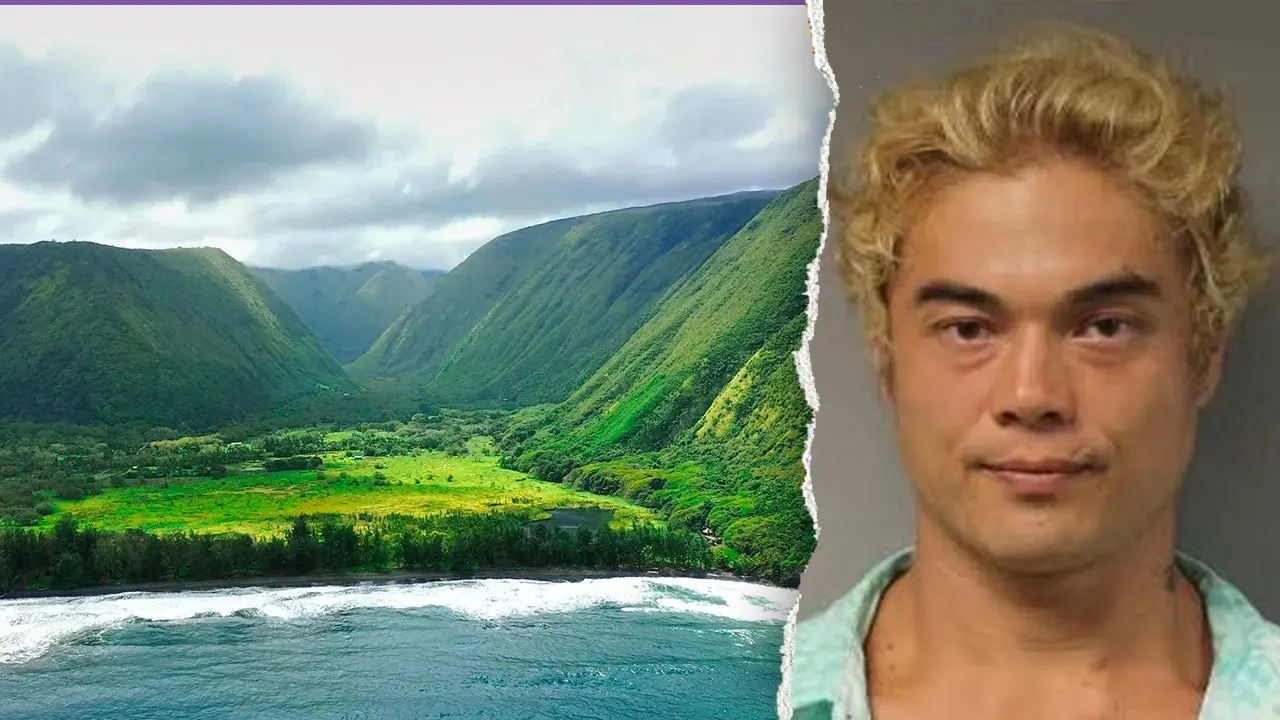
The lush, volcanic landscape of Hawaii’s Big Island has long been romanticized as a place of healing, sanctuary, and profound natural peace. Yet, over a terrifying forty-eight-hour period, that idyllic silence was shattered by a wave of violence that plunged the rural communities of the Puna district into a state of absolute dread. The arrest of 36-year-old Jacob Baker, a local resident from Pahoa, brought a sudden end to a high-stakes, multi-agency manhunt, but it did little to ease the deep emotional wounds left in his wake. Baker stands accused of orchestrating a brutal spree that claimed the lives of three older men, leaving a traumatized community to grapple with how such unimaginable violence could penetrate their tight-knit, off-grid neighborhoods. For a region where residents often seek solace from the chaos of the modern world, the sudden presence of an “armed and extremely dangerous” killer hiding in their vast, jungle-like backyard turned paradise into a claustrophobic nightmare.
The human cost of this tragedy is measured in the lives of three vulnerable elders who deserved to spend their golden years in peace. The nightmare began on a Monday when the body of 69-year-old Robert Shine was discovered partially submerged in a rural cement pond, a setting that mockingly juxtaposed tranquil water with a violent end; an autopsy later confirmed that Shine’s life was taken through the terrifying cruelty of strangulation. The horror compounded the very next afternoon when police discovered a 79-year-old man lying dead just a few hundred feet from where Shine was found, his identity and cause of death still shrouded in ongoing investigation. The violence was not contained to a single local neighborhood, however, as investigators soon linked Baker to a third crime scene nineteen miles away, where 69-year-old John Carse was found dead from sharp force trauma. These men were neighbors, grandfathers, and quiet fixtures of their communities, and the sheer brutality of their sudden deaths has left their families navigating an ocean of unexpected grief.
What makes these losses even more painful for the local community is the haunting realization that the legal system had a chance to intervene just days before the killings began. In the week leading up to the murders, two local women had urgently petitioned the court for temporary restraining orders against Baker, describing a volatile man who was actively threatening and harassing them at a nearby farm. One of the women detailed a chilling scenario in court filings, warning that Baker had explicitly threatened to kill several women staying on the property, creating an atmosphere of terror so intense that multiple residents packed their belongings and fled for their lives. Despite these desperate cries for help, a judge denied both restraining orders, citing “insufficient evidence” of harassment. This devastating systemic failure has left residents questioning a legal framework that requires blood to be spilled before protection is granted, leaving vulnerable people to defend themselves against a building storm of violence.
To those who knew Baker before his descent into alleged violence, he was a complex and increasingly hostile figure who had slowly worn out his welcome on the island. Stephen Shaffer, a local resident, recalled a time when Baker lived on his ex-wife’s agricultural property in Puna, earning his keep by performing rugged farm labor, including climbing high into coconut trees to harvest fruit. Yet, beneath this seemingly peaceful lifestyle of self-reliance, a dark and volatile anger was beginning to take root. Shaffer noted that Baker eventually had a bitter falling out with his ex-wife, prompting her to seek legal protection because she felt deeply threatened by his escalating hostility and unpredictable behavior. Shaffer described Baker simply as a man who “seemed kind of angry,” a restrained description that prefigured the explosive, lethal rage that authorities believe eventually turned outward toward the older men in the community.
The hunt for Baker mobilized a massive, unprecedented coalition of law enforcement agencies, transforming the tranquil Big Island into a high-stakes theater of operations. Given the dense, rugged terrain of the Puna district—characterized by thick tropical rainforests, hidden lava tubes, and isolated dirt roads—finding a suspect required immense coordination. The Hawaii Police Department joined forces with a legion of federal and state partners, including the FBI, Homeland Security Investigations, the U.S. Marshals Service, state sheriffs, and officers from the Department of Land and Natural Resources. While helicopters buzzed overhead and heavily armed tactical units combed the dense foliage, local residents lived in a state of suspended animation, locking doors that had remained unlocked for decades and looking suspiciously at every shadow. The manhunt finally ended on a Thursday evening when authorities captured Baker without incident, bringing a collective sigh of relief to a community that had spent days holding its breath.
Though the immediate danger has passed with Baker behind bars, the psychological scars left on the Big Island will take a generation to fully heal. Hawaii Police Chief Reed Mahuna expressed the department’s deepest condolences to the grieving families, acknowledging the profound fear and anxiety that an event of this magnitude inflicts on a close-knit population. As investigators work to piece together a motive and determine if the victims had any personal connection to Baker, the community is left to rebuild its shattered sense of security. The tragedy serves as a grim reminder of how quickly peace can be stolen, and how the warning signs of violence must be taken seriously before they culminate in irreversible loss. For now, the people of Puna are left to mourn their lost elders, finding solidarity in their shared grief as they try to reclaim the quiet, peaceful life they once knew.