



Trump Pulls the Plug on Iran Peace Talks Amid Escalating Tensions
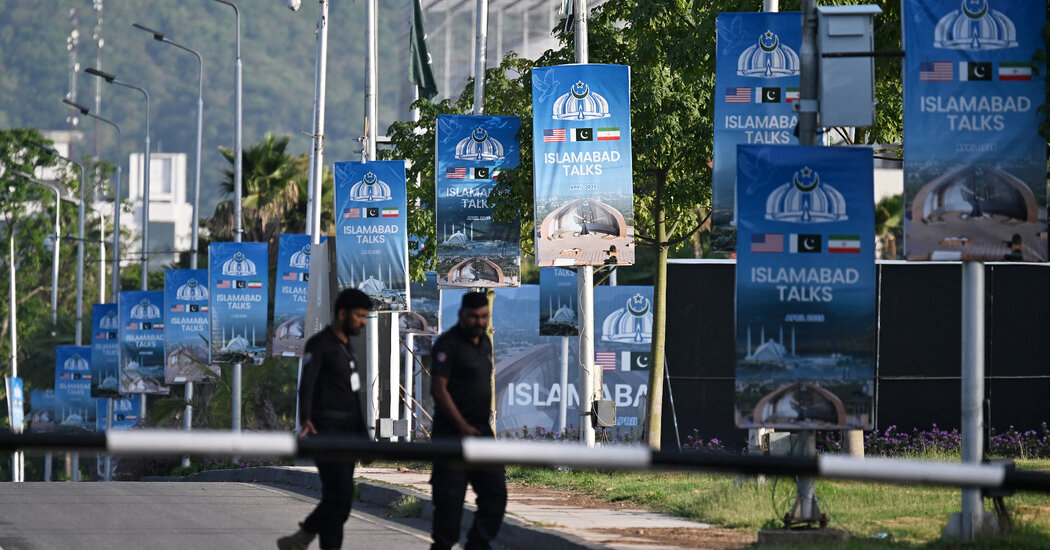
In a bold and abrupt move that underscored the high-stakes drama of U.S.-Iran relations, President Trump canceled a planned trip by two key negotiators to Islamabad, Pakistan, late last Saturday, just as they were poised to board planes for what could have been a pivotal round of discussions on ending the monthslong conflict with Tehran. The envoys—billionaire real estate mogul Steve Witkoff, serving as Trump’s special envoy, and the president’s son-in-law, Jared Kushner—had assembled their teams and secured logistics for the 18-hour journey. But in a characteristic blast on social media, Trump declared victory before takeoff: “I’ve told my people a little while ago, they were getting ready to leave, and I said, ‘Nope, you’re not making an 18-hour flight to go there. We have all the cards,’” he posted. “They can call us anytime they want, but you’re not going to be making any more 18-hour flights to sit around talking about nothing.” The statement, laced with Trump’s signature bravado, signaled a shift in strategy, emphasizing American leverage over diplomatic endurance. It came as Iranian Foreign Minister Abbas Araghchi made his way back to the Pakistani capital Sunday after a brief detour to Oman, where he’d huddled with officials to outline Tehran’s stance on a framework for lasting peace. Iran’s state media reported his return ahead of a looming trip to Russia, hinting at alternative alignments in the power chessboard of Middle Eastern geopolitics. This tug-of-war in diplomacy reflects a broader confrontation, where economic pressures and military posturing continue to set the stage for brinkmanship, leaving observers wondering if talks can ever bridge the chasm.
Stalling Progress in Pakistani Mediation Efforts
As Pakistan persists in its role as an impartial broker, striving to mediate between Washington and Tehran since the outbreak of hostilities earlier this year, this cancellation marks another stumble in fragile negotiations that have seen fits and starts. Islamabad’s officials, mindful of the region’s volatility, have hosted high-level meetings in recent weeks, facilitating back-channel exchanges amid the fog of war. Yet, just days earlier, another U.S. emissary, believed to be Secretary of Defense J.D. Vance, had scrapped his own Islamabad itinerary at the eleventh hour, citing unspecified reservations. These repeated snubs underscore the cautious, piecemeal approach both sides are adopting, with Araghchi’s Saturday disclosures to Pakistani counterparts teasing a “workable framework” for ending the U.S.-imposed conflict—though specifics remained shrouded in ambiguity. Diplomats close to the talks describe a process fraught with last-minute pivots, where a flicker of progress often drowns in procedural hurdles. Meanwhile, tensions simmer in one of the world’s most critical maritime chokepoints: the Strait of Hormuz. This narrow waterway, a jugular vein for Persian Gulf oil and gas exports, has become a battleground of blockades and seizures. Both nations accuse each other of violating shipping rules, with Iranian and U.S. forces intercepting vessels amid claims of embargo enforcement. Each incident heightens the risk of escalation, turning routine maritime traffic into a geopolitical powder keg. As one international shipping executive put it off the record, the strait is no longer just a trade route—it’s a pressure point where economies could buckle under prolonged standoff.
Iran’s Defiant Stance Against Blockade Pressures
Iran’s leadership has publicly balked at engaging in substantive talks while enduring what they view as an illegal U.S. naval blockade on their ports, a measure designed to cripple Tehran’s economy and force concessions. This blockade, part of Washington’s broader strategy since the conflict erupted, targets Iran’s global trade lifelines, aiming to isolate the regime financially and militarily. Tehran argues that such actions—seizing shipments and rerouting cargoes—undermine any genuine dialogue, painting the U.S. approach as coercive rather than collaborative. Analysts note that Iran’s historical penchant for endurance shines through here: the Islamic Republic has weathered decades of sanctions without yielding, and this blockade fits into that narrative. In Araghchi’s earlier meetings, he reportedly emphasized Tehran’s insistence on lifting these restrictions as a precondition, framing the U.S. as an aggressor whose naval incursions echo colonial impositions. For Pakistani mediators, juggling these grievances adds layers of complexity; they must navigate Iran’s resentment over perceived overreach and Washington’s demand for rapid capitulation. The irony isn’t lost on regional experts: a conflict born from disputes over sovereignty and access is now exacerbating those very issues, with no clear off-ramp in sight. As the standoff drags on, everyday Iranians bear the brunt—shortages in medicine and fuel paint a stark picture of human cost beneath the headlines of global maneuvering.
Nuclear Stumbling Blocks: Uranium Enrichment and the JCPOA Legacy
At the heart of the U.S.-Iran deadlock lies a tangle of nuclear-related issues that have defined their fraught relationship for nearly a decade. Key among these are the scope of Iran’s uranium enrichment program and the fate of its sizable stockpile of highly enriched material—the very fuel that could expedite a weapon if refined further. Tehran staunchly defends its right to enrich under the Nuclear Nonproliferation Treaty, arguing for sovereignty over its atomic activities. Meanwhile, U.S. officials, echoing Trump’s fiery rhetoric, insist they won’t tolerate Iran acquiring nuclear weapons, viewing any expansion as an existential threat to regional stability. The roots of this impasse trace back to the Obama-era Joint Comprehensive Plan of Action (JCPOA), a landmark deal brokered in 2015 that curtailed Iran’s nuclear ambitions in exchange for sanctions relief. Trump, who famously dubbed it “a horrible, one-sided deal,” withdrew unilaterally in 2018, sparking a cascade of consequences. Freed from constraints, Iran accelerated enrichment far ahead of schedule, amassing vast reserves. Today, international inspectors estimate Tehran holds over 11 tons of uranium at varying purity levels—enough, with additional processing, to fuel up to 100 bombs, dwarfing even some assessments of Israel’s arsenal. Much of this accumulated post-withdrawal, exposing the deal’s expiration clause, which would have allowed unrestricted enrichment by 2030. The buried stockpile, targeted in Trump’s June bombing raids on Iranian tunnel complexes, represents only a sliver; the broader Program remains a ticking clock, with centrifuges spinning and stockpiles swelling. Negotiators grapple with how to dismantle this inventory without igniting war, balancing disarmament demands with Tehran’s technological escalations.
Demystifying ‘Nuclear Dust’: Trump’s Rhetoric Meets Reality
In recent weeks, Trump has leaned on a peculiar phrase to downplay Iran’s lingering nuclear capabilities, insisting that U.S. strikes have reduced the program to “nuclear dust”—a metaphorical wipeout under layers of debris. This colloquial spin portrays the aftermath as harmless remnants, a victory lap in his anti-Iran campaign. Yet, peeling back the curtain reveals a far more menacing reality. What Trump refers to isn’t literal dust; it’s a half-ton cache of uranium enriched near weapons-grade levels, tucked away in sturdy canisters resembling oversized scuba tanks. Far from powdery residue, this material exists as a pressurize d gas that solidifies at ambient temperatures—a volatile, toxic substance with detonation risks if mishandled. The majority of it lies entombed in a bombed Iranian tunnel network, but leaks or retrieval could spell disaster, exposing handlers to lethal contamination. Experts, including retired nuclear inspectors, caution that while the raids disrupted infrastructure, they didn’t erase the threat; recovery efforts continue, and the material’s potency endures. Trump’s “dust” narrative appears tailored to deflect domestic scrutiny on his Iran strategy, minimizing the nuclear elephant in the room. By branding it as impotent fallout, he shifts focus to leverage claims, yet inspectors warn that the unburied portions—embedded in safeguards-deprived sites—pose ongoing proliferation worries. This semantic sleight of hand underscores a deeper disconnect: policy shaped by soundbites versus the granular perils of atomic science.
Contrasting Negotiating Philosophies in a High-Wire Persian Gulf Showdown
As the Iran-U.S. saga unfolds, a stark clash of negotiating temperaments emerges, pitting Trump’s assertive style against Tehran’s marathon endurance in a geopolitical theater where patience often trumps pyrotechnics. Trump fancies himself a maestro of coercive diplomacy, wielding threats of military might to extract swift surrenders—a tactic that worked in sandboxing the North Korean regime, though unverified claims of denuclearization linger. Yet, encountering a regime hardened by past hardships, he’s found resilience where speed was assumed. Iran, under its clerical custodians, champions a long-haul ethos, grinding through hardship rather than buckling to ultimatum. “Trump is impulsive and temperamental; Iran’s leadership is stubborn and tenacious,” observes Robert Malley, a seasoned negotiator who danced the diplomatic tango on both the 2015 JCPOA and Biden’s thwarted revival. “Trump demands immediate results; Iran’s leadership plays the long game. Trump insists on a flashy, headline-grabbing outcome; Iran’s leadership sweats every detail. Trump believes brute force can compel obedience; Iran’s leadership is prepared to endure enormous pain rather than concede on core interests.” Reflecting on history, the last major accord took over a year of clandestine and overt dialogues, evolving from quiet backchannels with pragmatists to multilateral summits. Trump, ever aware of comparisons, thundered assurances that his impending deal would eclipse the JCPOA: “The DEAL that we are making with Iran will be FAR BETTER than the JCPOA,” he proclaimed on social media. “It was a guaranteed Road to a Nuclear Weapon, which will not, and cannot, happen with the deal we’re working on.” Time will tell if this vision holds, but for now, the chasm widens, a reminder that in the furnace of Iran-U.S. talks, one man’s leverage is another’s labyrinth. As ships seize in the Hormuz and nuclear centrifuges hum, the world watches a Persian Gulf drama scripted by dueling wills—urging diplomats to bridge the gap before sparks ignite an inferno.