


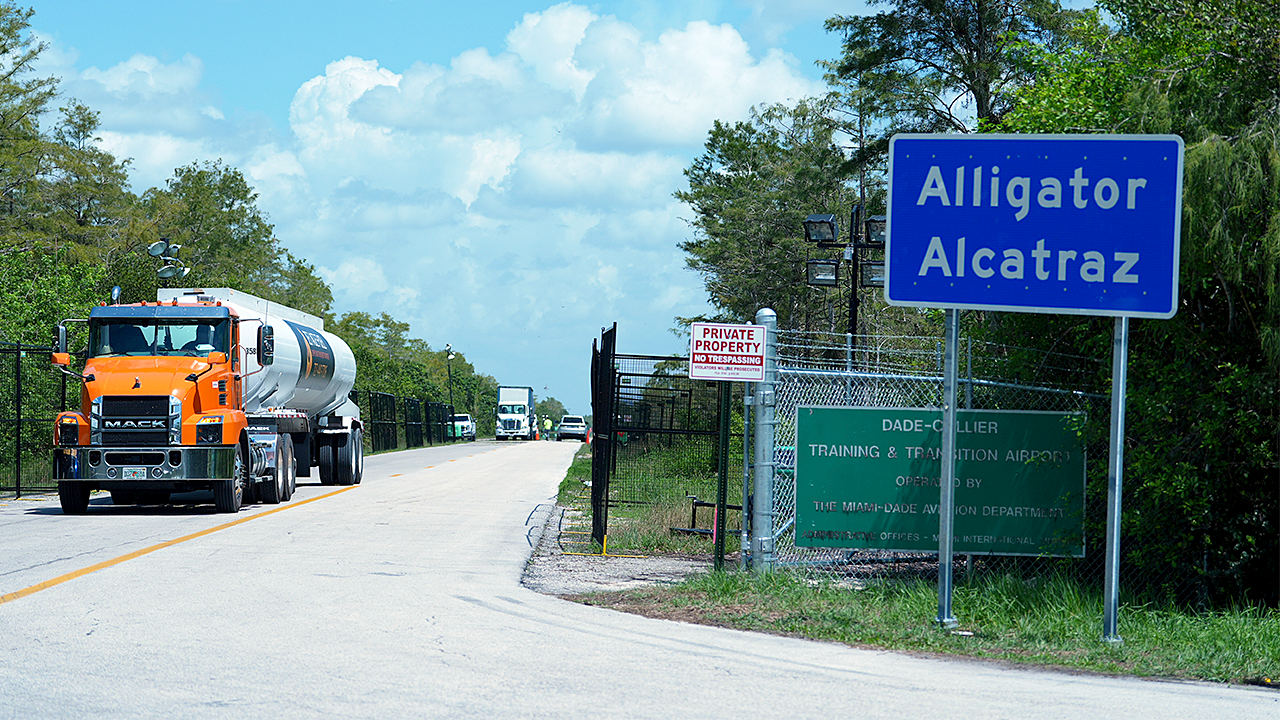
Imagine stepping into the steamy, insect-ridden expanse of the Florida Everglades, where mosquitoes buzz relentlessly and alligators lurk just beyond the barbed wire fences. Tucked away in this unforgiving wilderness stands a stark reminder of America’s immigration struggles: the notorious “Alligator Alcatraz,” a sprawling detention center built by Governor Ron DeSantis’ administration. Designed as a quick-fix solution in President Donald Trump’s push to ramp up detentions and deportations, this facility has quickly become synonymous with misery. Over the summer, it opened its gates to hold hundreds of migrants, many fleeing violence and poverty in their home countries. But behind the no-nonsense facade of concrete and chain-link, stories of brutality have begun to emerge, painting a picture of a place where human dignity is routinely trampled. Lawyers and asylum seekers alike have shared harrowing accounts of neglect, isolation, and now, allegations of savage beatings that leave you wondering how a system meant to enforce borders has descended into something so barbaric. One detainee, speaking through a haze of pain and fear, might whisper to a visitor: “We came here seeking safety, but instead, we’re treated like animals.” The air is thick with humidity, and the distant splash of gators only amplifies the sense of imprisonment. Families back home wait anxiously for news, teetering on the edge of despair, as their loved ones endure this ordeal far from civilized eyes. It’s a place where hope flickers like a dying flame, and the very concept of justice feels like a luxury reserved for others. With lawsuits piling up and cries for accountability growing louder, “Alligator Alcatraz” stands as a testament to the dark underbelly of immigration enforcement, where the line between security and savagery blurs dangerously.
The triggering event that led to the violent outburst happened just days ago, early this month, when detainees voiced their frustrations about a critical lifeline being cut off: phone access. These phones aren’t just conveniences; they’re lifelines to the outside world, allowing migrants to connect with relatives who worry about their fate and lawyers who fight their corner in a labyrinth of legal battles. Without them, the isolation becomes unbearable, a suffocating silence that echoes the traumas they’ve already endured. The detainees, confined to their cramped cells, complained, their voices rising in what was meant to be a peaceful plea for reconnection. But peace was not what they received. Instead, guards, perhaps overburdened or emboldened by the remoteness of the site, responded with hostility. What started as taunts escalated rapidly. Imagine the scene: dozens of immigrants, from various walks of life—farmers from Central America, young asylum seekers dreaming of a better future—huddled in a cage under harsh fluorescent lights. The guards’ provocations turned into threats, their words dripping with menace, promising entry and retribution. One detainee, trying to stand his ground by approaching a guard, was met not with words but with a fist to the face. It was the spark that ignited a chain reaction of violence. Beating sounds—thuds, cries, the scuffle of bodies—filled the air as multiple guards descended upon the group. The atmosphere must have been charged with terror, hearts pounding like drums, as detainees cowered and fought back in futile defiance. Guards wielding pepper spray unleashed it liberally, the acrid fumes adding to the chaos, stinging eyes and searing skin. Bodies were thrown against walls, limbs twisted in restraint. For those watching from afar, it’s hard to fathom how a simple complaint could escalate to such brutality, but in this insulated bubble of authority, rules bend, and human decency evaporates. The guards, in their uniforms symbolizing order, morphed into enforcers of a different kind, leaving scars on bodies and souls alike. One can almost hear the echoes of pleas: “Please, we just want to call home.”
Katherine Blankenship, the resolute lawyer representing two of the detainees, laid bare the aftermath in a court declaration that reads like a gripping testimonial from the edge of hell. She described how one of her clients, a man who had already endured the rugged journey north, was targeted with particular ferocity. Punched squarely in the right eye, he was hurled to the floor, where several guards pummeled him relentlessly. Kicks rained down on his head, each one a cruel reminder of his vulnerability, while his shoulder and arm bore the brunt of their rage. In a chilling maneuver that echoes haunting imagery from other instances of misconduct, a guard pressed his knee into the man’s neck, pinning him down in a display of dominance that could have ended tragically. Blankenship’s words paint a visceral picture: the detainee’s bloodied face, swollen and bruised, his spirit battered as much as his body. Nearly a week later, during a video call, a photo captured the lingering damage—a blackened eye that spoke volumes of the unprovoked assault. But this wasn’t an isolated act of cruelty. Blankenship reported that the officers unleashed their fury on multiple detainees, with one unfortunate soul suffering a broken wrist, his bone shattered in the melee, leaving him in agony without proper medical attention. As she recounted the incident, you can sense her fury and compassion intertwining; here was a professional warrior for justice, witnessing the breakdown of a system she believed in. The declaration isn’t just legal jargon; it’s a human story of resilience amid cruelty. These men, many seeking refuge from persecution, were met with the very violence they fled. The photo, circulating in hushed whispers, becomes a symbol of outrage, a visual testament to the price of speaking out. Families receiving these calls must recoil in horror, wondering if their husband, father, or son is next. It’s a reminder that detention isn’t just about borders—it’s about preserving humanity in the face of unchecked power.
At the heart of this turmoil lies the phones, or rather, the lack thereof, which ignited the powder keg. Without functioning phones, detainees are severed from their support networks, unable to reach attorneys desperately pleading their cases or families offering solace. The primary mode of communication rendered useless, the days blur into an abyss of uncertainty and dread. Blankenship’s declaration was filed as part of a broader lawsuit, alleging that both state and federal officials disregarded a federal judge’s injunction issued last month. U.S. District Judge Sheri Polster Chappell had decreed that detainees must have access to timely, free, confidential, unmonitored, and unrecorded calls with their legal representatives— a right enshrined in the First Amendment. She specified at least one operable telephone for every 25 people, a seemingly basic provision in an era of digital connectivity. Yet, this edict was flouted, with officials citing nebulous excuses like staffing shortages or security concerns. The judge’s ruling stemmed from prior lawsuits claiming violations of detainees’ rights, highlighting how this facility, meant to be a holding pen, has become a crucible of constitutional neglect. Phone service trickled back on the day after the beating, but no explanations were offered, leaving detainees to grapple with the silence of unaccountability. It’s a grim irony: in a country built on free speech, these voices are systematically muted. Imagine the strategy meetings where officials debate policies; perhaps a lawyer there argues passionately: “These people deserve their due process.” But the reality on the ground is far removed from such ideals, breeding a culture of dismissal. Detainees, awakening to another day of limbo, check those recalcitrant phones, their hopes pinned on sporadic connectivity, knowing that each blocked call could mean lost asylum claims or deepened isolation.
Predictably, officials have circled the wagons, denying the allegations with bureaucratic detachment. State representatives scoff at the idea of restricting attorney access, pointing fingers at logistical hurdles rather than willful misconduct. Federal authorities, named as defendants, assert that no First Amendment violations occurred, dismissing the complaints as exaggerations. Last week, state officials signaled their intent to appeal the judge’s preliminary injunction, waging a legal battle that delays accountability for those ensnared in this web. This deflection only fuels the skepticism; how can staffing issues justify the level of violence described? The facility’s history isn’t spotless—since its hasty construction, lawsuits have mounted like storm clouds, alleging everything from inadequate conditions to outright abuses. Built in tandem with a second center in northern Florida, it’s part of DeSantis’ grand vision tied to Trump’s mass detention agenda. Critics see it as a political theater, a showcase of tough-on-immigration stance that prioritizes optics over ethics. Visitors to the outside world might wonder: “Are these men and women terrorists, or are they simply seeking a chance?” The dehumanizing nickname “Alligator Alcatraz” underscores the narrative of isolation, where migrants are no longer seen as people with stories, dreams, and rights. Politicians back in Washington feed the fire with rhetoric, but on the frontline, it’s personal—it’s the cries of the beaten, the silence of the unheard. Yet, voices like Blankenship’s keep pushing, reminding us that justice, though slow, isn’t impossible. As one lawmaker notes, power doesn’t justify abuse, and in this ever-swirling debate over borders and rights, the human cost is undeniable.
Adding to the chorus of condemnation is the recent visit by U.S. Rep. Debbie Wasserman Schultz, a Democrat from Florida, who emerged from “Alligator Alcatraz” last week with a heavy heart and pointed words. Denied any chance to converse directly with detainees, she painted a damning portrait of the facility’s conditions as inhumane and cruel. “The way the detainees are housed is cruel and unnecessary,” she declared, her voice carrying the weight of empathy and outrage. Schultz described crowded quarters where basic dignities are denied, where the Everglades’ heat and wildlife encroach on the psyche as much as the body. This wasn’t her first encounter with immigration woes, but the sheer barrier erected against communication spoke volumes of the center’s opacity. She embodied the disconnect many feel: that hidden away, abuses can thrive unchecked, only surfacing through courageous declarations and persistent advocacy. The Associated Press, contributing to the unfolding narrative, has amplified these stories, ensuring they reach beyond the swamps to the nation’s living rooms. As lawsuits multiply and appeals loom, the fight for reform intensifies. Families petitioning for updates, lawyers drafting motions, and lawmakers demanding oversight—all are threads in a tapestry of resistance. For the detainees, each day is a testament to endurance; one might reflect on distant memories of home while tending new wounds, vowing silently to share their truth. “Alligator Alcatraz” may be a fortress of detention, but cracks are forming—through photos, declarations, and unyielding voices—that threaten to dismantle the illusion of control. In humanizing these events, we glimpse the faces behind the headlines: fathers, mothers, children separated by barbed wire and bureaucratic indifference. The path ahead demands reflection, reform, and above all, a reclamation of humanity in our treatment of the vulnerable. As Fox News amplifies these stories with new audio features, the demand for accountability grows louder, echoing through the Everglades and into the halls of justice.