


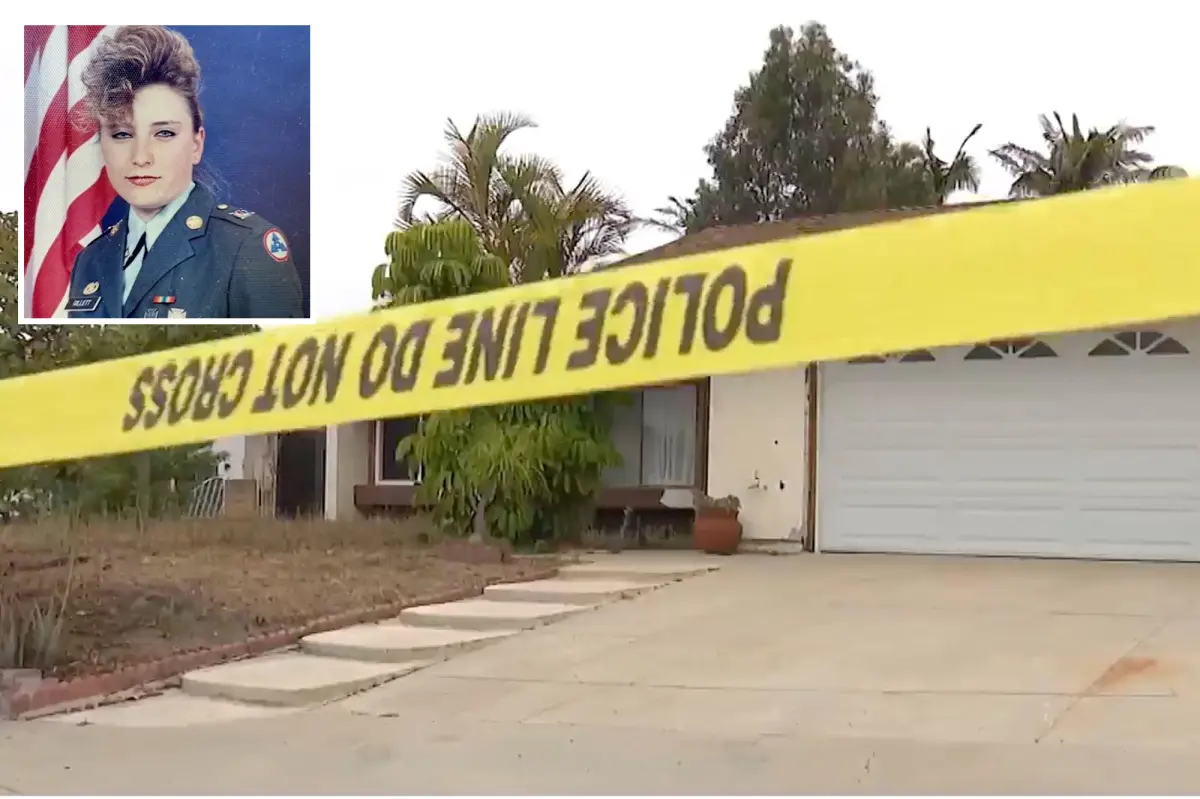
In a world that often struggles to find anchors of strength, Brenda Gillett stood as a shining example of resilience, duty, and quiet grace. A 56-year-old resident of Chula Vista, California, Brenda was a proud veteran of the United States Army, a sister, and a beloved member of her community who carried the discipline and protective nature of her military service into her civilian life. True to her character, she took on the responsibility of managing her own rental property on Via Curvada, seeking to maintain a safe, orderly, and peaceful environment for everyone who lived there. To those who knew her, Brenda was a woman defined by her warmth, her reliability, and her unwavering willingness to help others. Tragically, it was her pursuit of safety and her natural determination to manage her home responsibly that ultimately brought her face-to-face with an unthinkable act of violence, leaving her family shattered and a community in deep mourning for a woman who lived her life in service to others.
The escalating tension that led to this tragedy unfolded in the very place Brenda should have felt safest: her own home. Her tenant, Robert Watkins, had become an increasingly erratic and troubling presence, defying house rules and systematically dismantling the safety measures Brenda had put in place. The situation reached a critical breaking point in the early hours of May 31 when Brenda, deeply concerned for her safety, called the police around 2:00 a.m. to report that Watkins was deliberately covering up the property’s security cameras and hosting unauthorized guests. Despite her vulnerability and the clear signs of danger, the responding officers informed her that they could not intervene in the eviction process, leaving Brenda to navigate a highly volatile situation on her own. Just an hour later, at approximately 3:00 a.m., neighborhood Ring cameras captured a fleeting, heartbreaking final image of Brenda walking toward the back of the house. It was the last time the dedicated veteran would ever be seen alive, captured on video stepping into a fatal trap set by the person she had trusted as a tenant.
The silence that followed Brenda’s disappearance was loud enough to immediately alarm her loved ones, who knew she would never uncharacteristically slip away. By the following afternoon, paralyzed by an unbearable sense of worry, Brenda’s sister contacted the Chula Vista Police Department to report her missing, sparking an immediate welfare check at the Via Curvada residence. When officers arrived, they found Brenda’s car parked in the driveway, yet she was nowhere to be found. A deeper search of the home quickly turned into a forensic nightmare as investigators uncovered blood-soaked evidence indicating a violent struggle scattered throughout the interior and exterior of the property. When police confronted Watkins, his physical appearance immediately gave him away; his body bore fresh, defensive scratches, and forensic teams quickly noticed traces of human blood on his shoes, prompting his immediate arrest.
As the community reeled from the shocking discovery, investigators faced the grim task of parsing together the final moments of Brenda’s life during their interrogation of Watkins. Confronted with the mounting physical evidence, the tenant confessed to a crime of stomach-turning brutality, admitting that he had beaten Brenda to death with a hammer before dismembering her body to hide his tracks. In a display of chilling and calculated coldness, Watkins initially refused to reveal where he had hidden Brenda’s remains, attempting to hold her family’s closure hostage in exchange for a favorable plea deal from prosecutors. Refusing to let a killer manipulate the justice system, law enforcement worked tirelessly to trace his steps, relying on digital forensics and community surveillance footage to map out the horrifying journey Watkins took after taking Brenda’s life.
The painstaking investigation eventually led search teams to two disparate locations, painting a tragic picture of the indignity Brenda was subjected to in her final moments. Part of her remains were found stuffed inside a suitcase that Watkins had callously dumped at Paseo del Rey Park, a peaceful neighborhood park located just a short distance from the rental home where she had lived. In a heartbreaking and profoundly bitter irony for a woman who had proudly worn her country’s uniform, other parts of Brenda’s remains were discovered in the waters of San Diego Harbor near the USS Midway Museum. Security cameras from a pier near the historic, decommissioned aircraft carrier captured the dark silhouette of Watkins callously throwing heavy plastic bags into the ocean—a final, disrespectful act carried out in the shadow of a monument dedicated to the very military service Brenda had honorably dedicated her youth to.
Today, Robert Watkins remains behind bars at the San Diego County Jail, held on a charge of first-degree murder as the formal legal proceedings against him begin. While the justice system prepares to hold her killer accountable, Brenda’s family and friends are left to navigate the monumental vacuum left by her absence, choosing to remember her not for the horrific circumstances of her death, but for the light and laughter she brought to their lives. Her tragic story stands as a sobering reminder of the very real vulnerabilities faced by independent property owners and the critical importance of domestic safety. Through their grief, those who loved Brenda Gillett are determined to keep her memory alive, ensuring that her legacy of courage, patriotism, and kindness will far outshine the darkness of the tragedy that took her away.