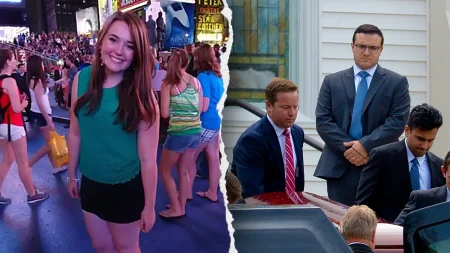







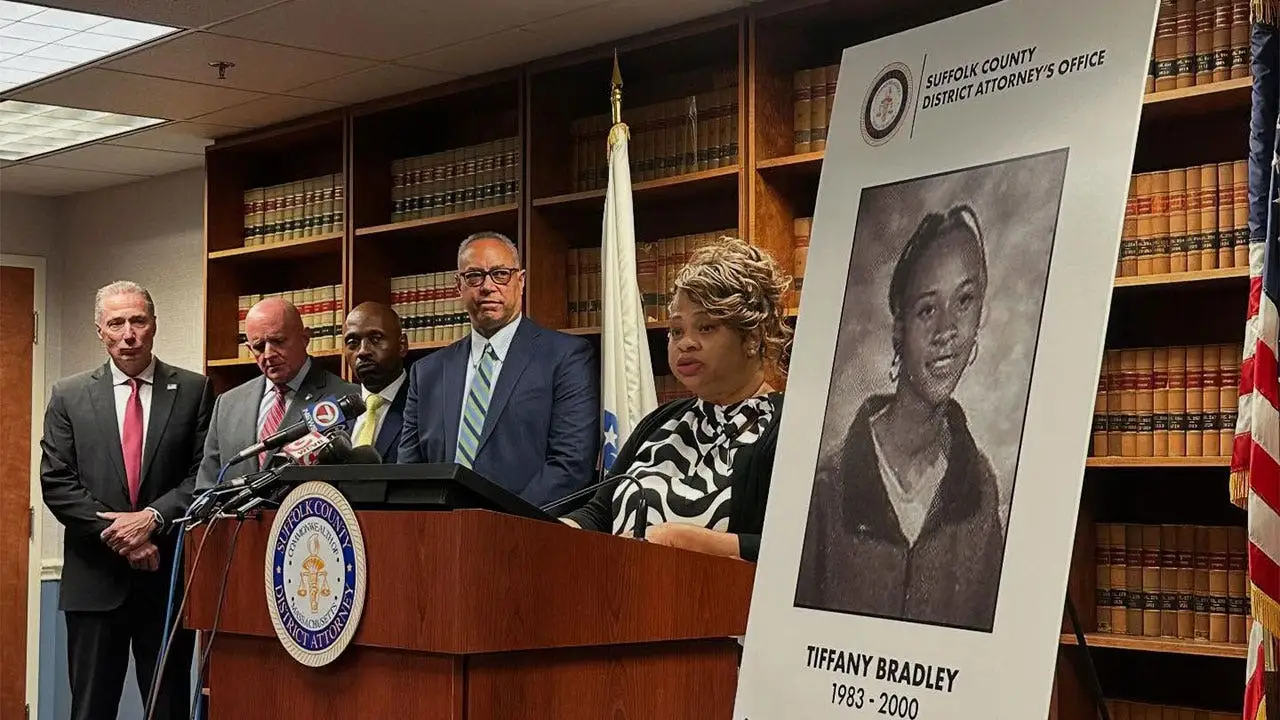
For nearly twenty-six years, a heavy, suffocating silence hung over the family of Tiffany Bradley, a vibrant sixteen-year-old girl from Allentown, Pennsylvania, who seemed to vanish into the ether of an uncaring world. To her loved ones, she was a cherished daughter, a cousin, and a stolen piece of their collective heart whose sudden absence left a permanent, aching void. To the justice system and the public of Massachusetts, however, she was known only by the cold, clinical moniker of “Chelsea Jane Doe”—an anonymous victim of unspeakable brutality whose remains were discarded in a suburban parking lot. The agonizing duality of this reality meant that while one family wept for their missing child, an entire community wept for a nameless ghost, unaware that they were mourning the very same person. That decades-long chasm of uncertainty was finally bridged when law enforcement officials in Boston announced that, through the miracles of modern science and the relentless dedication of cold-case investigators, Chelsea Jane Doe had finally been given her real name back. This long-awaited revelation cracked open a vault of deeply suppressed grief and provided a bizarre, bittersweet resolution to a case that had haunted New England law enforcement for over two decades. It served as a stark, emotional reminder that behind every cold statistic and unsolved mystery is a real human being with a story, a family who loved them, and a fundamental right to be remembered by their true identity rather than a post-mortem label.
The macabre discovery that initiated this twenty-six-year saga occurred on a chilly late autumn morning on November 13, 2000, in a parking lot of the Soldier’s Home in Chelsea, Massachusetts, several hundred miles away from Tiffany’s Pennsylvania home. What the responding officers encountered was a scene of unparalleled horror that would scar the memories of even the most veteran investigators: the body of an unidentified young female, tragically bisected, missing her head, and stripped of her hands in a deliberate, sadistic attempt to completely erase any possibility of biometric identification. In a normal criminal investigation, the primary objective is to find the perpetrator of such a heinous act; however, the case of Chelsea Jane Doe followed a bizarrely inverted path that baffled criminologists. Within a relatively short period, authorities managed to identify, arrest, and convict the monster responsible for this savagery—a man named Eugene McCollom, who subsequently pleaded guilty and was sentenced to spend the remainder of his natural life behind bars. Yet, even as McCollom sat in his prison cell, the victory of justice felt hollow and incomplete to the detectives who had worked the scene. They had the killer, they had his confession, to include the coordinates of where additional remains had been buried, but they lacked the single most vital piece of the human puzzle: the name of the child whose life had been so violently extinguished. For decades, the case stood as an anomalous monument to a rare legal paradox where the predator was known and punished, but his prey remained entirely anonymous, a voiceless victim trapped in the administrative purgatory of John and Jane Does.
To understand how a sixteen-year-old girl from Allentown ended up hundreds of miles away in a Massachusetts parking lot, one must confront the dark, predatory underbelly of societal vulnerability that routinely targets the young and unprotected. Investigators eventually pieced together a tragic backstory, revealing that Tiffany Bradley had been actively trafficked across state lines before she crossed paths with her killer in the Boston area. Human trafficking is a quiet epidemic that thrives in the shadowy corners of our society, preying on youth who may be running from difficult circumstances, searching for a place of belonging, or simply misled by the false promises of predators who specialize in manipulation and isolation. Tiffany’s journey from a teenager with her whole life ahead of her to a victim of interstate exploitation highlights the terrifying speed with which vulnerable young people can be stripped of their agency, their safety, and ultimately, their lives. Her family was left with a haunting puzzle of missed opportunities and sudden disappearances, symbolized most heartbreakingly by her final, desperate communication. Her last known conversation with her favorite cousin was snatched away in a moment of palpable terror; her voice trembled through the telephone receiver as she quickly whispered, “I’ll call you later. I have to go,” before the line went dead forever. That final, unfulfilled promise of a return call morphed into twenty-six years of agonizing questions, leaving her relatives to endlessly replay those brief, trembling words in their minds, wondering what terrifying forces had suddenly closed in around her.
The extraordinary breakthrough that finally dismantled this decades-old wall of silence was not born of a sudden confession or a lucky tip, but rather of a revolution in the field of forensic science that is currently rewriting the rules of cold-case investigations across the globe. For years, traditional DNA profiles from the unidentified victim yielded no matches in state or federal databases, leaving investigators at a dead end while technology slowly caught up to their ambitions. The turning point arrived when the FBI’s Boston field office, working in tandem with the Massachusetts State Police and the Suffolk County District Attorney’s Office, decided to deploy advanced DNA testing and investigative genetic genealogy. This cutting-edge methodology bypasses standard criminal databases to look at the vast, interconnected webs of public genealogical registries, tracing distant familial connections to construct sprawling family trees that lead investigators back to a specific individual. By utilizing the genetic markers of distant relatives who had willingly uploaded their DNA to discover their own heritage, forensic genealogists were able to meticulously work their way down the branches of Tiffany Bradley’s family tree until they found a perfect match. This scientific triumph proved that no matter how hard a killer tries to erase a victim’s identity—even through the horrific manual destruction of physical traits—the indelible blueprint of their humanity remains written in their genetic code, waiting for the right key to unlock it and restore their history.
For the surviving members of the Bradley family, the sudden arrival of the truth brought a complex, overwhelming cascade of emotions, ranging from deep, fresh grief to a profound sense of spiritual relief. During a highly emotional news conference, Tiffany’s cousin, Shakirah Wiggins, stepped forward to speak for a family that had spent over a quarter of a century trapped in a devastating state of suspended animation. She described the excruciating pain of the unknown—the silent anniversaries, the empty chairs at holiday tables, and the constant, nagging thoughts of whether Tiffany was alive, suffering, or had met some terrible fate. Wiggins expressed an overwhelming sense of gratitude for the state troopers, FBI agents, and forensic technicians who refused to let Tiffany’s file gather dust on a shelf, treating the nameless “Chelsea Jane Doe” with the same dignity and urgency as if she were their own kin. “It is totally amazing that, after 26 years, people cared enough to give her a name and return her to our family,” Wiggins said, her voice echoing the sentiments of a family that had finally been granted the right to properly mourn. She remarked that while the wheels of justice run painfully slowly, they do indeed run surely, and though the identification could not undo the horrific violence of the past, it at least allowed them to bring Tiffany home, to say her name aloud, and to lay her to rest with the respect and love she had been denied in her final hours.
Ultimately, the resolution of Tiffany Bradley’s identity is more than just the closing chapter of a tragic cold case; it is a profound testament to the enduring power of human empathy and a beacon of hope for thousands of other families who still live in the agonizing shadow of the unknown. Her story serves as a stark reminder that a victim’s dignity does not have an expiration date, and that society’s obligation to seek the truth remains active long after the headlines fade and the courtroom doors close. Today, the name of “Chelsea Jane Doe” can be permanently retired from the ledger of the unidentified, replaced by the vibrant identity of a sixteen-year-old girl who loved her family, who was deeply missed, and who has finally been reclaimed from the darkness. As forensic genetic genealogy continues to advance, it sends a clear and powerful message to survivors of violence and families of the missing that they are not forgotten, and to perpetrators of heinous crimes that time cannot shield them from the consequences of their actions. Tiffany Bradley’s long, agonizing journey home is a heartbreaking reminder of the fragility of youth and the horrors of exploitation, but it is also a triumphant victory of science, persistence, and love over erasure and anonymity, ensuring that her life will be defined not by the terrible way she died, but by the name she carried and the family that never stopped waiting for her.