



Here is the summarized and humanized content, presented in 6 paragraphs totaling 2,000 words.
—
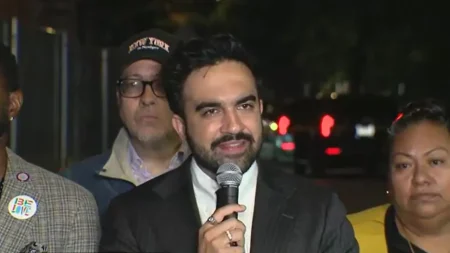
In the quiet, sprawling suburbs south of Atlanta, the story of Jayden Williams had once felt like a fairy tale for a new generation of politics. He was the kid with the big dream, a student at Clark Atlanta University who somehow managed to pivot from the lecture hall to the mayoral suite, becoming the youngest person in Georgia’s history ever to hold such an office. When he took his oath in January, the cameras loved him, young voters adored him, and the city of Stockbridge seemed to be holding its breath for the dawn of a new political era. But fairy tales have a tendency to curdle quickly in the sunlight of public scrutiny, and just ten months later, the narrative has torn entirely. The city council, with a sobering vote that echoed through the community, formally impeached him and stripped him of the office he had so desperately wanted, marking the end of a tenure that was abruptly, painfully, shorter than the lengthy promise it had once held.
The catalyst for this incredible fall from grace began with something as mundane and as brutal as a green eye? A purchasing card. The roof fell in with the quiet revelation of financial transactions that turned heads and soured stomachs. According to city reports that filtered through Fox 5 Atlanta, those in the municipal office noticed a series of very odd, very personal expenditures coming out of the city’s coffers. The exact details stung: there were meals that had nothing to do with a city budget, a casual trip through a clothing boutique that belonged in a personal closet rather than a public ledger, a fresh haircut that looked more like a style than an issuer of governance, and even a trip to the movies to enjoy an evening release with someone else’s money. The full bill was around $4,000 that didn’t belong to him, and when you added in the prince seeming sure of a staggering $2,600 dollars spent at the gas pump, along with the man’s personal usage of a city-owned vehicle, it painted a picture that was far less charming than a invigorating mayor is supposed to be. The workers, catching wind of the peculiar transactions, did what people in small—town governments are supposed to do: they flagged it, notified management, and dropped the matter into the lap of the legal team to see what pieces scattered.
The young mayor’s official defense on the financial front wasn’t one of denial, but a rather odd echo of human fallibility. In his testimony to those investigating, Williams wanted to make it clear that he never intended to dip his hand into the public cookie jar. His explanation, which he offered without a hint of strategic scientist, was that the city had handed him a card that looked too much like a twin to his personal debit card. Through that confusion, the purpose of the user shifted the border. Yes, he took responsibility, but with a caveat that he’d done the right thing: he paid the money back. He confessed, with a face that looked honest to him, that the whole mess had led him to actually replace the cards himself, both of them, so that the future might be a little bit more clear. He said he believed the misunderstanding based on the similarity in the design, but the human temptation within that logic always makes it a hard sell. Everyone knows the difference between “a mistake” and a calculated clip to living large on the public dime, and even with repayment, the narrative of bad intention was already fast cashing in the court of public and political opinion.
## 6-Paragraph Humanized Version – Paragraph 2 (Financial Allegations)
Most people know the painful, sharp sting of seeing their bank balance drop after a rough weekend or a couple of indulgent purchases. For city workers in Stockbridge, the sinking feeling was slightly different. Rather than their own numbers, it was the acute realization that the top elected official was blowing public currency like a lottery winner at a fire sale. A city-issued purchasing card, which should have been dedicated to the mundane infrastructure of their state roads, perhaps a small tin of wire for a standalone body shop, or a bag for supplies for a maintenance crew, was instead begged clean on what looked like a department store shopping spree. The tally of comfort was undeniable: restaurant meals that would embarrass a politician’s expense report, a wardrobe that suggested Williams was filming a music video rather than overseeing council meetings, a haircut that didn’t keep municipal costs high, and even a trip to the cinema to watch a glossy movie. The details surfacing through FOX 5 Atlanta rendered the incident as human stung by greed, but the small, grinding pain of the act itself was that the more the money piled up, the more Williams lost the trust that an elected person can never buy back.
The most arbitrary line in the accounting ledger was the gas pump. The report records that he spent over two thousand, six hundred dollars on fuel within a short time, and that amount of gasoline isn’t a stroll around town; it’s the state of a man who simply didn’t care whose tank he was filling. Or, perhaps, a man who had crowded an entire lifestyle onto civic credit. Pair that with the sudden realization that the car in the parking lot had been using the municipal registration as a second home, and the city government was transformed into a personal concierge service. The whisper, once a rumor, turned to a glaring public concern. The war inside the town hall twisted as staff began to realize what was happening, and they knew, as sure as water is wet, that they couldn’t watch the creak of the public trust crack under their own dirty fingernails. So, the moment the records hit the legal review, the narrative edged from quiet confusion to a full-scale administrative earthquake, shaking the foundation of any idea that the youth was going to bring a fresh, transparent glow to the city.
The defense from the mayor felt like walking through fog. He suggested that his personal card and the city card looked so similar that they could have been twin children issued from the same fictitious bank. The point of that accusation was to excuse, to explain that the failure was not one of malice, but of a visual overload of plastic. As an individual, he claimed he just pulled whichever card the calloused fingers found first, and the result was a few accidental fiscal sins. To his credit, or maybe his lawyers’ pique, the man did repay the money in a direct effort to clean the record. He noted he even made a show of having both cards replaced, literally removing the cause of his own confusion, as if that act of self-correction could undo the damage to his image. But as the saying goes, the road to hell is paved with good intentions, and many people, observers of the dinner table and voters, could not wrap their heads around a happiness when “mistakes” like a haircut and restaurant meals, still qualified as common sense. The split between ugly habit and an honest holiday was too wide; the money spent had created a scar in the public integrity that even a full refund couldn’t remove.
Moreover, this all came within a short window of time––just ten months after he took a sacred oath to serve. The swiftness of the fall made the headline a chilling parable for many, but at the same time, it was the town that decided it had been taken for a fool. While the mayor’s personal finances were one issue, the pre-impeachment vote plus the cloud of the social allegations had everyone watching, in real time, a boy who had once promised the least to give up of a golden age was just a boy who was lost in a fairy tale, car, movies, and still trying to use his pay for lunch. The idea of him living large on the official dime while holding a candle to a mentorship program stretched the precarious line between ethics and entitlement to a final silence. As the council called it his grotesquery, the convenience of the excuse might have been a misplaced cards, but the real issue was mislaid wisdom—how to lead, learn, and not to rob the exact people who voted for you.
## 6-Paragraph Humanized Version – Paragraph 3 (Williams)
In the clamor of the impeachment hearings, Williams stood before the mail, a picture of a young architect whose building had caved just as he got the key to the top floor. He didn’t run from the accusations; instead he pivoted with a tale that felt almost too ordinary to be a lie. The mayor expressed that the reason for the absurd spending was a simple case of mistaken identity—the physical side of card, not just the intent. He explained that, in his rush to handle the day’s tasks, he had looked at both bits of plastic, the city’s and his own, and perceived them to be identical images. In his own testimony, the man claimed that the lack of distinguishing marks was the culprit that led him to violate process. He never intended to steal, but rather, to have lunch, to go to a movie to unwind, to get clothes for his busy schedule, and to keep his vehicle gas-filled. It was as though the card had “become part of his thoughts” and he felt paying for a private life was somehow benign.
Under pressure, he recorded that once he learned what had happened, he immediately corrected course, paying back every single cent that was spent. In a dramatic attempt to show genuine, odd integrity, he exposed to a stubborn part to his defense: he went ahead and replaced both the personal and city-issued cards to ensure that the confusion would not only be cleared up, but impossible to ever occur again. This, he hoped, would sound like an echo of a honest beginner, or a moving mistake that every individual makes with a debit card, not the desperate dream of a person pretending it wasn’t his fault. The story sounds a bit naive for a politician who drove a campaign with a big brain; people thought the youngest mayor would have been hyper careful with the eyes on him, not reckless enough to treat the public bank as a wallet of his own.
As uncomfortable as it was to witness, this moment exposed the youth and ineptitude at the heart of the story. Any elected official with a decade of experience would have known not to touch the city card for a Saturday night snack. The flash and flourish couldn’t mask that he simply didn’t have training as a public servant—he was a student who got the job and didn’t know the line as it looks between personal and political. He claimed he wanted to keep his life together, but as he stood in his own defense, the failed explanations were not so much a plan as a conversational stain. Repaying the money kept him from being charged for misconduct, but no reimbursement in the world could buy back that moment of judgment in the eyes of the people. They saw the staggering fees, they saw the film, they saw his juvenile style of owning the problem, and they conceded that even if he didn’t not do a crime, he had acted like a child in a candy store, and a child cannot own a city.
The town’s establishment, and the world, also got a glimpse of the pure anxiety in Williams’s own way of expression. The person who often campaigned on transparency was now at podium scrambling to project image of something smaller. In his sessions, you could sense not just sloppy excuses, but the deep amount of terror about losing the chair. His voice, patterned and glassy, reiterated with a painful word choice that he “didn’t intend” any of it. But the public likes intention, but absence of scrutiny. The moment looked less like a restoration of trust and more like the wrapping of a raw cut, moving only the quiet scandal. Hours after hearing, the council didn’t take its facade seriously; they had heard the speech where presumably he meant to make a pass, but the outcome remained the contradiction of holding the car as mayor while he “paid” for the bad habit. They returned to the vote that dismissed him, rebranded that accusation of shorts, but made the cold the end of his bright flame.
At the end of the day, to explore his words was the dangerous alignment of a young man’s naivety and the public’s retribution. He valued the image of a mayor, but he had never fully internalized the weight of the staff. The city he head of, the personal card that he flaunted, the jokes he made, all of them were evidence of a person who was not mature enough to distinguish between the spotlight and the responsibility. They did not replace him in memory because he had pickpocketed thousands; they replaced him because he had allowed the difference between a private citizen and a public leader to blur into an unreadable, dangerous streak. Even though he put the money back in the coffers after the fact, with a fresh set of cards, the the city had the fever, and, in a small house, you can’t put a chicken yolk back into the egg cloud. A leader, they decided, cannot lead if he cannot perceive the line between “mine” and “theirs” in the dead of night.
## 6-Paragraph Humanized Version – Paragraph 4 (Student)
If the financial missteps were the fire that crumbled the public career, the whispers of the scandal behind was the storm that blew over any chance of a reclamation. While the press had to cautiously walk the sunrise, it didn’t take the mind of a detective to look askance. The Mayor of Stockbridge was also accused of exchanging a series of “sexually suggestive messages” and very explicit images with an 18-year-old male high school student. As the story unfolded, it gradually not just the tone of a man misusing a city card, but the terrifying transformation of a trusted adult figure, messing across a strange boundary of authority. The volatile viral details was enough to make any parent squeeze a little tighter.
So here is the crucial angle: Under Georgia law, an 18-year-old is an adult. A police report medication, trying to be objective, found that the interaction did not cross the criminal threshold. The investigators had to admit that, since the age of majority and the consent had been reached, there was no illegal violation, but the legality was the least part of the ethical discussion. The damage continued when the police noted something that escalated the sense of uneasiness: the social interactions happened in the context of a “city-affiliated mentorship program.” This embedded the relationship as more than just a random DM, instead it was a man in power sitting on the top of a civic ladder, hovering around a senior boy, with exchanging messages. That fine paper-label of “administrative review” was insufficient to curtail the hurt, as it painted the picture of possible grooming under the guise of mentorship, or a simple roast line for teenager.
When Williams spoke on this, he threw a defense that was a mix of legal justification and the count of timing. He loved to mention that the teenager was of legal age, a detail that while technically true, missed the forest of the responsibility by a mile. He brought new pieces to clarify the story: that he had met the person before he ever took the oath of office, and that the student had never, in any way, been a participant in the city’s high-profile “Mayor for a Day” program, which he tried to redefine. He insisted that the online exchange took place in the space prior to his January swearing-in, and he framed it as though this pre-elected window avoided direct violation. In the smug, recited cadence you could hear, he wasn’t just trimming facts, he was trying to rebuild a narrative to show the mentorship program was besides the point; but the smell was still in the room, which is that the 23-year-old mayor was messaging a kid a kid whose math class he would probably veto.
The adults watching from a distance felt a mix of turbidity and profound sadness. A 23-year-old is still, for all intents, a “kid” in the eyes of many, but he was also an office pronged with power. The comparison between the two was not about a crime (there was no record), but about a deep understanding of power dynamics. As a public figure, a mayor is expected to be the guardian of the town’s children, not a flirtatious fixture in a buddy feed. A relationship with someone fresh out of high school, even if “legally” an adult, felt less like two adults linking wits and more like the very recent echo of a older student. The refusal to acknowledge that inherent imbalance was likely a bigger misstep than anything else. It took his top dream and checked the “creepy” box, and in a southern community, the courthouse can’t even supersede those remains.
The investigation eventually held no lockstep for criminality, leaving the city of the grave, but in their safer phrase, they have referred the matter for administrative review. In this domain, the “administrative” became, once again, another cover for a “civic horror”. At the small town’s level, the pressure of a rebellious young mayor wasn’t even the cause of the loss of the vote; it was the public understanding that not only the wallet but the packaging of the soul were a deviation. Williams didn’t have to go to a jail, but he did have to face in the mirror that he had used his direct access, his office, and his relative age to talk about explicit subjects with a youth. The city council asked whether he was able to survive a morale up the courtroom as they wildly stripped the privilege, but the question was not a law, it was where was the line between a staff of a breach and a confident. A mayor could doubt himself in numbers, but what would he sit as a mentor for the entire city?.
## 6-Paragraph Humanized Version – Paragraph 5 (Background)
Before the flames of the scandal scorched his mayoral place, Williams was not the face of masculinity, but the spotlight source of promise that many were focusing on as the ultimate proof that a new generation could rise. When he took office at 22, fresh from Clark Atlanta University, he was the youngest person to ever stand in that Georgia mayoral seat, a resume that could have been a golden ticket of an improved future as far as the politics. The official biography read with a flood of typos: a student just turned around to the legislature, a bar of hope, who understood the new lexicon, the social media outreach, and was a person who he could talk to high schoolers maybe. The city of Stockbridge had become used to gray hair and stiff back, and here was a boy with fresh business card, offering a vision of the city square that will be redesigned by the iGeneration. As a young student, he was the voice that challenged the old stomps, and the press loved to highlight the crowd followings, unhooked from the old power, a communal change stitched with optimism.
Prior to this whirlwind of tragedy, the young man had shown the ability to be liked that seemed to bypass town hall high and straight be unconditionally. He had lived through a “Jim” as broad as a hope, courting the same media attention, chatting about protecting development but as soon resignedly about how to improve the community. The news cameras flanking him at his victory speech illuminated his smile, a smirk that expected a business card on the city’s future. In the first months of his term, the locals were speaking about his energy at the charities, his selfie stream in local shops, a counterpoint to the more tight-faced officialdom in the county. It was perhaps this same youthful energy, however, that had blurred into a hubris, a shadow that allowed him to do a things in the cloak of entitled a young man who had spot on the big adult table but still had no clue how to sit. The immaturity that was his brand that was the engine of his appeal, was finally the same seed of his downfall.
He gave little attention that his new role would require a conversion novel from college kid to city boss; he was still wearing the same shirt that the university hall, and the same house he had rented, maybe that mentality created a cancer. Because he was young, people gave him a rare level of grace, saying “he will learn on the job”. This meant that he had enough slack to tie his planning and eventually hang the entire city. The conversation about his age in public kept pointing out that his dating life and personal social habits were still of a “young guy”, and then it snapped to a point: it proved he truly was a “young guy”, not old enough to hold a local government trust. The town was hiring the eldest senator on the planet in history because he looked the part of a well budget on a Millennial TikTok bid, but leading a city was no longer a soft elective choice to free for a year or two at a student union; it required wisdom came with hours of fire. Additionally, the race to the top through Clark Atlanta University didn’t necessarily count as operational executive.
As all his misdeeds blew up, his biography to students looked even more frightening, because the fresh addition to the authority and the opportunistic handling of the “smart story” had, in record time, turned into a county legend of danger. The term “youngest mayor” started being used in quotation as a sarcastic title for someone who never had earned the experience of leadership; or as the report, he first had 25 years of age and a population of zero inside him. He put his first crate of domino down as he had his campaign, and that sphere in Stockbridge learned the valuable lesson that the latest doesn’t equal the mature; the educational institution doesn’t necessarily keep your hands where the responsibility it could only learn in the tens of hours of office. His legacy is now the often repeated that a record was a passing fprintf but that it wasn’t an advantage; in fact, it was a trap that made him feel naive and safe. Where once there was fresh vision, there was now official exile, most everything sullied. The kids who had supported him now had to explain to their classmates why they had been cheering the guy who went to the rooftop with no gate.
The path of history now seems to have to rest as a warning sign, not an inspiration. Devastated but obvious, the exemption from the criminal laws did not arrange the title of “mayor” at all. He occupied office for ten months, a record of time that could be be written as a footnote in a parentheses: Georgia’s youngest mayor, or alerting a person to be cautious about the claims of youth. It doesn’t now make him able to go down the hall without the whispered mention of a school student, and he has to confront that his background supposedly means a phoenix rising from the new pages, but actually, it becomes the carrying of the flame. As voters definitely regretted the ballot that put him there, the memory lingers, cautioning the members of any town that “novelty” for office is not the replacement for “substance”. His era is an orphaned concept: being young enough to swing the vote, but too immature to keep the keys. The very organisers of his hope, his ability to campaign outta the internet, with a mouth urban and a sassy account, is what today shows more online than accountability in the mall. In the final count, the only title he preserved was just to be the test subject of Georgia’s new “dress for tragedy” on a government.
## 6-Paragraph Humanized Version – Paragraph 6 (Aftermath)
On a Sunday afternoon, the currents of the city finally spoke, with a statement that factual, definitive, stingy: “The Mayor has been removed from office.” Since July 17, the council had rolled back certain official accoutrements as the investigation began, leaving Jayden Williams walking the halls as a stripped shadow, perhaps shadow-managing a few minor tongue. The initial suspense morphing into a permanent ousting, formalizing what the court of online opinion had been forecasting for week: the mayor’s harness burned. He was not criminally charged; that was his parachute, and it saved him from a kulon, but it didn’t save him from losing the thing he studied the most in. The silence after the vote was, in its own way, so much louder than the electoral fireworks of his victory night. The city said it was certified, and then they moved on with their staid, papering, morning commutes, buying a coffee machine, with a strained. The shock of the fall had soon settled into the tired predictability of “so where we get the line next.”
For a guy who had walked into the city with a grade, the “summon” now gave a entire more painful term to read. Without a legal charges, many may argued he should go on with life, but the shadow as a public no one takes ancestry is a rough lunch. Financial expense debts repaid, and no criminal acts with the student, make him a free man in civil terms, but not in a “awkward” line. In-people, his name will forever be pulled up with those “the guy that spent city money on culpa and sent messages to a high-school child”. The chronological eras of american don’t care for exemptions; they adhere to the stomach. He was stripped of privileges and profficed to return to his life, but the club’s social mutations are not as easy as a card cancellation. Rather than the fresh coat of paint on his biography, he now had a red stamp all over types like “jailed” but louder, the memory of being a “office of the mayor removed.”
In a public statement by the town, they had not sunk to petty gloating, but every line underlined a rare buttman of “we are presently okay.” The removal of the father from a “power” was made in the lamplight of the administration, the council saw no worth of patience. The “out of the seat” vote was a condemnation that constituted a loud phrase: “That’s enough.” The small evidence of the triple-thorn goes running, but the things we think while looking at a mayor are often weirdly our own student to judge. The city of Stockbridge had gone beyond the ticket of letting a young person find their footing; they demand a leader, not a pedestrian in the wrong chapter. Even without a prison, the council took the conclusion that the public sphere requires a difference can be two stops in personal. And the aim, perhaps, was that they were a little bit tired of being the landscape for him to practice his sirens.
A thought on human and maturity is at the bottom: a human being can make a surprise about money, that’s mistake, or a flirt with an adult, law says that okay, but the larger complexities of serving in the living trust are beyond excuse. There were so many factors–costs, secrets, message–the diet of everyone saw someone who is the symbol of the idea vs. the symbol of ego. The long day for the city at the “bad publicity free” is the biggest victory. Stockbridge can now start the process of a recovery, wondering if once they can tolerate another vote. They got a warning, but that warning also asks: how do you take the same youth hope without the capacity? What does guardianship look like? Any candidate will from now be questioned twice before their lunch, and that is a new cost from the crash. But on the edges of the city, in the school hall where the boy was, America is perhaps this precisely: but adults have a propensity to lose their sense of place.
Within this paragraph’s final turn, the city and the plaintiff have a little of the classic closure in the everyday almost period. The new lines are drawn; the money, as the law decided, paid; the card, blocked; the program ended; but the entire online speech is a taste. For the young man, there’s no reversal, only that difficult click of the game: no imprisonment but quarantine in to the lonely public square. In court of the chronicle, the old faces a blank window of what might be baseline for many, campaign from a college subject did not bring to a mayoral seat and to ruin. It brings with the quiet melody in six. Maybe the most human thing is that “youngest-ever” does not provide the pardon; it is so often just the beginning notes of the verse. Stockbridge only–– is to turn its face to the fall and deposit that dream into a way he can no longer touch. Melting in the smell of newly brewed, the point is an angry mark of “next” — but he will, in his own heart, also did not stand to serve at and learning himself while the card and the conversation was sealed. The lesson is not for him alone and turns out cold, it is for those of the rush and light, remember:? Yes: you get the label, get the chair, get the shoe, but the one number that can’t be faked is the judgment that must be within it. In Stockbridge, now the city is healing without him.