


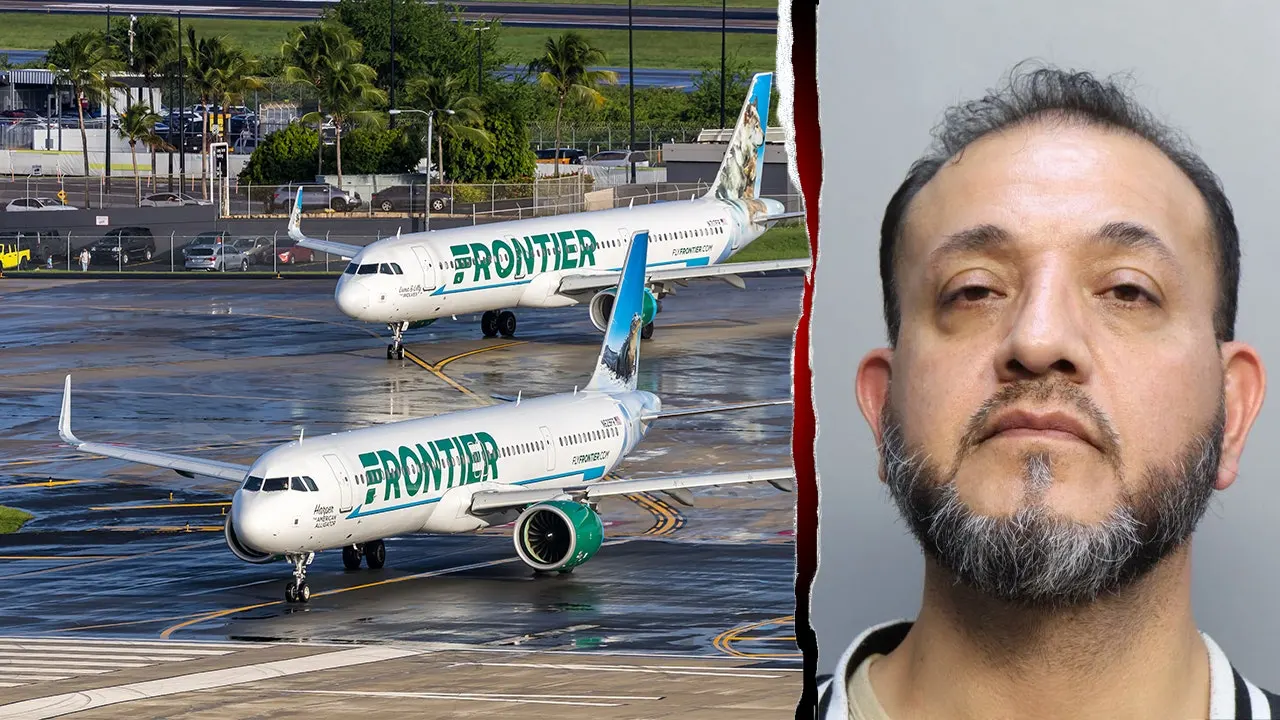
When we step onto a modern commercial airliner, we implicitly agree to a unique social contract, one that requires us to surrender our personal autonomy and trust our lives to a highly trained crew operating a pressurized cabin miles above the ground. For the passengers boarding Frontier Airlines Flight 3345 in San Juan, Puerto Rico, on Sunday, May 31, the flight back home to Chicago, Illinois, was meant to be a simple, routine transition from a tropical island atmosphere back to the familiar, bustling reality of the Midwestern United States. For the first forty-five minutes of the journey, this collective expectation of peaceful transit held true, as passengers settled into the quiet, hypnotic rhythms of air travel—adjusting their neck pillows, reading books, listening to music, or drifting off to sleep as the aircraft hummed smoothly through the silent night sky. However, this fragile peace was violently shattered when 51-year-old Chicago resident Juan Gabriel Reyes began to display increasingly erratic, volatile, and deeply concerning behaviors that instantly set off alarm bells among those sitting near him. In the confined, inescapable environment of an aluminum tube cruising at high altitude, the psychological impact of seeing a fellow traveler lose their grip on reality is profoundly unsettling. With no escape routes and no external help immediately available, the cabin of Flight 3345 transformed in a matter of minutes from a space of mundane, sleepy comfort into a claustrophobic pressure cooker of escalating tension, fear, and collective vulnerability. Indeed, the transition from a relaxed vacation mindset to a state of high alert is a stark reminder of the unique psychology of flight, where a single individual’s instability can suddenly threaten the peace of hundreds of strangers who are forced to witness a private crisis play out in a very public, unforgiving space.
The situation escalated from a minor internal disturbance into a life-threatening crisis as Reyes’ behavior veered into active, dangerous panic. According to court records later obtained by federal authorities, Reyes made desperate, physical attempts to open the aircraft’s two main overwing exit doors while the plane was midair. To those watching in sheer disbelief, the primal terror of a passenger trying to breach an exit door at cruising altitude is almost impossible to overstate, evoking nightmarish visions of explosive decompression, freezing winds, and catastrophic structural failure. Even though modern commercial aircraft doors are structurally designed to shut tightly under the immense pressure of flight, making them virtually impossible to open at high cruising altitudes, the psychological horror of witnessing someone attempt to pull those levers in mid-flight remains entirely real and deeply traumatizing to those on board. Reyes was overheard shouting desperately that he wanted to get off the plane, a claustrophobic panic that unfortunately manifested as extreme physical aggression. When his terrifying attempts to open the emergency doors and breach the heavily reinforced flight deck door were blocked by the physical reality of the plane’s design and the crew’s vigilance, Reyes’ volatile energy turned outward to violence. He abandoned his assigned seat and aggressively targeted a 33-year-old off-duty flight attendant who happened to be seated quietly nearby, minding his own business as an ordinary passenger on the flight. In a shocking, unprovoked show of physical hostility, Reyes lunged at the off-duty crew member, grabbing him by the head and choking him, instantly turning a psychological emergency into a brutal physical assault that threatened the lines of communication and safety on board.
This savage assault on a defenseless person served as a breaking point, forcing those in the immediate cabin to transition catastrophically from passive, terrified onlookers into active defenders of their own collective safety. Recognizing that the aircrew was under direct, violent attack, both a working flight attendant and several brave passengers rushed forward to intervene. They initially attempted to subdue the thrashing attacker using standard airline-issued safety tools, binding him with heavy-duty plastic flex cuffs and utilizing seatbelt extenders to lash him to an airplane seat. However, Reyes seemed to possess an almost superhuman reservoir of adrenaline-fueled strength; he violently thrashed against his bonds and managed to break entirely free from the restraints multiple times, standing up to confront the cabin once more. The cabin descended into a scene of utter chaos, filled with shouting, crying, and the frantic sounds of a physical struggle playing out in the narrow aisles of the aircraft. This environment is already notoriously tight on budget carriers like Frontier, which only served to amplify the danger as flailing limbs and physical impacts spilled over into adjacent rows. The realization that their improvised restraints were failing to hold a manic, highly combative individual spread a wave of panic throughout the cabin, stripping away any remaining illusion of safety and leaving everyone on board acutely aware that they were entirely on their own to manage a rogue threat. In these high-stakes moments, the thin veneer of civilized air travel is stripped away, revealing a raw, cooperative human instinct to protect one’s neighbors from an unpredictable threat.
It was at this critical juncture, with the situation hovering on the edge of disaster, that a passenger possessing a highly specialized set of skills stepped up to restore order. Josh Longood, an experienced Brazilian jiu-jitsu martial artist, recognized that traditional panic would only exacerbate Reyes’ aggression, and that structured, controlled physical dominance was the only way to ensure the safety of the cabin. Drawing upon years of rigorous physical training designed to neutralize opponents without causing lethal harm, Longood moved into the fray, took hold of the combative Reyes, and systematically neutralized him. Longood managed to guide Reyes back into a row of seats, laying him down and framing his own body weight against the larger man to pin him firmly in place. By keeping his composure and systematically controlling Reyes’ hands and feet, Longood was able to prevent further violence, acting as a human anchor in the midst of the storm. Longood later downplayed his heroic actions with a deeply humanizing and remarkably grounded perspective, comparing the high-altitude struggle to “holding a kid down throwing a tantrum.” This humbling comparison helped to demystify the frightening situation, transforming a terrifying mid-air assailant back into a deeply troubled and disoriented human being who simply needed to be safely contained until real authority could take over. His ability to apply precise martial arts techniques in a tight airplane aisle demonstrated the value of professional composure over chaotic aggression, ultimately giving the rest of the passengers and the flight crew a much-needed moment of relief and security.
With Reyes finally quieted and safely pinned under Longood’s watchful guard, the flight deck crew executed an immediate emergency diversion, steering the plane toward the nearest major hub to get the volatile situation resolved on solid ground. Frontier Airlines Flight 3345 eventually touched down safely at Miami International Airport around 11:55 p.m. local time on Sunday, its cabin greeted by the flashing lights of emergency vehicles and waiting law enforcement officers. Reyes was immediately escorted off the plane in handcuffs by police and booked into the Miami-Dade Correctional Center on state assault charges. However, the legal consequences of his actions quickly escalated to a much more severe level as federal prosecutors stepped in on Wednesday, officially charging Reyes with interference with flight crew members and attendants, alongside assault within maritime and territorial jurisdiction. Under strict federal aviation laws designed to protect public air transit, a conviction on the flight crew interference charge carries a devastating maximum sentence of up to 20 years in federal prison, while the assault charge carries up to an additional year behind bars. This aggressive prosecutorial response serves as a sobering reminder of the absolute gravity of disrupting a flight, indicating that the modern legal system will show little leniency to those who compromise safety in the sky. For Reyes, a fleeting mental break or outburst during a standard flight has now translated into a high-stakes federal legal battle that could define the rest of his life, turning a routine journey to Chicago into a permanent turning point of legal jeopardy.
This harrowing mid-air ordeal is not just an isolated incident of high-altitude drama; it is a vivid and troubling reflection of the broader phenomenon of “air rage” that has increasingly plagued the commercial aviation industry in the post-pandemic era. Flight crews, who are trained primarily to offer hospitality and ensure basic safety procedures, are finding themselves on the front lines of deep societal distress, grappling with mental health crises, substance abuse, and intense interpersonal friction. Humanizing this story requires us to look past the sensational headlines and recognize the deep emotional toll such events take on the airline staff who are just trying to do their jobs, and the regular travelers who find their hard-earned peace shattered by unexpected violence. The swift, courageous intervention of passengers like Josh Longood and the resilience of the injured off-duty flight attendant remind us of a powerful truth: even in our most vulnerable and isolated moments, a collective human instinct for mutual protection and empathy can rise to overcome chaos. As we continue to navigate the stresses of a highly connected yet deeply anxious world, the standard of bravery displayed on Frontier Flight 3345 stands as a testament to the fact that looking out for one another is our ultimate safety net, both on the ground and in the skies. By highlighting the mutual reliance between passengers and crew, the mid-air resolution of this crisis serves as an inspiring example of communal resilience, showcasing how empathy, discipline, and quick thinking can turn a terrifying emergency into a story of survival and shared humanity.