






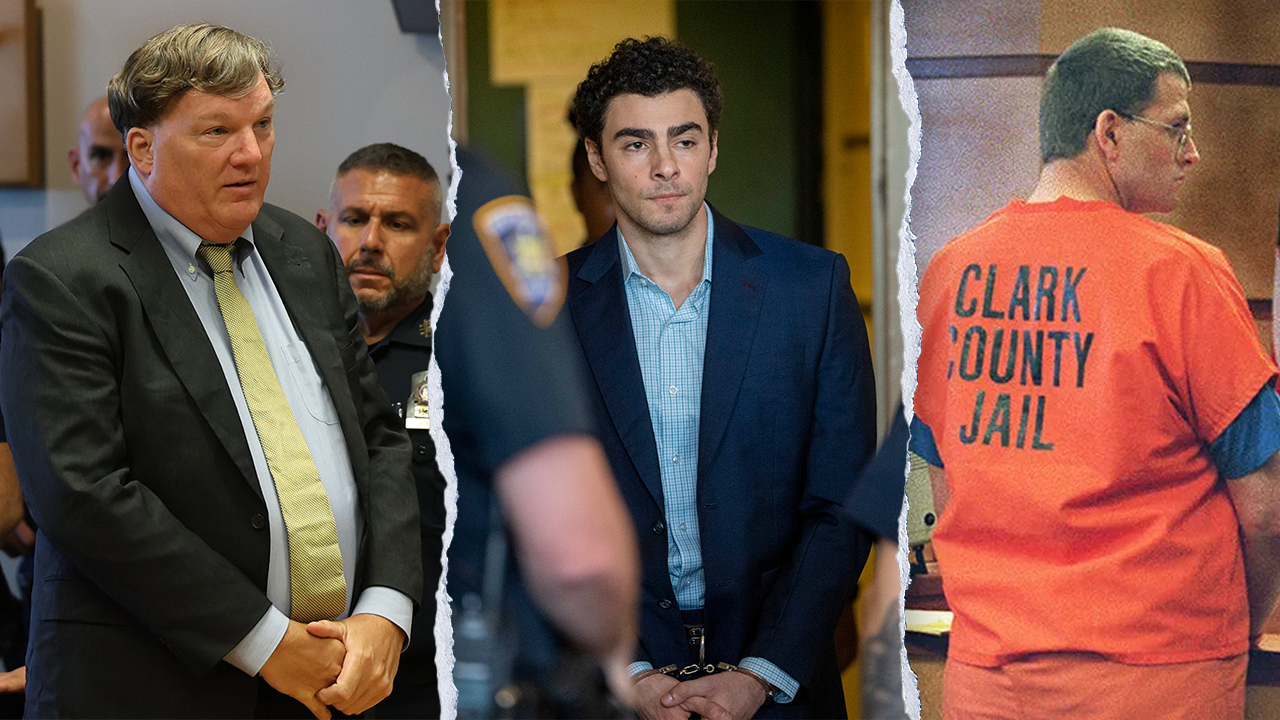
For the tranquil South Shore communities of Long Island, the final closing of the book on Rex Heuermann’s reign of terror brought a collective, heavily burdened sigh of relief, ending a dark era that had haunted the region for more than a decade. The sixty-two-year-old former New York City architect, once a seemingly mundane suburban family man, was swiftly and unceremoniously transferred to an upstate maximum-security facility just hours after receiving the absolute maximum punishment permitted under New York state law. Heuermann was handed three consecutive terms of life imprisonment without the possibility of parole, followed by four additional sentences of twenty-five years to life, a legal guarantee that he will draw his last breath behind bars. This definitive judgment came after Suffolk County District Attorney Ray Tierney laid bare the chilling, systematic nature of Heuermann’s crimes, describing a terrifying biological reality in which the architect had constructed a meticulous, soundproofed dungeon in his Massapequa Park basement—a real-life, “Dexter”-style kill room where he brutally ended the lives of seven of his eight known victims. For Heuermann’s ex-wife, Asa Ellerup, who spent years sharing a home with a monster while remaining entirely oblivious to his double life, the sentence provided a grim form of closure. Through her attorney, Bob Macedonio, Ellerup expressed a quiet, resolute satisfaction with the court’s decision, stating simply that the severe punishment was entirely appropriate for the unspeakable horror he inflicted, and that he had ultimately received exactly what he deserved. The rapid physical removal of Heuermann from Long Island symbolized the community’s desperate urge to purge itself of his presence, transferring him far away from the coastal landscapes he had poisoned with his secret cruelty and leaving those left behind to begin the painfully slow process of healing.
In a different corner of the American legal thriller, another highly complex human drama unfolded with the sudden defense pivot of Luigi Mangione, the former Ivy League scholar accused of the brazen, high-profile assassination of UnitedHealthcare CEO Brian Thompson. This past week, Mangione’s defense team briefly floated the possibility of deploying a psychiatric defense, only to execute a sharp, strategic backtrack just twenty-four hours later as the immense legal risks of such a move became terrifyingly clear. Under New York’s stringent legal framework, for Mangione to successfully utilize an “extreme emotional disturbance” defense, he would have had to make a monumental concession: admitting outright that he was indeed the individual who fired those fatal shots into Thompson’s back outside a midtown Manhattan hotel. While such a defense, if accepted by a sympathetic jury, had the potential to drastically reduce his state-level sentencing from a conviction of first-degree murder down to manslaughter, it carried a catastrophic catch-22. Any psychiatric admission or formal confession of the physical act in a New York state court would have immediately stripped him of any leverage and virtually guaranteed his conviction in his upcoming federal trial, which is currently scheduled for next year. This legal high-wire act exposes the profound psychological isolation of a brilliant young man who transitioned from a privileged academic path to a desperate, weaponized rebellion. It forces the public to confront not only the cold mechanics of a high-stakes criminal defense but also the deeply tragic, systemic anxieties that drive a young person of such promise to completely throw his life away in the pursuit of a violent, misguided sense of modern justice.
Meanwhile, the southern gothic saga of the Murdaugh family continues to spin off new legal battles, illustrating how systemic corruption and personal greed can warp the pursuit of justice into an absurd and endless cycle of litigation. Rebecca Hill, the former Colleton County court clerk whose self-serving misconduct and jury tampering ultimately derailed the initial conviction of disgraced attorney Alex Murdaugh, is now fighting a desperate battle of her own in federal court. Hill’s legal representatives filed a strong motion requesting a federal judge to summarily throw out a staggering six-hundred-thousand-dollar lawsuit brought against her by Murdaugh, who is seeking to claw back the massive sums of money he spent defending himself during his sensationalized 2023 murder trial. Her attorneys argue with biting pragmatism that a convicted double-murderer has absolutely no legal or moral right to recover the astronomical funds spent on his defense, regardless of the administrative integrity breaches that occurred during the trial. This ongoing legal dispute highlights the absolute tragedy of a judicial system compromised by personal vanity, where a public official chose to prioritize book deals and media stardom over her sacred duty to ensure an impartial trial. The real tragedy, however, continues to be obscured by the constant stream of sensational lawsuits: the senseless, violent loss of Maggie and Paul Murdaugh, whose memory is repeatedly desecrated and reduced to mere leverage as these legal opportunists fight over the financial wreckage of a collapsed dynasty.
The hard, inescapable reality of long-term prison life serves as a brutal leveling ground for those who once believed themselves to be untouchable masters of life and death, as demonstrated by the harsh warnings of one notorious serial killer to another. Keith Jesperson, widely known as the “Happy Face” killer, offered a blunt, unsolicited dose of prison survival advice to the newly arrived Heuermann, mocking the architectural killer’s towering, “ogre”-like physical stature. Jesperson warned the massive Heuermann that his sheer physical bulk would not protect him inside the lawless, concrete ecosystem of a maximum-security prison, noting with cold experience that vulnerable, smaller inmates frequently spend their entire days working out and lifting weights for the sole purpose of violently taking down larger, intimidating newcomers. This warning of inevitable physical violence is contrasted with the quiet, mundane existence of twenty-one-year-old Mackenzie Shrilla, the “Hell on Wheels” killer who purposefully accelerated her Toyota Camry into a brick wall to kill her boyfriend and their friend. Shrilla, who is currently serving a concurrent sentence of fifteen years to life for her reckless and malicious actions, has recently adjusted to the bleak rhythms of institutional daily life by securing a job preparing and serving meals in the prison cafeteria. There is a deeply unsettling irony in seeing these individuals, who once exercised absolute, god-like control over the lives and deaths of others, reduced to the humiliating struggle of navigating the unspoken hierarchies of the yard or quietly handing out metal trays of institutional food to fellow convicts under the watchful eyes of armed guards.
While those behind bars face the slow, predictable grind of incarceration, a heart-wrenching digital mystery continues to torment the family of “Today” show co-host Savannah Guthrie, whose seventy-six-year-old mother, Nancy Guthrie, has been completely missing for more than one hundred and thirty-five agonizing days. Nancy vanished from her Tucson, Arizona home under highly suspicious circumstances, leaving behind zero physical clues but sparking a terrifying investigation into the rising, dark world of modern cyber-extortion. Sophisticated cybersecurity and forensic experts increasingly believe that Nancy may have fallen victim to a highly coordinated, terrifying phenomenon known in digital crime circles as a “wrench attack.” In these high-tech, physically violent schemes, online hackers coordinate directly with local, boots-on-the-ground criminals to physically abduct or terrorize vulnerable individuals, using them as human leverage to extort massive sums of untraceable bitcoin from their wealthy, high-profile relatives. This highly organized, deeply predatory trend represents a terrifying evolution in modern crime, shifting the crosshairs of cyber-extortion away from tech-savvy corporate earners and directly onto their most defenseless, elderly loved ones who lack the means to defend themselves. For Savannah Guthrie and her family, the endless silence of the Arizona desert is a source of profound, daily psychological torture, highlighting the terrifying reality that in our hyper-connected digital age, a family’s public success and financial security can instantly make their beloved elders targets of physical violence.
Finally, the relentless legal machinery marches forward in a series of highly charged battles across the nation, demonstrating that the pursuit of truth often extends far beyond the conclusion of a singular criminal trial. Next week, Boston resident Karen Read will return to a Massachusetts courtroom for three separate, critical hearings connected directly to the civil wrongful death lawsuit brought by the grieving family of her deceased ex-boyfriend, John O’Keefe. Though Read was acquitted of all criminal homicide-related charges stemming from O’Keefe’s freezing, tragic death during a historic 2022 blizzard, the civil system offers no such easy resolution, forcing her to repeatedly relive the trauma of that night in front of a relentless legal onslaught and public scrutiny. Concurrently, in other American courtrooms, judges are grappling with the complex boundaries of justice and prosecutorial ethics; Judge Tony Graf is expected to deliver a highly anticipated ruling on defense motions to punish prosecutors for making prejudicial, extrajudicial remarks in the case of Tyler Robinson, who stands accused of attempting to assassinate conservative turning point influencer Charlie Kirk. Meanwhile, the haunting, beautiful mountains of Colorado will once again serve as the backdrop for legal conflict as Barry Morphew returns to court, continuing his exhausting fight against the legal system in connection with the tragic disappearance and untimely death of his wife, Suzanne. These ongoing, agonizing proceedings serve as a poignant reminder that for the families of the victims, the legal system represents a long, draining gauntlet where closure is a rare luxury, and the painful search for answers is measured in years of procedural battles, endless paperwork, and the quiet, enduring weight of grief.