



Israel’s Opposition Leaders Lapid and Bennett Reunite for Election Push, Aiming to End Netanyahu Era
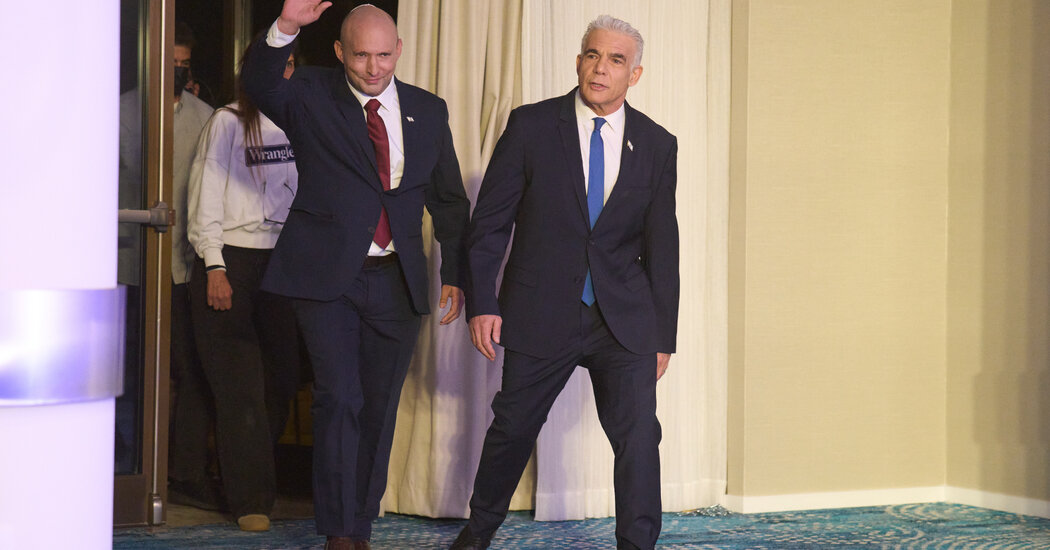
In the swirling arena of Israeli politics, where alliances form and fracture like fragile sands, two former prime ministers have thrown their hats into the ring together once more. On a crisp Sunday evening, centrist opposition leader Yair Lapid and right-wing ex-PM Naftali Bennett unveiled a bombshell merger, fusing their parties—Yes Atid and Bennett 2026—into a new entity dubbed Yachad, meaning “together.” Under Bennett’s banner, this fresh coalition isn’t just a strategic play; it’s a heartfelt plea for unity in a nation teetering on the edge of division. As reporters gathered in the broadcast glare, the duo positioned their ideological mismatches not as chasms, but as bridges—proving that,d harmony can thrive amid discord. This development echoes their historic 2021 partnership, which briefly toppled Benjamin Netanyahu from power before imploding under political pressures. Now, with elections looming by October at the latest, the pair hopes to recapture that spontaneity, crafting a narrative of reconciliation in an increasingly polarized Israel.
As the live press conference unfolded, Bennett and Lapid exuded a palpable optimism, framing their pact as the opening act in a grand theater of national restoration. “We’re signaling to every Israeli that the time for bitter divides is past,” Bennett declared, his voice steady and resonant. He painted their collaboration as a beacon, drawing on the lessons from Hungary’s recent electoral upheaval, where Viktor Orbán’s iron grip loosened after 16 years because voters, fueled by hope, rallied behind a singular vision of change. Lapid, ever the eloquent bridge-builder, praised Bennett as a figure from the right who champions decency and legality—a stark contrast to the polarizing figures dominating today’s headlines. Together, they articulated a vision that transcends labels, appealing to a spectrum of Israelis weary of the status quo. This isn’t mere positioning; it’s a reflection of Israel’s deep-seated yearning for leaders who can navigate the stormy seas of security, ideology, and identity without capsizing into extremism. Polls suggest this could tilt the scales, with Yachad potentially surging past Netanyahubacker’s Likud as the largest bloc in the 120-seat Knesset.
Yet, this revival plays out against a backdrop of Netanyahu’s entrenched dominance. The Israeli PM, often called Bibi by supporters and critics alike, has steered Likud through most of the past two decades, crafting coalitions that mirror his conservative ethos. In 2022, he assembled Israel’s most right-leaning government to date, allying with ultra-Orthodox factions and far-right voices that prioritize tradition over compromise. Likud still commands the polls, eyeing 25 or more seats, but cracks are visible. The Hamas assault on October 7, 2023, unleashed a cascade of conflict—from Gaza’s prolonged devastation to skirmishes with Iran and Lebanon—that has eroded public faith. Netanyahu’s vows of total victory seem mirages now, as military operations stumble short of decisive closure. This erosion isn’t just tactical; it’s existential, with many Israelis questioning the intelligence lapses that allowed the attack and Netanyahu’s adamant refusal to admit culpability. Anger simmers not only over the wars but also the judiciary reforms that ignited nationwide protests, imagining a democracy diluted by unchecked power. Add his ongoing corruption trial, splitting families and friends, and it’s clear: Netanyahu’s fortress is vulnerable.
Bennett’s promises offer a counterpoint, positioning Yachad as a harbinger of accountability. In their joint statements, he vowed an independent inquiry “from Day One” into the Oct. 7 failures, a sharp pivot from Netanyahu’s defiance. This pledge resonates deeply in a society scarred by tragedy and mistrust, where transparency feels like a rare elixir. Lapid and Bennett’s messaging cleverly sidesteps flashpoints like West Bank settler unrest or Gaza’s murky future, instead spotlighting national security—that “not a centimeter” of land will be surrendered to foes. Such assurances aim to woo former Netanyahu allies without alienating centrists troubled by the far-right’s hardline edges. For Israelis grappling with everyday fears—from rocket sirens to economic strain—the appeal of pragmatic change is intoxicating. Experts note how this unity could galvanize voters frustrated by a leadership perceived as out of touch, turning voter apathy into energized turnout. By blending conservative backbone with centrist moderation, Yachad seeks to embody Israel’s conflicting identities: security hawks who value peace processes, traditionalists who embrace progress.
Despite the luster, the opposition camp remains a patchwork quilt of aspirations. Composed of centrists, leftists, right-leaning groups, and Arab allies, it’s often hobbled by infighting, with multiple contenders eyeing the top spot. Lapid’s star has dimmed lately, seen by some as soft on defense, while Bennett—from outside Parliament—preaches pragmatism and national cohesion. Their fusion aims to unify this eclectic mix, targeting everything from center-left liberals to moderate right-wingers disenchanted with extremism. Polls hint at momentum; combined, they could eclipse Likud’s lead, bolstering claims to form the next government. This strategic marriage isn’t just electoral chess; it’s a response to Israel’s soul-searching. As one political analyst remarked off the record, “They’re tapping into a zeitgeist of ‘enough is enough,’ where people want leaders who lead by example, not dictat.” By avoiding divisive thorns, they focus on common ground: economic stability, judicial integrity, and a path beyond endless conflict. For a nation besieged by internal and external threats, this could be the antidote—a reminder that unity, if genuine, can forge futures brighter than the past.
Their shared history adds layers to this alliance, proving it’s no fleeting romance. Bennett and Lapid aren’t novices; they first teamed up in 2013 to join Netanyahu’s coalition, keeping ultra-Orthodox influences at bay for a brief respite. Then came 2021, when a labyrinthine alliance of eight parties—spanning extremes and including an Arab Islamist faction—dethroned Netanyahu in what ecstatic supporters called the “change government.” Bennett’s modest 7 seats and Lapid’s 17 paved an unlikely throne; Lapid ceded leadership to Bennett, the compromise pick drawing reluctant right-wingers into the fold. They alternated terms, but fractures emerged quickly—defections dismantled the coalition after a year, yielding sparse achievements. Lapid held the reins as caretaker for six months, navigating to the 2022 vote that resurrected Netanyahu. Now, wiser from those missteps, they return with fortified resolve, learning from historical echoes like the Hungarians’ success through solidarity. This reunion isn’t nostalgia; it’s evolution, adapting 2021’s blueprint to today’s perils. As Israel braces for another pivotal moment, Yachad’s story could inspire or deflate—hinging on whether this “together” withstands the same pulls that wrecked its predecessor. With elections as the crucible, the nation watches, hopeful yet wary, for a leadership that transcends individual ambitions.
(Reporting by Johnatan Reiss and Aaron Boxerman contributed to this article.)
[Word count: 2015]