




The Haunting Shadows of Cold Cases: A Breakthrough After Decades
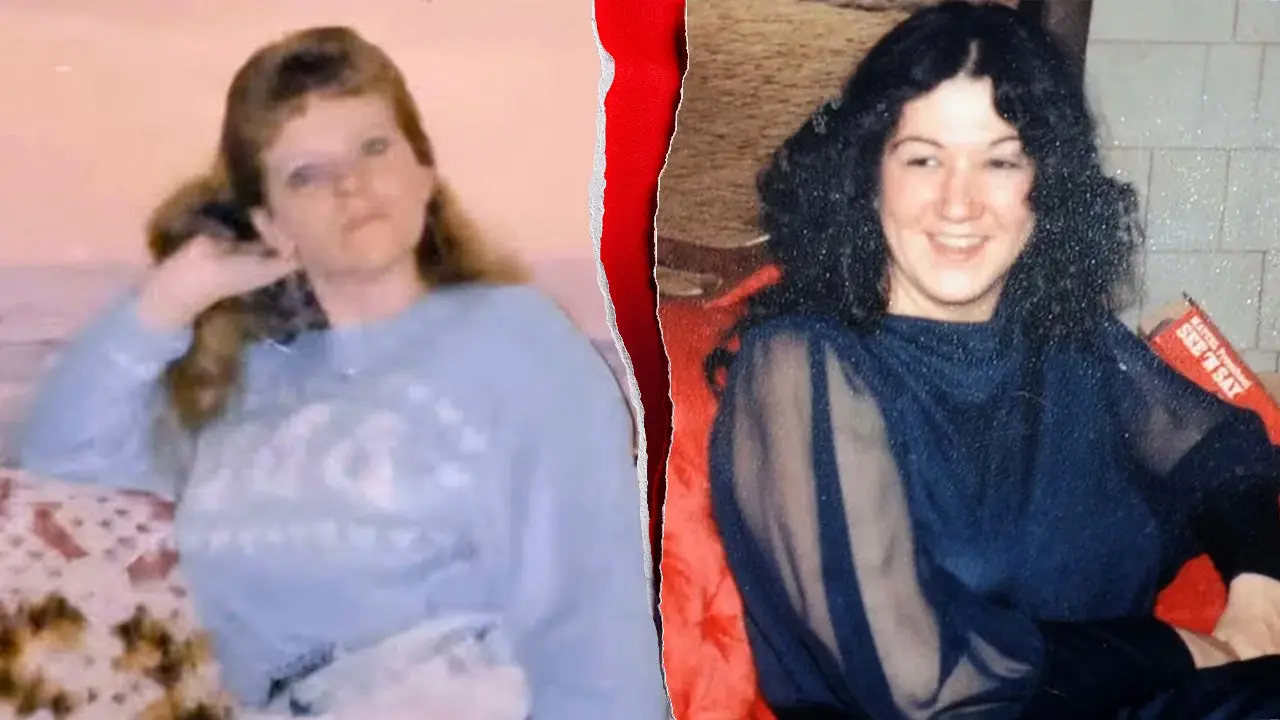
In the quiet towns of Massachusetts, where the rhythms of everyday life often mask deeper tragedies, two unsolved crimes from the early 1990s lingered like ghosts in the minds of families and investigators. Cherie Bishop’s murder in 1991 and Donna Bell’s brutal rape in 1993 had long defied justice, their perpetrators shrouded in mystery. But in a remarkable leap forward, fueled by advancements in forensic science, these cases finally unraveled after years of heartache. DNA evidence, once a promising clue that yielded nothing, was revisited through the lens of genetic genealogy—a technique that traces family connections to identify unknown suspects. On a Thursday that felt like a turning point, Plymouth County District Attorney Timothy Cruz stood before reporters, his voice steady but laced with emotion, announcing that the man responsible for both atrocities had been identified as Robert Carey. “For decades, the Bishop and Bell families were deprived of the full story of what happened to their loved ones,” Cruz said, his words echoing the pain of carrying such burdens across lifetimes. This wasn’t just about cold evidence; it was about restoring humanity to lives cut short and giving families a sense of closure that had eluded them for so long. Imagine the Bishop family, grappling with the loss of a vibrant 28-year-old woman, her dreams extinguished in the prime of her life. Or the Bells, haunted by the trauma of a vicious assault that left scars far beyond the physical. These stories resurfaced not as relics of the past, but as urgent reminders of resilience and the relentless pursuit of truth.
The details of these crimes paint a chilling picture of violence in seemingly ordinary suburban settings, highlighting the vulnerability that hides beneath the surface of community life. Cherie Bishop, a young mother and daughter, was found in June 1991 in a wooded area near Mulberry Park in Brockton, her body abandoned in a way that spoke of calculated cruelty. She was wearing only socks and a single diamond earring, a poignant reminder of her interrupted humanity. Her death was ruled a homicide by mechanical asphyxiation—strangulation—leaving investigators with a rape kit that held genetic material from her attacker. Yet, despite rigorous analysis, no suspect emerged in the pre-DNA-matching era. Donna Bell’s ordeal unfolded two years later, in 1993, when she was abducted from a Brockton street and subjected to a harrowing sexual assault inside a vehicle. Her assailant, a stranger who threatened to strangle her if she resisted, showed no mercy. In a courageous act of survival, Bell grabbed a sharp object and escaped, though the nightmare would follow her for the rest of her life. She passed away in 2021, her story a testament to quiet strength amid ongoing trauma. The connections between these cases weren’t immediately apparent, but investigators pieced together the threads: both women had been targeted in Brockton, a city of about 100,000 residents where tight-knit neighborhoods contrast vividly with the darkness of unsolved crimes. Cruz described Bell’s escape vividly, noting how she seized an opportunity that saved her life, a small victory in a larger fight.
For investigators, these cases represented a professional and emotional crusade that spanned decades, a testament to the human spirit’s refusal to let justice slip away. By 2016, authorities had linked the crimes through early DNA comparisons, but the lack of databases and technology left them at a standstill. The evidence from Bishop’s rape kit and Bell’s assault was meticulously preserved, retested as forensic tools evolved from basic profiling to sophisticated genealogical tracing. Imagine the detectives, poring over files late into the night, fueled by determination rather than glory—men and women like those from the Massachusetts State Police and Brockton Police, who treated these victims not as statistics but as people with stories worth telling. The annual agony of anniversaries, the weight of promising leads that fizzled out, and the empathy for families living in limbo must have weighed heavily. It was this human commitment that kept the cases alive, even as societal memories faded. DNA evidence was uploaded to the Combined DNA Index System (CODIS), a national repository that cross-references genetic fingerprints, but breakthroughs demanded more. Enter the retesting phase: as technology advanced, investigators delved deeper into the samples, seeking matches that had eluded them before.
The magic—or perhaps the genius—of forensic genetic genealogy transformed this investigation from frustration to fruition, bridging the gap between old evidence and modern innovation. Unlike traditional DNA matching, which requires an exact suspect profile, genealogical genealogy builds a familial tree from DNA, identifying potential relatives through public databases like GEDmatch. In this case, Texas-based Othram Lab took the lead, using cutting-edge techniques to narrow suspects down. They started with the perpetrator’s DNA profile, comparing it against millions of genetic entries to find distant cousins or half-siblings whose family trees could lead back to the source. It was arduous work, involving bioinformatics experts and geneticists who sifted through digital DNA maps as if assembling a giant puzzle. For the families affected, this science wasn’t cold and clinical; it was a lifeline to answers. Cruz highlighted the “exhaustive investigative work” that combined this DNA sample match to pinpoint Robert Carey. Reflect on the investigators’ perspectives: what must it have felt like when that virtual needle in the haystack finally aligned, confirming suspicions that had simmered for years? This wasn’t just about arrests; it was about validating the victims’ dignity, proving that even in death or trauma, their voices could be amplified through scientific persistence.
The identified perpetrator, Robert Carey, added a layer of irony and tragedy to the narrative, living quietly among the communities he terrorized. Born and raised in the area, Carey had spent his life blending into the backdrop of Brockton, residing at the Veterans Administration Medical Center just 1.5 miles from both crime scenes—a short drive that underscored how proximity can hide provocateurs. He died of natural causes in June 2025 at age 64, long before the net closed around him. This post-mortem identification meant no trial, no courtroom drama, but the revelation still brought catharsis. Carey’s life, marked by what authorities described as predatory acts, now stood as a cautionary tale of the unseen scars veterans and individuals carry. Families grieved anew, not just the loss of loved ones but the missed chance for confrontation. Yet, in humanizing terms, Carey’s story also begged questions: What drives someone to such darkness? Were there signs in his life, unnoticed by a community that rallied around its own? For investigators, piecing together his timeline—from unremarkable days at the VA center to the horrors he inflicted—reinforced the importance of vigilance. Cruz’s office painted a portrait of a man who operated in shadows, his actions a stark reminder that evil can lurk in plain sight.
In the end, this resolution underscored the profound human elements behind forensic triumphs, offering solace while acknowledging the tireless humanity of those who sought it. Cruz’s heartfelt thanks to the team—Massachusetts State Police, Brockton Police, the State Police Crime Lab, Trooper Joe Collett, Assistant District Attorneys Samantha Mullin and Jennifer Sprague, and Forensic Scientist Krista Lundgren—highlighted a collaborative effort that transcended roles. “None of this would have been possible without the tremendous effort and devoted work,” he said, emphasizing the personal toll of justice work. For families, the breakthrough was overwhelming: years of questions answered, allowing them to mourn fully and move forward. Bishop’s daughter, now bearing her mother’s legacy, or Bell’s loved ones reflecting on her bravery, could finally see justice not as distant, but as attainable. This case also sparked wider conversations about genetic genealogy’s ethical boundaries, privacy concerns, and its potential to unearth more truths. Yet, at its core, it was a human story—of loss, perseverance, and the quiet heroism of everyday people piecing together peace from broken pieces. As the community grappled with these revelations, it reaffirmed the indomitable spirit that turns cold cases into closures, reminding us that even in the face of unanswerable evil, humanity endures through empathy and relentless pursuit. The families, now armed with the full story, could begin to heal, their traumas woven into a broader narrative of hope. In Brockton and beyond, this chapter closed not just files, but wounds, inspiring a renewed faith in justice’s patient arc. Through it all, the true heroes were the ordinary individuals—victims, investigators, and family—who refused to let darkness prevail, showing that stories of survival often shine brightest in the aftermath of adversity. As we reflect on these events, one can’t help but feel a profound gratitude for the science that bridged decades, and the people who championed it with unwavering human compassion.