


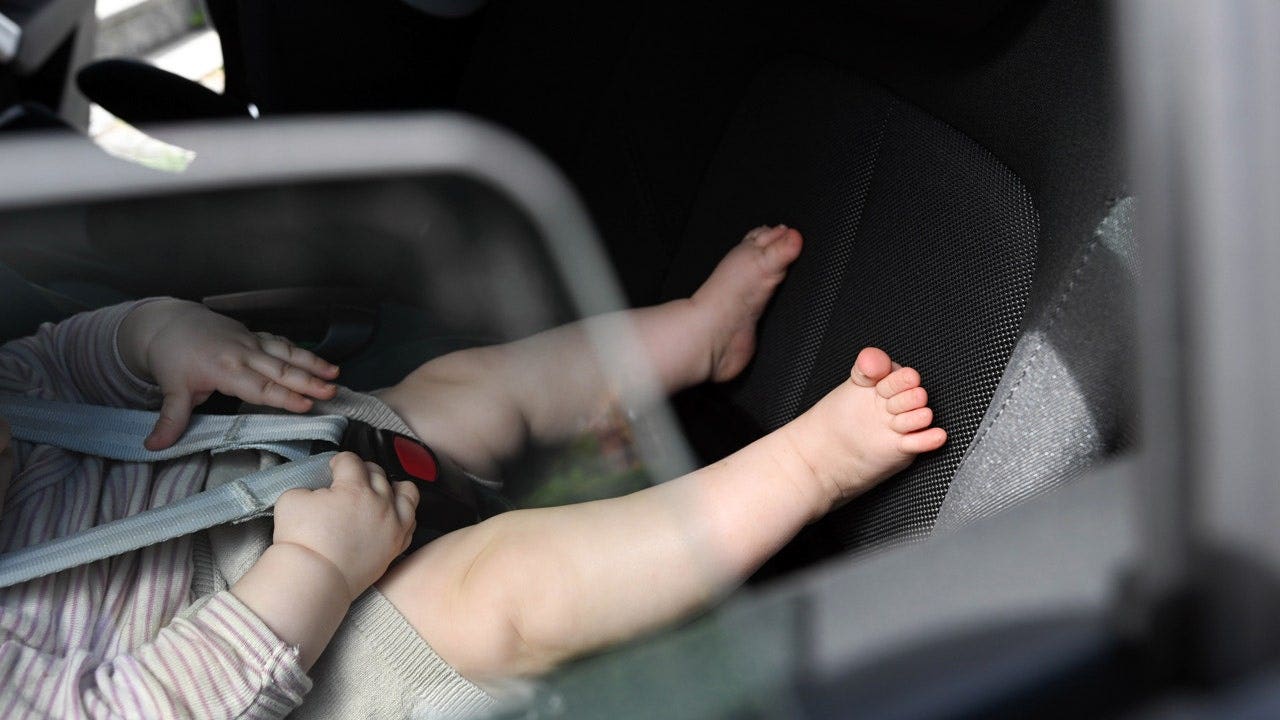
Under the heavy afternoon sky of Plantation, Florida, a routine Monday dissolved into an unspeakable nightmare, leaving a local community shattered and a family forever changed. At approximately 5:39 p.m., emergency sirens pierced the humid air as first responders rushed to A World of Discovery Academy, an early childhood education center on a quiet street. There, parked in the lot, was an SUV containing a 23-month-old boy who had spent the entire sweltering day trapped in his car seat. The child’s father had driven to the daycare to pick his son up at the end of the workday, completely unaware that he had never actually dropped him off that morning. When he arrived, the devastating reality of his catastrophic memory lapse struck him with absolute, paralyzing force: his son was still in the vehicle, unresponsive. Despite the prompt arrival of the Plantation Police Department and Plantation Fire Department, it was already too late, and the little boy was pronounced dead at the scene. This tragic event was not born of malice or deliberate neglect, but rather a chilling demonstration of how easily the fragile constructs of human memory can fail under the pressure of daily routines. For the grieving father, who had spent the day believing his son was safe and playing inside the school, the discovery was an unimaginable horror that instantly redefined his family’s reality. The quiet parking lot, usually filled with the happy chatter of children reuniting with their parents, became a scene of profound grief and investigative focus as authorities began to piece together the timeline of how a beloved toddler could be lost to a series of ordinary, tragic oversights.
To understand how such a devastating event can happen to a loving parent, one must look beyond superficial judgment and examine the complex, often fragile nature of human cognitive psychology, a phenomenon researchers refer to as “Forgotten Baby Syndrome.” This heart-wrenching occurrence is rarely a reflection of a parent’s character, affection, or devotion; instead, it is a catastrophic failure of the brain’s prospective memory systems. In the course of a normal day, the human brain relies heavily on its motor memory and habit loops managed by the basal ganglia, which allows us to perform routine tasks—such as driving a familiar route to work—on a form of cognitive autopilot. When a parent is exhausted, distracted, stressed, or experiencing a slight alteration in their typical morning structure, this habit system can completely override the prefrontal cortex, the area of the brain responsible for active planning and conscious awareness. If a child falls asleep quietly in a rear-facing car seat, out of the driver’s direct line of sight, the brain can create a false memory, convincing the parent that the drop-off was successfully completed. This neurological blind spot tricks the mind into believing the child is safe in their classroom, leaving the parent to go about their workday in agonizing ignorance. Recognizing this scientific reality does not lessen the tragedy, but it humanizes the parent involved, transforming them from an object of public condemnation into a victim of a cruel cognitive glitch that could happen to almost anyone operating under the relentless strain of modern life.
At the center of the immediate aftermath was Leslie Novoa, the owner of A World of Discovery Academy, who found herself thrust into the role of a first responder to a tragedy she could scarcely comprehend. Having known the family for over six years, Novoa shared a deep bond with them, having watched three of their children grow within the walls of her educational center. She described them as an exceptionally loving, attentive, and wonderful family, making the reality of the situation all the more painful and difficult to accept. When the father made the horrific discovery in the parking lot, Novoa was there, standing beside him in his moment of sheer panic and agonizing grief as they frantically dialed 911 together. To see a family she cared for so deeply plunged into such intense pain was a devastating blow to Novoa and her entire staff, who had dedicated their lives to nurturing and protecting young children. “This is difficult for the parents, and it is incredibly difficult for us,” Novoa expressed in a deeply emotional interview, her voice carrying the heavy weight of a community trying to process the inexplicable. She emphasized that there was no history of neglect or instability within the home; rather, this was a tragic anomaly that had shattered a family that was otherwise defined by love, care, and mutual support. The daycare, which has always prided itself on being a safe haven, was suddenly the backdrop for an event that highlighted the terrifying vulnerability of even the most dedicated parents.
The ripple effect of the loss quickly spread outward from the parking lot, enveloping the entire school community in a collective state of mourning and shock. In the wake of the incident, A World of Discovery Academy released a poignant statement expressing their deepest condolences and promising unwavering support for the grieving family while trying to reassure anxious parents. “Our primary responsibility is the safety and well-being of our students and their families,” the academy wrote, acknowledging the profound trust placed in them every single day. They quickly reached out to their school community to offer resources, grief counseling, and a space for families to process the tragedy together. For the teachers and administrators who had spent hours caring for the toddler, the loss was deeply personal, leaving them to grapple with the sudden absence of a child who had been a beloved fixture in their daily lives. Other parents who arrived at the school in the days following the event were met with a somber atmosphere, forced to confront the ultimate parental nightmare happening right on their own doorsteps. This collective mourning highlighted the strength of the community, as families rallied around the grieving parents, offering silent solidarity and shared tears in place of the quick judgments that so often dominate public discourse in the digital age.
This heartbreaking loss in Plantation is not an isolated incident, but part of a sobering national crisis that claims the lives of dozens of children each year in the United States. According to data compiled by the advocacy organization Kids and Car Safety, an average of 40 children die from heatstroke inside locked vehicles annually, with approximately half of those cases involving a caregiver who unintentionally forgot the child was in the car. The physical environment inside a vehicle parked under the intense sun can turn lethal with terrifying speed; within just ten minutes, the interior temperature of a car can rise by twenty degrees, and because children’s bodies heat up three to five times faster than adults, they are uniquely vulnerable to rapid heatstroke. In response to these preventable tragedies, safety advocates have long pushed for systemic changes, including the mandatory installation of rear-seat reminder technology in all new vehicles to alert drivers of passengers in the back. Simple daily habits are also promoted as life-saving interventions, such as placing a necessary item like a cellphone, purse, or shoe in the backseat, or keeping a stuffed animal in the front passenger seat as a visual cue when a child is traveling. By examining this tragedy through a national lens, it becomes clear that preventing these deaths requires a combination of technological innovation, public education, and a collective commitment to overcoming the cognitive vulnerabilities of the human brain.
Ultimately, this tragedy serves as a solemn reminder of our shared human fragility, a call for profound empathy, and a plea to suspend judgment in the face of incomprehensible grief. The father at the center of this event faces a life sentence of agonizing self-reproach, carrying a burden of guilt that no legal system or social commentary could ever replicate or punish more severely. As the Plantation Police Department continues its formal investigation into the exact circumstances of the toddler’s death, the community is left to contemplate how easily a normal morning can deviate into catastrophe. Rather than distancing themselves from such a tragedy with feelings of superiority, parents and caregivers are encouraged to recognize that fatigue, stress, and routine can blind anyone, and that compassion is the only decent response to a family’s absolute devastation. The memory of the 23-month-old boy, whose life was cut short in a sweltering SUV, deserves to be honored not as a news headline of negligence, but as a catalyst for greater awareness, systemic safety changes, and a deeper, more forgiving understanding of the human condition. In a world that often demands perfection from parents, this loss reminds us that we are all fallible, and that in our moments of deepest vulnerability, we must look out for one another with gentleness, vigilance, and unconditional grace.