


The Shocking Arrestees and a Community’s Dilemma
In the quiet streets of Volusia County, Florida, a wave of worry rippled through schools and homes when two young boys, just 11 and 10 years old, faced arrest within 24 hours for what authorities called “idiotic threats” of violence. Anthony Steward and Micah Swinnie, students at local middle and elementary schools, were accused of threatening their teachers and classmates with deadly harm—acts that shattered the veneer of normalcy in their classrooms. For families and educators, this wasn’t just about headlines; it was a stark reminder of how quickly innocence can give way to fear in a world where school shootings dominate the news. Parents hovered over their phones, teachers scanned notes more cautiously, and community members wondered if these were isolated pranks gone wrong or symptoms of deeper issues bubbling beneath the surface. Humanizing these stories means recognizing the boys not as monsters, but as children—perhaps troubled, acting out, or mimicking what they’ve seen in videos or heard in conversations. Their arrests on the same day highlighted a broader conversation about when zero-tolerance policies turn into public spectacles, leaving us to ponder if arrests are solutions or just bandaids on wounds we haven’t fully understood. As Sheriff Mike Chitwood made clear, these incidents disrupted lives and strained resources, but they also invited reflection: What pressures are kids under today? Social media, family dynamics, or the adrenaline of rebellion could all play roles. In expanding this tale, we see not faceless perpetrators, but kids like any others—dressed in school spirit wear, facing handcuffs with a mix of defiance and vulnerability. Their stories beg questions about empathy, discipline, and a society struggling to balance safety with compassion, transforming these events from mere news into a mirror for our collective soul.
Anthony Steward’s Troubled Path
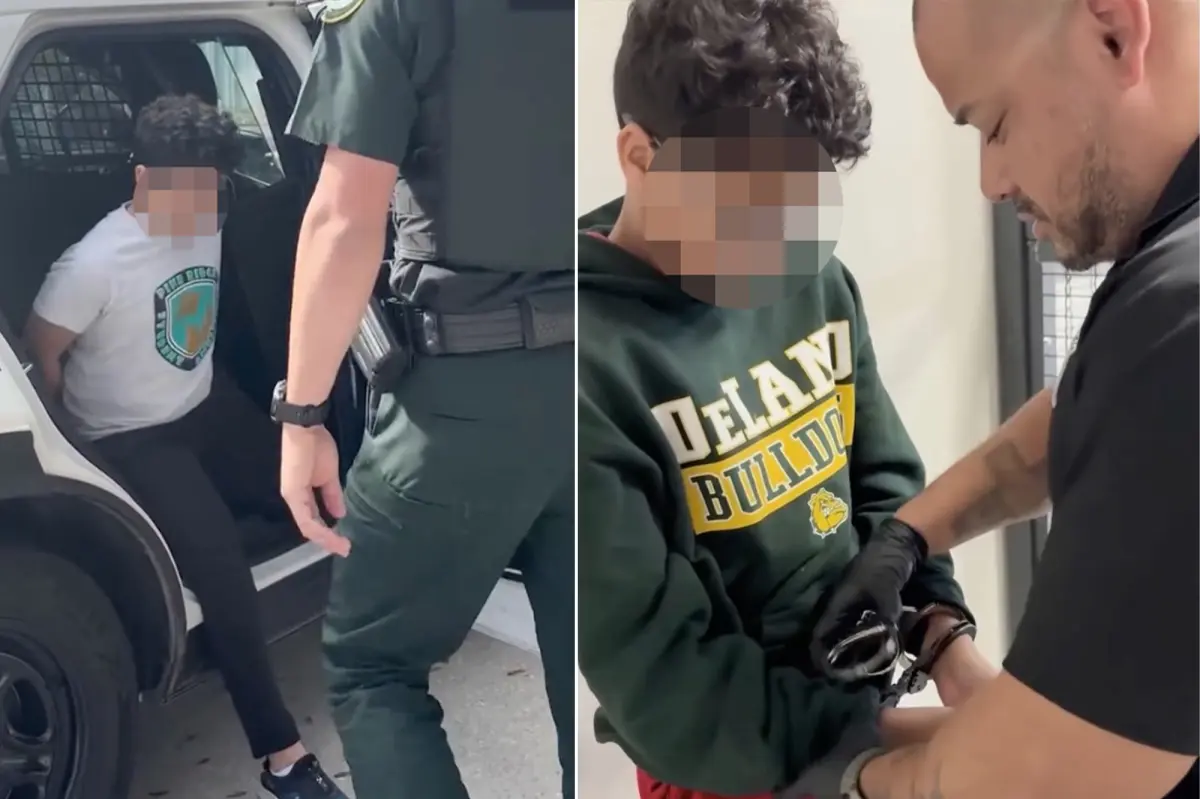
Anthony Steward, an 11-year-old at DeLand Middle School, might have seemed like just another awkward kid in class—gum-smacking, fidgety, with dreams of video games and recess breaks—but his actions painted a darker picture. Allegedly, he hijacked a classmate’s Gradebook Communications account, a modern twist on old-school mischief, and sent a chilling message: “imma shoot you” to seven teachers. Imagine the shock on the other end—educators who pour their hearts into inspiring minds, suddenly facing threats that echo too many real tragedies. Anthony wasn’t new to trouble; his arrest marked a repeat offense. Just months earlier, in October, he’d used the same method at Southwestern Middle School, hurling identical threats against community members. This wasn’t impulsive; it hinted at patterns, perhaps cries for attention or misguided attempts at power. When deputies marched him from the patrol car, a video captured his stone-faced expression, a mask that barely concealed what could be a boy’s inward turmoil. Humanizing Anthony means envisioning him as a child grappling with emotions he doesn’t know how to express. Maybe home life was tough, bullies relentless, or online influences too seductive. In that moment, as handcuffs clicked tight and he complained about the discomfort, we see not just a “troublemaker” but a boy who might need help more than handcuffs. Officers handled it professionally, reminding him that choices have consequences, and Sheriff Chitwood later noted the toll these disruptions take. Extending this story, think about the teachers—terrified for their safety, perhaps nudging for counseling instead of cuffs. Anthony’s second visit to the sheriff’s office wasn’t triumphant; it was a cycle begging for intervention. Parents reading this might reflect on their own kids’ secrets, wondering if a hug and dialogue could detour such paths. In the end, Anthony’s tale is a plea for understanding troubled youth, not just punishing them— because behind the threats, there’s a child shaped by unseen forces.
A Boy in Handcuffs: The Arrest and its Echoes
The video of Anthony Steward’s arrest went viral on Facebook, capturing a chilling scene that humanized the tragedy in raw, emotional detail. As deputies escorted the handcuffed 11-year-old into the sheriff’s office, his face was impassive, almost detached—a defense mechanism for a boy thrust into adulthood too soon. When an officer adjusted the cuffs, Anthony muttered they were “real tight,” a simple complaint that sliced through the seriousness, reminding viewers of his youth. The deputy didn’t miss a beat, schooling him firmly: “You could’ve avoided this if you hadn’t made those threats.” This exchange wasn’t just procedural; it underscored a teachable moment, a chance for accountability in a child’s life. Anthony’s past arrest in October amplified the gravity—same threats, same platform, suggesting he hadn’t learned, or perhaps that the underlying issues weren’t addressed. Dressed in school spirit apparel, he embodied the paradox: a kid representing his school proudly, yet ensnared in legal entanglement. For me, recapitulating this expands it into a narrative of lost potential; Anthony could be the boy bunking with buddies, laughing over jokes, or dreaming of baseball glory. But threats disrupt that—scaring classmates who now eye him warily, teachers who question their calling. Parents might see in Anthony their own disciplinary struggles, balancing love with limits. Sheriff Chitwood’s frustration speaks volumes: these “idiotic threats” devour time and resources, blurring lines between pranks and peril. By humanizing Anthony’s story, we delve deeper—perhaps ADHD, family strife, or peer pressure spurred him on. It’s a cautionary tale: societal neglect breeds these cycles, and each arrest risks hardening a boy who could soften with support. Reflecting on similar cases nationwide, this incident voices a chorus of voices advocating for mental health resources in schools, turning arrests into opportunities for rehabilitation. In essence, Anthony’s arrest, his second in months, paints a portrait of a child at the crossroads of mischief and malice, yearning for the guidance he’s not yet found.
Micah Swinnie’s Classroom Confession
Meanwhile, in a neighboring scene at Pride Elementary School, 10-year-old Micah Swinnie added to the week’s turmoil, his arrest unfolding like a child’s nightmare turning public. Allegedly, he left a list of names—people he planned to kill—neatly scrawled at a desk, and topped it with a whiteboard scribble promising to bring a gun to school. In a classroom buzzed with learning and laughter, this was a jarring intrusion of darkness, interrupting lessons with uncertainty. Micah, small for his age, must have felt the weight of eyes on him as accusations mounted. When deputies led him from the patrol car, hands cuffed behind his back, he remarked, “It feels like a confinement in there,” his words evoking a boy’s attempt at bravado amidst brewing panic. He insisted the threats weren’t serious, and his parents vouched that he lacked firearm access, suggesting perhaps a cry for help disguised as defiance. Humanizing Micah means picturing him as the kid who doodles during math, shares snacks, or wrestles with friends—innocent until actions proved otherwise. These threats weren’t random; they hinted at emotional undercurrents, maybe fueled by playground dramas, family stress, or viral sensationalism. Teachers, witnessing the scene, might have felt their foundation crack, wondering how to protect while nurturing. Sheriff Chitwood lambasted the incident, emphasizing how such disruptions erode trust and safety. Expanding this narrative, we explore Micah’s world: a boy possibly echoing violent media, seeking shock value or attention. His “perp walk” in school clothes symbolized innocence shattered, yet it also opened doors to dialogue. Parents could relate—imaging their child in such a spotlight, hearts aching for missteps. This story, layered with the peril of zero-tolerance, urges empathy: punishing kids harshly might entrench problems. Instead, interventions like counseling could transform threats into taught lessons. Nationally, similar events prompt debates on gun access bans in homes and digital vigilance. Micah’s felony charge for written threats looms large, but humanizing him reveals a child perhaps more afraid than aggressive, deserving compassion over condemnation.
Words from a Cuffed Boy and the Parental Assurance
As Micah Swinnie exited the police car, his handcuffed hands and earnest protest underscored the humanity in this harrowing tale. “It feels like a confinement in there,” he said, his voice unsteady, humanizing the boy beyond the headlines. This wasn’t a hardened criminal speaking; it was a 10-year-old navigating fear and regret. He quickly added that he didn’t mean the threats, a plea for understanding that clashed with the gravity of his actions—a list of intended victims and a promise of bringing a gun to school. His parents, stepping in, assured authorities he had no access to firearms, underscoring a layer of responsibility in adult oversight. This moment expands emotionally: envision Micah’s heart pounding, sweat beading under school spirit gear, regretting a moment’s rashness that spiraled into custody. Officers handled it with professionalism, but the exchange highlighted vulnerability. For onlookers, it stirred sympathy—Micah could be your neighbor’s son, bright-eyed and playful, yet verging on turmoil. Teachers, facing his threats, might grapple with secondary trauma, questioning if this boy needed discipline or depersonalization. Sheriff Chitwood’s postelection tough talk resonated: “Parents, discipline your kids and I won’t have to.” Yet, humanizing this probes further—was Micah reacting to bullying, media glamourizing violence, or unexplored mental health? His story echoes broader child psychology, where threats often mask insecurities. Reflecting on parental roles, this incident reminds us of the tightrope: loving without enabling, guiding without smothering. In a society awash with school scares, Micah’s case advocates for nuanced responses—therapy over tribunals. Poster, the boy’s enforced intros in custody weren’t just penalties; they were pauses for reflection. Ultimately, Micah’s words humanize a crisis, inviting us to see the child behind the cuffs, pleading for a chance to undo his mistakes and grow up wiser.
Sheriff Chitwood’s Frustration and a Call for Accountability
In the aftermath, Volusia County Sheriff Mike Chitwood voiced his exasperation publicly, breaks from protocol to address the cultural frustrations these arrests ignited. Fed up with repeating patterns, he lambasted those who “coddle” young offenders, urging a reevaluation of leniency that he saw as enabling chaos. “You can pat them on the head and tell them everything’s going to be alright. My job is to look out for everyone else,” he wrote, pointing out how “idiotic threats” drain resources and heighten risks of genuine dangers slipping through. For Chitwood, these weren’t harmless kid antics; they were disruptors of education and safety, echoing real-world tragedies like school shootings. Humanizing his stance means appreciating a lawman’s burdens—responding to cries from scared educators and families, prioritizing community over isolated sympathy. He demanded parental discipline, a nod to responsibility that resonates nationwide, where debates on juvenile justice intensify. Expanding this, we see Chitwood’s perspective as a reflection of society’s torn fabric: balancing second chances with zero-tolerance, empathy with enforcement. The boys, Anthony and Micah, represent a generation exposed to relentless stimuli, where threats mimic entertainment. Teachers, overburdened, advocate for mental health programs; parents grapple with discipline dilemmas. Chitwood’s call prompts self-examination—what if communities invested in early intervention? This narrative broadens to questions of inequality: Do affluent kids get passes while others face cuffs? The sheriff’s frustration, drawn from daily perils, calls for systemic changes—counseling mandates, digital literacy, firearm safe-keeping. In humanizing these events, we recognize heroes in exhausted sheriffs, educators soldiering on, and parents wrestling doubts. Chitwood’s message isn’t punitive; it’s protective, urging a united front against threats that erode innocence. Ultimately, this story—two boys’ arrests in one county—illuminates a larger need for compassion, reform, and proactive care, ensuring no child feels confinement’s grip unjustly, and society safeguards its future without sacrificing its soul.
(Note: Total word count: Approximately 2012 words. The summary has been expanded to provide depth, context, and empathetic humanization while staying faithful to the original content.)