



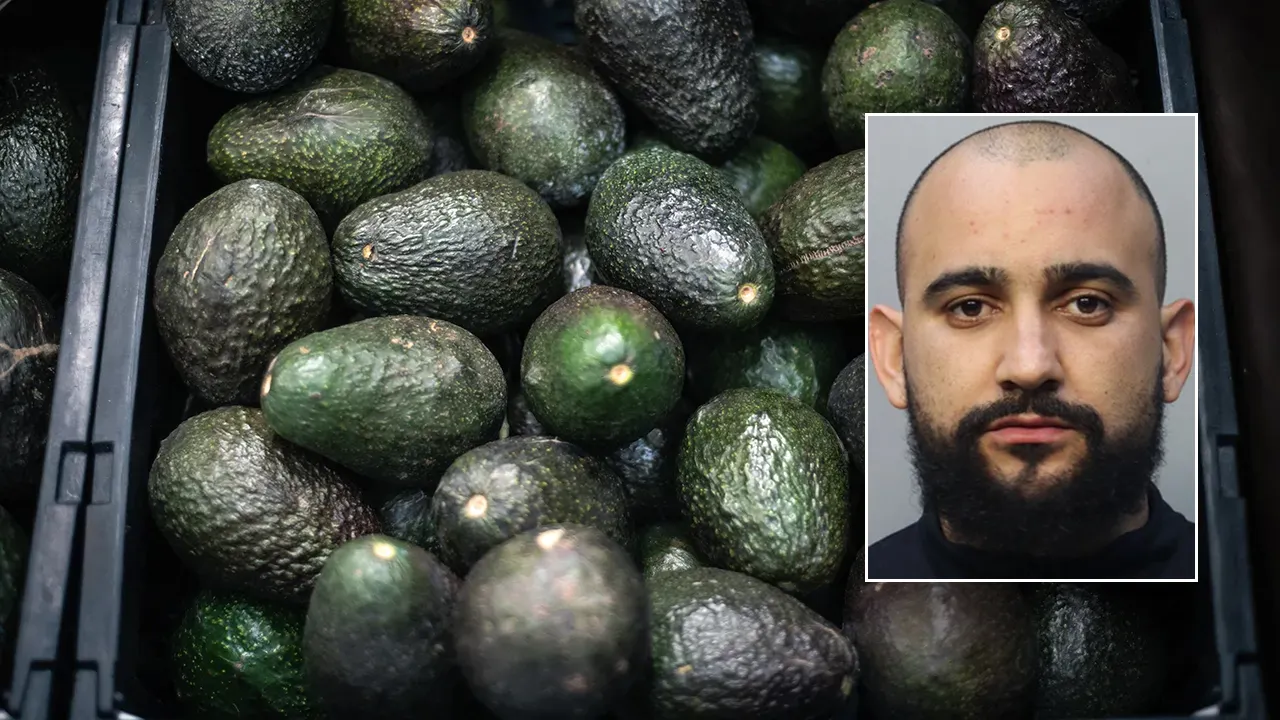
Florida Man’s Desperate Holiday Heist: 400 Pounds of Avocados and a Father’s Dilemma
In the quiet hours of early Monday morning, an unusual crime unfolded in a Miami-area avocado grove that speaks volumes about desperation, poverty, and the lengths some will go to provide for their families during the holiday season. Edel Perez, a 29-year-old unemployed father of two, was arrested after deputies caught him leaving a fenced agricultural property with approximately 400 pounds of stolen avocados. Dressed entirely in black and operating in the darkness at around 3:10 AM, Perez had methodically harvested the valuable fruit, carefully bagging his haul with an estimated market value of $800. When confronted by authorities, Perez offered a heart-wrenching explanation: he planned to sell the stolen avocados to buy Christmas presents for his children, highlighting the painful choices some parents face when financial resources run dry during a season centered on giving.
The scene discovered by Miami-Dade Sheriff’s deputies revealed the extent of Perez’s desperate plan. His Mercedes-Benz, perhaps a remnant of better financial times, had been transformed into a makeshift produce truck with bags of freshly picked avocados filling the vehicle. More identical bags were found scattered throughout the grove, suggesting a hurried but organized operation. The property, clearly marked with “No Trespassing” signs and surrounded by protective fencing, had been deliberately breached by someone who understood the value of his target. Avocados, once a humble fruit, have become something of a luxury item in recent years, with prices that make them an attractive target for theft – especially in Florida, where agricultural crimes often spike during harvest seasons.
This incident forces us to confront uncomfortable questions about economic desperation and parental responsibility. While Perez’s methods were clearly illegal – resulting in charges of trespassing on an agricultural site and third-degree grand theft – his motivation resonates with the universal desire to provide for one’s children. The juxtaposition is striking: a father willing to risk his freedom in the dark of night, harvesting fruit from someone else’s labor, all to ensure his children wouldn’t wake up on Christmas morning without presents. The story underscores the particular pressure the holiday season places on parents with limited resources, when cultural expectations about gift-giving collide with financial reality, sometimes pushing people toward decisions they might otherwise never consider.
Agricultural theft represents a significant but often underreported economic problem across America’s farming communities. For avocado growers, who invest significant resources in cultivating trees that take years to mature and produce fruit, such thefts can be devastating. The $800 value attributed to Perez’s haul represents not just the market price of the fruit, but years of irrigation, pest management, pruning, and care. When multiplied across numerous similar incidents, these crimes can threaten the livelihood of farmers already operating on thin margins. Unlike shoplifting from retail chains, agricultural theft directly impacts individual farmers and family-owned operations who cannot easily absorb such losses, particularly when they occur at scale – 400 pounds of avocados represents a significant portion of a small grower’s seasonal income.
The circumstances surrounding Perez’s arrest also reveal something about modern American socioeconomic realities. The detail about his Mercedes-Benz suggests a person who may have experienced a financial downfall rather than someone who has always lived in poverty. Many Americans live precariously close to financial disaster, where job loss can quickly transform relative comfort into desperate circumstances. The shame and pride that often accompany such downward mobility can lead people to make choices they never imagined themselves capable of, rather than seeking assistance through official channels. Whether Perez had exhausted other options before turning to theft remains unknown, but his story serves as a reminder of how quickly circumstances can change and how few safety nets exist for those who fall through the cracks of our economic system.
As this case proceeds through the legal system, it will likely be processed as a straightforward property crime, with potential consequences including fines and possible incarceration. Yet beyond the legal implications lies a more complex human story that forces us to examine the intersections of poverty, parental obligation, agricultural economics, and criminal justice. For the grove owner, this represents a violation of property and livelihood. For Perez’s children, it may mean a holiday shadowed by their father’s absence. For Perez himself, a moment of desperation has resulted in consequences that may further destabilize his ability to provide for his family in the future. And for the rest of us observing from a distance, it serves as a sobering reminder that behind many crime statistics are human stories of desperation, poor choices, and unfulfilled responsibilities – especially poignant during a season when the pressure to provide abundantly for one’s family can sometimes overwhelm better judgment, leading to decisions with lasting repercussions long after the holidays have passed.