






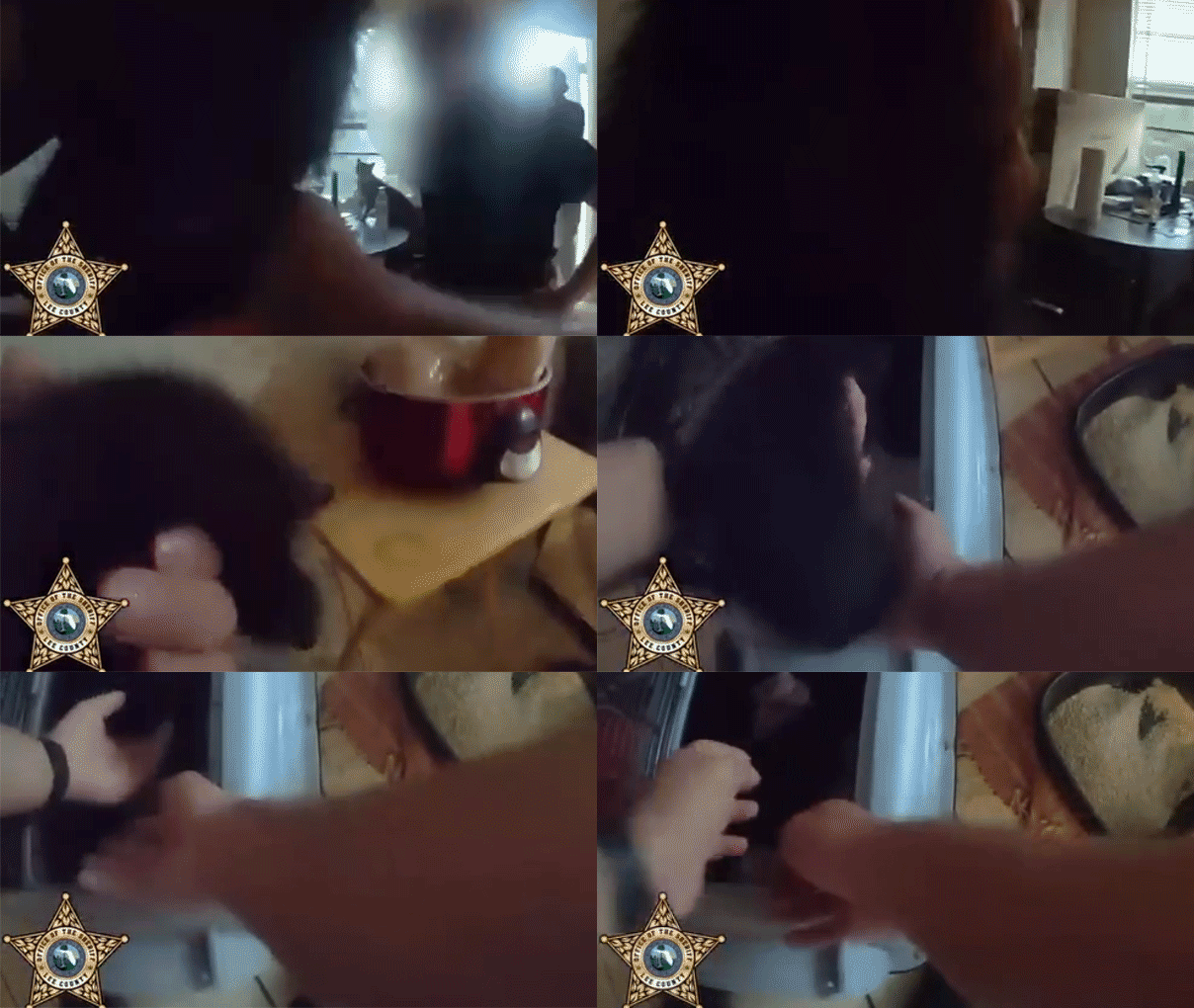
In the quiet residential enclave of Pine Manor, Florida, what should have been a peaceful neighborhood sanctuary was shattered by an intervention that exposed a deeply hidden household horror. Law enforcement officers from the Lee County Sheriff’s Office arrived at a local residence, their bodyworn cameras rolling, capturing a scene charged with tension, confusion, and underlying dread. They were responding to an urgent, distressing report concerning the welfare of a tiny, defenseless life—a two-month-old kitten named Luna, who was reportedly being subjected to violent drowning attempts and physical strikes. As deputies stepped across the threshold, the sterile glare of their flashlights illuminated more than just a chaotic domestic scene; it began to peel back the layers of a toxic domestic environment where the most vulnerable members of the household lived in a state of constant apprehension. This was not a sudden, isolated outburst of anger, but rather the unraveling of a dark, calculated pattern of domestic terror where innocent companion animals were weaponized to inflict maximum emotional suffering. The rescue of little Luna became the catalyst for exposing a heartbreaking reality of cruelty that extended far beyond the physical boundaries of a backyard cage, revealing how easily a home can be transformed from a place of safety into a theater of psychological torment.
At the very heart of this devastating case lies a profoundly troubling human dynamic: the systematic emotional abuse of a teenage girl by her own father, David Charette Jr. For a child, a parent is supposed to represent an absolute shield against the harshness of the outside world, a source of unconditional love, security, and guidance. Instead, authorities allege that Charette used his daughter’s deep affection for her vulnerable pets as a cruel mechanism of control and punishment. Whenever the teenager “acted up” or found herself in trouble, her father did not resort to constructive discipline; instead, he targeted her beloved kittens, torture-testing the young girl’s emotional resilience by abusing and killing her pets right before her eyes. This form of coercive control is a particularly insidious branch of domestic abuse, where the perpetrator exploits the victim’s empathy and love for another living creature to break their spirit and enforce compliance. The psychological trauma inflicted on a developing mind forced to witness such intimate violence is immeasurable, leaving deep, invisible scars that can take a lifetime to heal, as the young girl was forced to bear witness to the brutal destruction of the very things that brought her joy.
When confronted by responding deputies, Charette did not exhibit remorse or panic; instead, his recorded interaction on the sheriff’s body camera revealed a chilling apathy and a practiced defense of deflection. He casually dismissed the gravity of the situation, insisting to the officers that the kitten was in “perfectly healthy condition” and attempting to normalize his actions as routine pet care. With a tone of irritation, Charette explained that he was simply forced to bathe the kitten because it frequently soiled itself inside its cage, complaining about the mess and dismissing the animal’s desperate cries as mere annoyance. “It’s covered in crap and I have to give it a bath, and it cries, and she doesn’t like that,” Charette muttered to the deputies, attempting to frame a terrifying ordeal for the animal as an unpleasant but necessary chore. This attempt to rationalize physical abuse and gaslight both his daughter and law enforcement is a classic hallmark of abusive behavior, demonstrating a complete lack of empathy for the suffering of a living creature. By minimizing the kitten’s terror and pain, he sought to escape accountability, presenting his violent actions as logical responses to a household inconvenience.
The tragedy deepened significantly as the sheriff’s office launched a thorough investigation, revealing that Luna’s suffering was only the latest chapter in a year-long reign of terror inside the home. Detectives discovered that Charette’s abusive behavior had already claimed the lives of two other young kittens over the previous twelve months, leaving a silent trail of grief in their wake. In a particularly horrifying revelation, investigators learned that in June, Charette had allegedly smothered a tiny, one-month-old kitten using a rag soaked in bleach—a method of killing designed to inflict maximum pain and suffocation. In another separate, equally depraved incident, he reportedly used a household blow-dryer to kill a three-month-old kitten, demonstrating a sickening resourcefulness in utilizing everyday household items as instruments of torture. Both of these helpless animals were subsequently buried in the backyard, transformed into hidden secrets beneath the dirt; though investigators searched the property thoroughly, they were only able to recover the remains of one of the victims. These discoveries painted a grim portrait of a household where violence was normalized, and where a young girl was forced to live alongside the physical graves of her beloved companions, carrying the crushing weight of their loss in silence.
The public revelation of these horrific acts sparked widespread outrage and profound sadness throughout the local community and law enforcement agencies alike. Lee County Sheriff Carmine Marceno did not mince words when addressing the media, visibly shaken by the sheer depravity of the case and the psychological warfare waged against a young child. “A daughter says that when she acts up or when she’s in trouble, her father kills her kittens. This is sickening to me,” Marceno stated, expressing a sentiment shared by thousands of citizens who read about the arrest. Criminologists and domestic violence advocates frequently point to “The Link”—the well-documented statistical connection between animal abuse and interpersonal violence, noting that those who abuse animals are highly likely to inflict violence upon humans as well. By arresting Charette and charging him with felony aggravated animal cruelty, the sheriff’s office not only sought justice for the deceased and injured kittens, but also intervened to protect a vulnerable teenager from further psychological degradation. The community’s collective outcry underscored a growing societal consensus that animal abuse is not a minor property crime, but a severe red flag indicating profound psychological dysfunction and domestic danger.
Amidst the dark shadows of this tragic case, a fragile but vital light of hope remains in the survival and recovery of little Luna, who was quickly removed from the hostile environment. Taken to a local animal hospital, the resilient two-month-old kitten received immediate medical attention, safety, and the gentle, compassionate care she had been denied for so long. As Luna continues her physical recovery under the watchful eyes of veterinary professionals, she represents a small but significant triumph of life and survival over cruelty and malice. For the teenage daughter, however, the road to recovery will be much longer and far more complex than healing from physical wounds. Freed from the immediate physical presence of her alleged abuser, she must now begin the painful, delicate process of processing her trauma, rebuilding her sense of safety, and learning to trust again in a world that failed to protect her pets. This heartbreaking story serves as a powerful, urgent reminder of the critical importance of community vigilance, the necessity of speaking up when we suspect abuse, and our collective responsibility to protect those who cannot speak for themselves—both the innocent children in our neighborhoods and the gentle animals that share our homes.