





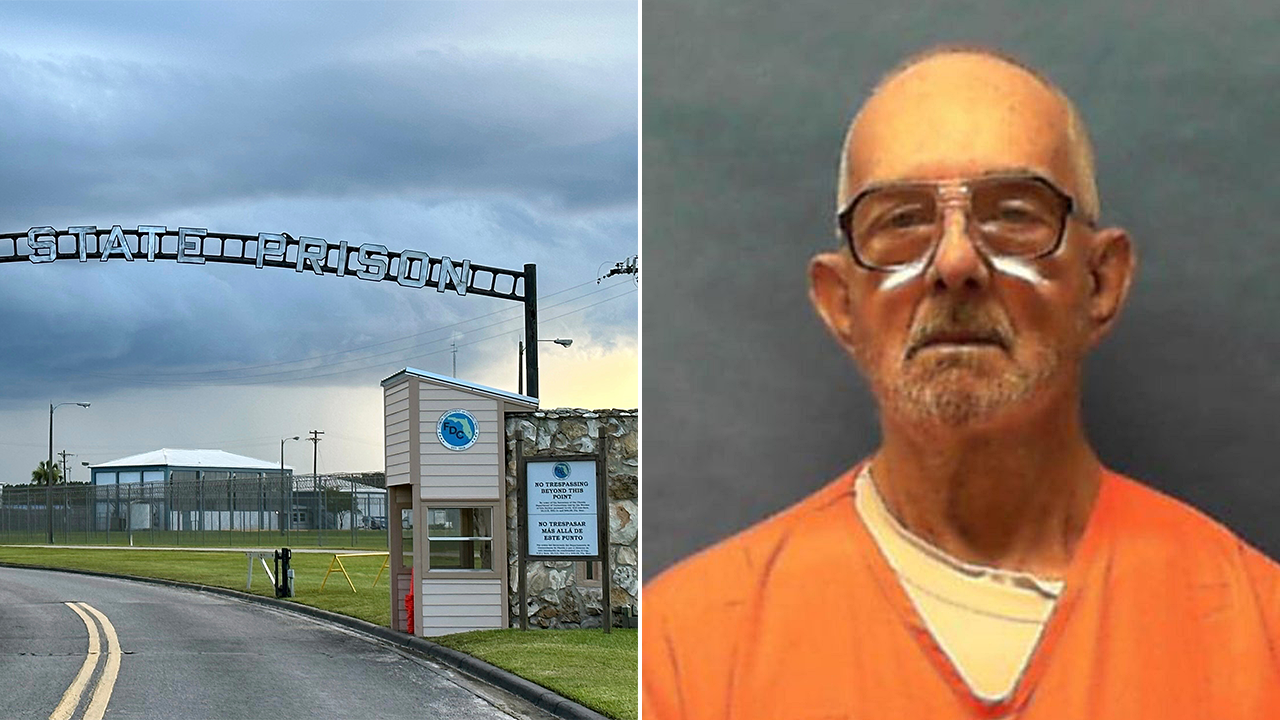
The evening air outside the stark concrete walls of the Florida State Prison near Starke was heavy with the solemnity that always accompanies the final hours of a life under the state’s custody. Inside, on a sterile gurney, lay 74-year-old Dusty Ray Spencer, a man whose weathered face and fragile physical frame bore the deep, unmistakable lines of more than three decades spent in the shadow of death. At exactly 6:10 p.m. on a quiet Thursday, Spencer was pronounced dead, marking the conclusion of a deeply somber chapter in the history of Florida’s criminal justice system, as he officially became the oldest inmate in the state’s modern history to be put to death. The execution was carried out using a standard but highly scrutinized three-drug lethal injection protocol, a clinical process that stood in sharp contrast to the raw, visceral emotion that fills the room during an inmate’s final moments on Earth. When asked if he had any final words before the chemicals began their journey through his veins, Spencer did not offer defiance or anger; instead, his voice carrying the fragility of his advanced years, he muttered a plea for forgiveness and a final prayer of surrender: “Sorry, sorry to the family. Into thy hands I commit my spirit and my soul. I’m on my way, Lord. I’m on my way. Amen.” In the fleeting moments that followed, the witnesses in the small observation room watched as his breathing became labored, a heavy rise and fall of his chest that gradually slowed until all movement ceased entirely. In a tense, routine ritual, the prison warden stepped forward, gently shaking the elderly man and speaking his name aloud several times to ensure he was unresponsive, before a medical professional stepped in to confirm that Spencer’s heart had stopped beating forever. This quiet, clinical exit ended a lifetime marked by a horrific act of violence, illustrating the stark, complex intersection of human mortality, state-sanctioned retribution, and the slow, inexorable march of time.
To truly understand the weight of Spencer’s execution, one must journey back over thirty years to the cold, terror-filled winter of 1991 and 1992, long before he was a frail geriatric inmate on a prison gurney, when he was instead a volatile and dangerous force in the lives of his family. The tragic trajectory began in December 1991 when Spencer was arrested for choking his wife, Karen Spencer, and threatening her life in an outburst of domestic rage that foreshadowed the horror to come. Even behind the bars of a local jail cell, Spencer’s malice was not contained; he channeled his anger through a telephone line, placing a chilling call to Karen to warn her with terrifying clarity that once he was released, he would “finish what he started.” The system’s failure to protect Karen became painfully obvious on January 18, 1992, when Spencer, having secured his freedom, breached the peace of her home and violently assaulted her teenage son with a clothes iron when the brave boy desperately tried to intervene and shield his mother from his stepfather’s fury. The terror reached its devastating climax just one week later, on January 25, when a sudden commotion outside the home drew the young boy outdoors, where he was met with the nightmarish sight of Spencer brutally striking his mother in the head with a heavy brick. In a desperate, heroic bid to save his mother’s life, the teenager grabbed a rifle and pulled the trigger, but the weapon tragically misfired, leaving the boy defenseless as Spencer turned on him with a flashing knife, forcing the terrified youth to run into the darkness to search for help. By the time law enforcement authorities arrived at the chaotic scene, it was already too late; Karen Spencer lay lifeless in a pool of blood, her body bearing multiple, fatal stab wounds to her chest, her life extinguished by the very man who had promised to love her, leaving behind a scarred family and a young boy haunted by the limits of his own courage.
The subsequent legal odyssey was a grueling, decades-long marathon that illustrated both the meticulous caution and the agonizingly slow pace of the American capital punishment system, a process that saw Spencer transform from a middle-aged convict into a geriatric man. Following his arrest, Spencer was swiftly convicted in November 1992 of first-degree murder, attempted first-degree murder, aggravated assault, and aggravated battery, receiving his first death sentence as a direct consequence of his brutal actions. However, the path to the execution chamber was far from straightforward; in 1994, the Florida Supreme Court threw a wrench into the proceedings by throwing out his original sentence, ruling that the trial court had fundamentally mishandled the delicate judicial process of evaluating and weighing the aggravating circumstances of the crime against the mitigating circumstances of Spencer’s life and background. This legal setback led to a tense resentencing hearing the following year in 1995, where a judge once again determined that the ultimate penalty was the only justice fitting for the sheer depravity of Karen’s murder, sending Spencer back to death row to begin a thirty-year cycle of hope and despair. Over the decades, a relentless succession of defense attorneys filed countless appeals, challenging everything from the constitutionality of Florida’s lethal injection cocktail to the adequacy of Spencer’s trial counsel, keeping his case alive in a state of suspended animation while the world outside changed rapidly. The final act of this legal drama played out with rapid-fire intensity in his final days, when the Florida Supreme Court decisively rejected his latest round of appeals, followed by a final, desperate plea to the Supreme Court of the United States, which was rejected on the very morning of his scheduled death, clearing the way for the state to finally carry out the sentence handed down more than three decades prior.
Spencer’s death at the age of 74 highlights a growing, deeply complex demographic shift within the American prison system: the rapid aging of death row populations, which presents unique ethical, medical, and philosophical challenges for a society grappling with the concepts of justice and mercy. Prior to Spencer’s execution, the distinction of being the oldest inmates put to death in Florida’s modern era belonged to Samuel Lee Smithers, who was executed at age 72 in 2025 for the tragic 1996 murders of two women, and R. Charlie Gifford, who was also 72 when he was executed in 1951 for the shooting death of a prominent state representative. The trend of executing elderly inmates is not unique to the Sunshine State; indeed, the oldest person executed in modern United States history was Walter Leroy Moody Jr., who was 83 years old when Alabama put him to death in 2018 for a deadly 1989 mail-bombing campaign that claimed the lives of a federal judge and a civil rights attorney. As inmates spend decades in the appellate process, correctional facilities are increasingly forced to operate as specialized geriatric care centers, spending millions of taxpayer dollars to treat the chronic illnesses, dementia, and physical infirmities of aging prisoners who no longer resemble the dangerous young men they were when they committed their crimes. This reality forces a painful societal introspection: at what point does the execution of an frail, elderly person cease to be an act of justice and instead become a hollow, bureaucratic exercise in clinical retribution? For critics of the death penalty, executing men like Spencer, who has another contemporary, 74-year-old Dennis Sochor, scheduled for execution in July for a 1982 murder, represents an unnecessary cruelty, while proponents argue that the passage of time does nothing to erase the horror of their crimes or the debt they owe to their victims.
This execution also underscores Florida’s aggressive and controversial shift toward a highly active capital punishment policy, positioning the state as a stark outlier in a nation where many states are moving away from the death penalty or instituting moratoriums. Spencer’s death marked the ninth execution carried out in Florida within a single calendar year, a blistering pace that follows a historic and record-shattering year in 2025 during which the state executed an unprecedented 19 people, the most in any single year in the state’s history since the death penalty was reinstated in 1976. This sudden surge in executions represents a dramatic escalation from previous decades, where the state’s modern yearly high had never surpassed eight, a benchmark set to much public debate in both 1984 and 2014. In 2025, Florida easily led the entire nation in executions, outpacing traditionally active states like Texas, Alabama, and South Carolina, which tied for a distant second place with five executions each, and contributing significantly to the national total of 47 executions carried out across the United States that year. This relentless pursuit of the death penalty is often framed by state officials as a commitment to law and order and a means of providing definitive closure to the families of victims who have waited decades for justice to be served. Yet, this high-volume approach to capital punishment continues to fuel intense national debate, drawing criticism from human rights organizations, religious groups, and legal scholars who question the fairness, racial equity, and moral justification of a system that so eagerly deploys the ultimate power of the state against its own citizens, even as public support for the death penalty nationwide continues to show signs of gradual decline.
Ultimately, when the final curtain fell on Dusty Ray Spencer’s long life inside the execution chamber, the silence that followed was perhaps the most profound testament to the enduring tragedy of domestic violence and the limits of state-sanctioned retribution. Karen Spencer’s surviving family members chose not to release public statements or celebrate the demise of the man who had torn their lives apart so many years ago, preferring instead to carry their grief in quiet, private dignity away from the glare of media cameras. For the son who had fought so bravely as a teenager with an iron and a misfiring rifle to save his mother, no amount of chemical injections or state ceremony could ever truly restore the innocence stolen from him on that horrific January night, nor could it bring back the mother whose life was brutally cut short. The execution of a seventy-four-year-old man, while legally vindicating the state’s authority, serves as a somber reminder of the devastation that ripples outward from a single act of rage, leaving scars that persist long after the perpetrator has grown old and frail. As Spencer’s final whispered words of repentance faded into the sterile air of the prison hospital, they left behind a quiet space for reflection on the nature of justice, the illusion of closure, and the heavy, tragic cost of human violence. In the end, the true legacy of this case lies not in the broken records of Florida’s execution statistics or the advanced age of the condemned, but in the memory of Karen Spencer, a woman whose life was precious, whose death was preventable, and whose tragic story remains a sobering call to confront the terror of domestic abuse that still lurks behind closed doors across the country.