





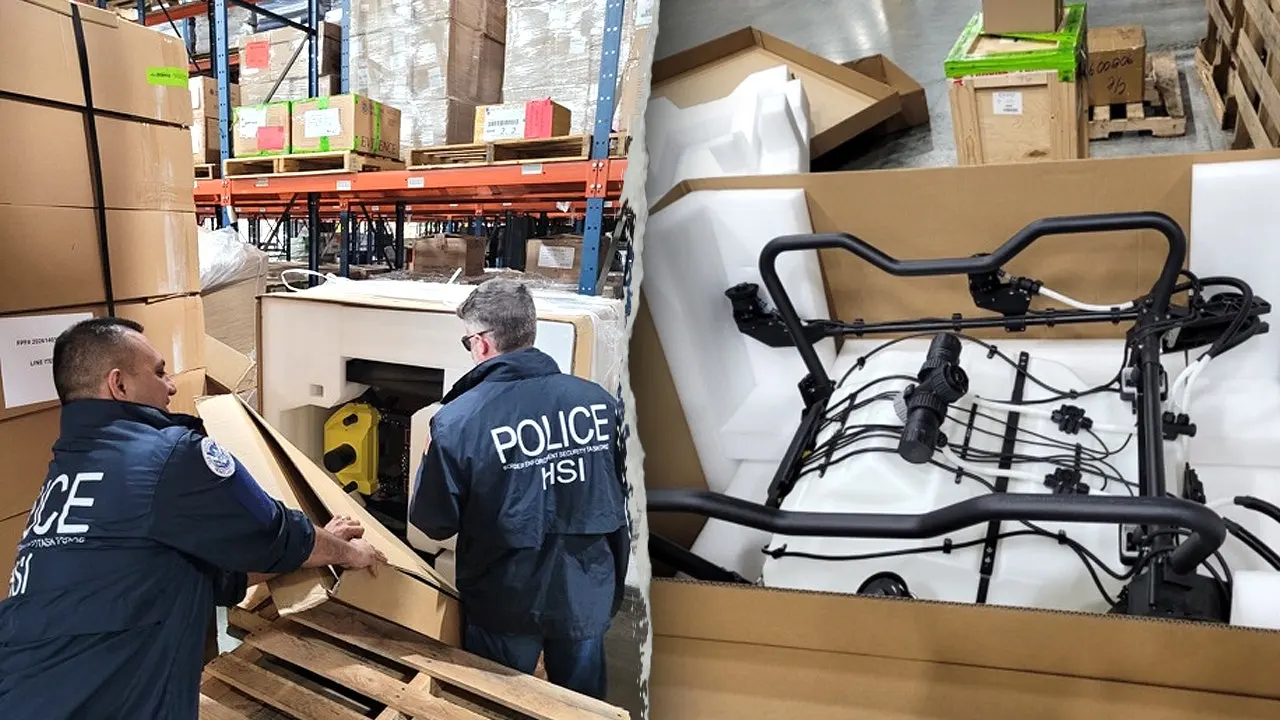
Paragraph 1: Imagine waking up one day to the news that something as seemingly innocent as a fleet of drones has gone missing, only to resurface months later in a way that chills you to the core. That’s the eerie reality unfolding in New Jersey, where a band of sophisticated thieves targeted a company called CAC International, based in the bustling town of Harrison. On March 24th, right under the noses of local logistics and shipping experts, 15 industrial drones vanished without a trace. These weren’t your average hobby gadgets fluttering around at backyard barbecues; they were powerful Ceres Air C31 models, built for serious agricultural work—think crop-dusting operations that spray chemicals over vast fields to keep crops thriving. Each one of these machines is engineered to carry and disperse large volumes of liquids, like pesticides or fertilizers, with pinpoint accuracy. Now, picture the folks at CAC International, a hardworking team dedicated to facilitating global trade and supply chains, discovering their warehouse breached. The theft wasn’t just about stealing pricey equipment; it felt personal, like someone had raided the toolbox of everyday workers who rely on these tools to keep farms productive and food on our tables. In a world where technology blends seamlessly into daily life, this incident serves as a stark reminder of how vulnerable our innovations can be to those with malicious intent. The company, tucked away in New Jersey’s industrial heartland, became an unwitting player in what could have been a much larger plot, leaving employees and neighbors wondering who’d want such specialized gear and why they’d go to such lengths to take it.
Paragraph 2: Delving deeper into the scene, CAC International isn’t just any run-of-the-mill operation—it’s a logistics powerhouse catering to international shipping needs, handling everything from electronics to exotic goods that crisscross borders. The drones, officially classified as agricultural spray systems, were stored securely, or so everyone thought, until that fateful day in late March. The break-in must have been meticulously planned; thieves likely knew exactly what they were after, bypassing alarms and safeguards in the dead of night or under the cover of busy daylight hours. Harrison, New Jersey, a hub of commerce along the Hudson River, is no stranger to thefts related to high-value cargo, but this one stood out. Eyewitness accounts from nearby residents might describe unusual activity—vans with tinted windows, figures in hoodies scouting the perimeter, or even drones in the air performing unauthorized test flights. It’s easy to humanize the perpetrators: perhaps they were disgruntled ex-employees harboring grudges, or international smugglers looking to repurpose the technology for illicit purposes. The loss hit hard; company owners like Derek Chen, who oversee operations, expressed shock at the boldness. “These aren’t toys,” Chen might say reflectively, recalling the precise machinery that each drone represents—cameras for navigation, pumps capable of spraying gallons per minute, and rechargeable batteries that allow for extended flights over acres of land. The theft disrupted not just inventory but also trust in a community where businesses thrive on reliability. As investigators pieced together clues left behind, like discarded packaging or surveillance footage, the scale of the operation became clearer: this was no amateur job, but a calculated strike that sent ripples through New Jersey’s commercial corridors.
Paragraph 3: Fast-forward over a month to late April, and the tension peaks as federal agents report a breakthrough. They located and recovered all 15 drones, intact and seemingly untouched, hidden away in Dover, New Jersey—a quiet town about 30 miles west of Harrison. The recovery site wasn’t random; it was the warehouse of Prudent Corporation, a trucking firm specializing in freight haulers and logistics, suggesting the thieves might have leveraged existing supply chains to stash their loot. Imagine the raid: SWAT-like entrances by Homeland Security Investigations teams, accompanied by New Jersey State Police, descending on the facility under a veil of secrecy. Workers at Prudent, unsuspecting everyday folks—drivers, warehouse staff, managers—were reportedly cooperative, expressing bewilderment at the discovery. “We had no idea,” one employee might recount, describing how the drones were concealed among pallets of goods, wrapped in tarps to avoid scrutiny. This moment of resolution brought a sigh of relief to CAC International, where staff had been on edge, fearing the drones could vanish forever into some black-market abyss. The vehicles themselves, each a marvel of engineering with rotor blades spanning several feet and tanks holding up to gallons of fluid, were seized as evidence. For the locals in Dover, known for its industrial parks and access to major highways, the event added a layer of intrigue to their daily routines—sudden patrols, news crews, and that underlying sense of being part of something bigger. The successful recovery underscored the vigilance of law enforcement, turning what could have been a prolonged nightmare into a victory for community safety.
Paragraph 4: At the heart of this saga are the dedicated professionals who turned the tide—the New Jersey State Police’s Cargo Theft Unit, who led the charge with their expertise in tracking stolen goods across state lines. They collaborated seamlessly with Homeland Security Investigations Newark, a division known for tackling smuggling, terrorism, and organized crime. Customs and Border Patrol also lent their support, recognizing the transnational implications of drones that could easily cross into international waters or skies. It’s humanizing to think of these agents as real people: career cops like Sergeant Maria Lopez, who joined the service after growing up in New Jersey towns plagued by crime, pouring hours into surveillance and informant tips. “Every case is a puzzle,” she might say over coffee breaks, reflecting on the exhaustion of staking out warehouses or reviewing shipping manifests. The investigation remains active, with officials tight-lipped on suspects or motives, but acknowledgments from spokespeople highlight the interdisciplinary effort. In a statement to Fox News, they emphasized the drones’ agricultural labeling, underscoring how such tools are registered for farming but can be misused. This cooperation isn’t just bureaucratic; it’s a lifeline in a world where crimes intertwine with global threats, fostering trust among agencies that protect us from the shadows. For families like those of the agents, it means late nights and missed dinners, but also the pride of safeguarding neighborhoods. The story even touches on broader themes, like how mundane logistics firms become frontline defenders against emerging dangers, blending the ordinary with the extraordinary in America’s heartland.
Paragraph 5: But beneath the surface of theft and recovery lies a chilling undercurrent of potential danger, articulated vividly by former FBI agent Steve Lazarus, a man with decades of experience chasing down perpetrators in high-stakes scenarios. Lazarus painted a grim picture in interviews, warning that these industrial drones, with their ability to spray vast quantities of liquids precisely, could be weaponized into tools of mayhem. Picture a “nightmare scenario,” as he called it, where someone accesses dark web recipes for chemical concoctions—anything from irritants to more sinister brews hidden behind Tor browsers—and rigs the drones to disperse them over crowds or infrastructure. Even common household chemicals, mishandled by nefarious minds, transform into public safety hazards: think airborne dispersions causing allergic reactions or worse. Lazarus, drawing from his time in counterterrorism, emphasized that these aren’t mere camera-equipped toys; they’re industrial sprayers engineered for efficiency, capable of blanketing areas quickly. In human terms, he evoked images of everyday people—parents at parks, commuters on subways—unaware of hovering threats above. His commentary added emotional weight, reminding readers of vulnerabilities in our tech-saturated lives. “Precision makes them deadly,” he noted, hinting at how a single modified drone could disrupt events or even pose bioterrorism risks if loaded with biological agents. This expert insight humanizes the fear, tying abstract risks to relatable anxieties about unseen dangers lurking in the skies. It prompts reflection: are our advancements in agriculture and logistics inadvertently arming potential adversaries? Lazarus’s words serve as a wake-up call, sparking conversations about regulation and security in drone technology.
Paragraph 6: As this developing story unfolds, it leaves us pondering the broader implications for a society deeply entwined with drones—from firefighting rescues to pizza deliveries. The recovery in Dover offers closure, but it opens doors to bigger questions about security in an era where technology democratizes both good and ill. For residents of New Jersey towns like Harrison and Dover, it reinforces the fragility of routine lives amidst larger threats, perhaps leading to heightened awareness of unusual activity or stronger community ties. Companies like CAC International and Prudent might invest in better safeguards, turning lessons from theft into proactive measures. Podcasts like “Crime & Justice with Donna Rotunno” amplify these narratives, inviting listeners to engage with the human elements—the police officers’ determination, the victims’ relief, the experts’ cautions. Ultimately, this incident humanizes how crime affects real people, blending technological marvels with the timeless struggles of vigilance and trust. It urges us to appreciate the unsung heroes piecing together these puzzles and to stay informed in a world where a single heist can echo far beyond its origins. As investigations continue, we hold onto hope that justice prevails, but with a renewed sense of how interconnected our fates truly are beneath the hum of rotors overhead. The tale reminds us that in the quiet suburbs of America, dramas of theft and redemption play out, shaping our collective future one recovered drone at a time.