

In the quiet, leafy streets of Evanston, Illinois, a college town resting on the shores of Lake Michigan, a quiet revolution in social justice has suddenly transformed into a high-stakes constitutional battleground. In 2021, Evanston made national history by launching the first-ever municipal reparations program in the United States, an ambitious initiative designed to directly heal the deep, lingering scars of 20th-century housing discrimination. Under this pioneering program, qualifying Black residents—or their direct descendants—who lived in the city between 1919 and 1969 are eligible to receive a $25,000 grant. Rather than letting the initiative fade into a mere symbolic gesture, local leaders funded the program through a dedicated tax on legal recreational marijuana sales, successfully distributing over $7 million to hundreds of elderly citizens and families. For the recipients, these funds are not abstract academic points; they are tangible lifelines used to repair leaky roofs, secure down payments for family homes, or pay off rising property taxes that threaten to push them out of the neighborhoods their families built. For many, it represented a long-overdue apology from a city that once systematically denied them the American Dream, helping to restore a sense of dignity and security to generations of families who had been forced to live in the shadow of institutionalized bias.
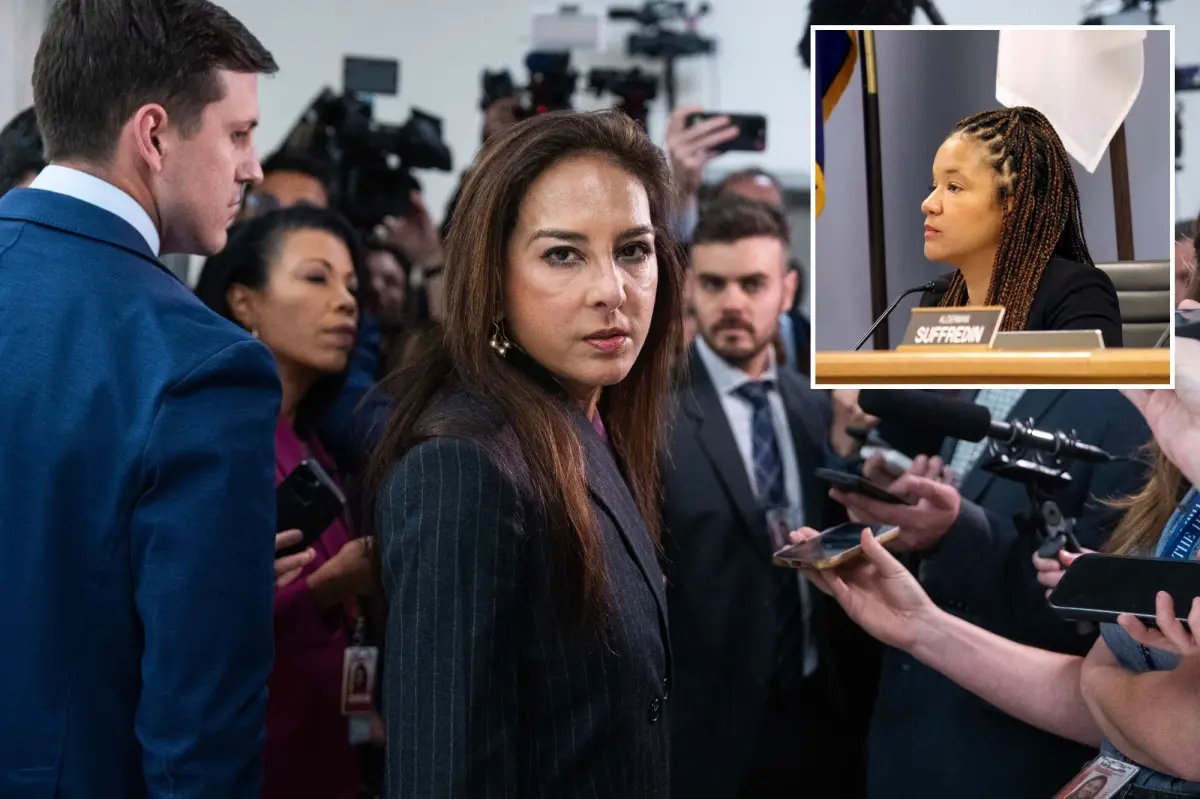
However, this local effort to mend historical wounds has collided with the massive, uncompromising machinery of the federal government. In a dramatic escalation of an ongoing legal battle, the United States Department of Justice stepped into an existing class-action lawsuit, filing a formal request with a federal judge to halt Evanston’s landmark program. The federal government has officially labeled the initiative as “racially discriminatory,” arguing that by earmarking public funds specifically for Black residents, the city has directly violated the Equal Protection Clause of the Fourteenth Amendment of the U.S. Constitution. Harmeet Dhillon, the assistant attorney general for the Civil Rights Division, argued that while municipalities have a duty to help their most vulnerable populations, doing so through race-based financial distributions is fundamentally unlawful. This intervention has instantly elevated a local zoning and historical dispute into a monumental national trial over how modern America should address its historic sins, forcing a painful debate over whether true equality means treating everyone exactly the same today, or actively correcting the visible imbalance left behind by decades of government-sanctioned racial oppression.
To understand why Evanston felt compelled to act, one must look at the physical and emotional layout of the city itself, where the echoes of segregation remain written into the landscape. According to historical studies and demographic data, Evanston’s Black population makes up about 14 percent of its 76,000 residents, with a significant majority concentrated in the historically neglected Second and Fifth Wards. For decades, between 1919 and 1969, the city utilized zoning laws, redlining, and restrictive covenants to explicitly prevent Black families from buying homes in wealthier, highly resourced neighborhoods. Robin Rue Simmons, the former alderman who pioneered the reparations program and now leads the local committee overseeing the funds, fiercely defends the program as a tailored response to these specific, documentable historical atrocities. Simmons argues that the deliberate denial of mortgages and property ownership stripped generations of Black families of their ability to build and pass down generational wealth, which in turn severely limited their access to high-paying jobs, quality healthcare, and elite education. In her eyes, the program is not a random handout, but a meticulously targeted remedy for a specific local conspiracy that worked for fifty years to keep Black residents economically subjugated.
In stark contrast, those challenging the program view it as an unconstitutional form of racial sorting that sets a dangerous and divisive legal precedent. Michael Bekesha, an attorney representing six non-Black Evanston residents who sued the city in May 2024, argues that the program is fatally flawed because it does not require applicants to prove that they, as individuals, suffered direct, personal harm from the actions of the city. Bekesha contends that because the program relies on ancestral heritage and systemic assumptions rather than individualized proof of injury, it uses race as the sole determining factor for eligibility, meaning his clients are excluded from receiving the benefits simply because of their skin color. He draws a sharp legal distinction between Evanston’s program and successful historic reparations initiatives, such as the federal compensation paid to Japanese-Americans forced into internment camps during World War II, or the financial settlements awarded to victims of systemic police torture in Chicago. According to Bekesha, those programs were constitutionally sound because they directly linked specific monetary damages to concrete, documented physical abuses suffered by specific human beings, whereas Evanston’s program seeks to mass-remedy historical housing patterns in a way that modern constitutional law simply does not allow.
The escalating legal warfare over Evanston’s program has sent shockwaves through a nation that has been deeply divided over the issue of racial justice since the abolition of slavery. While reparations have been debated for over a century, the movement gained explosive momentum in 2020 following the murder of George Floyd, inspiring a wave of racial reckoning that led at least five states—including California, New York, and Maryland—along with dozens of major metropolitan cities like Boston, Detroit, and Philadelphia, to establish official commissions to study the feasibility of reparations. Yet, while other governments have hesitated, tangled up in endless bureaucratic studies and political gridlock, Evanston was the only community brave enough to cross the starting line and actually put physical checks into the hands of its residents. Because of this, Robin Rue Simmons views the federal government’s aggressive intervention as a calculated “fear tactic” designed to intimidate other progressive municipalities and freeze the nationwide momentum for economic repair before it can take root in other communities. The lawsuit represents a major test case, because if the courts strike down Evanston’s program, it could effectively dismantle the legal viability of municipal-level reparations across the entire United States.
On a broader geopolitical and ideological scale, this federal intervention marks a sharp, decisive departure from the policies of the previous administration and highlights a widening global divide. Under President Joe Biden, the federal government had expressed cautious support for studying national reparations, aligning with progressive movements and international human rights bodies like the United Nations, which recently passed a sweeping resolution urging global powers to implement comprehensive reparations for the historic horrors of transatlantic slavery. The United States, alongside the United Kingdom and several European nations, historically resisted or abstained from such global measures, and the current administration’s aggressive courtroom push against Evanston signals a complete rejection of race-conscious corrective programs. As the federal judge prepares to deliberate on the fate of Evanston’s program, the small Illinois city finds itself standing at a historical crossroads, caught in a philosophical storm between a legacy of unresolved racial trauma and the rigid, colorblind framework of constitutional law. The final ruling will not only decide whether an elderly resident in Evanston can repair their home, but will also outline the legal boundaries of what America is willing to do to heal its oldest and deepest wounds.