



In early March, just nine days after American warplanes first began dropping payloads onto Iranian soil, President Donald Trump stood before a swarm of reporters in the humid Florida air, confidently declaring that the United States military was on the precipice of a swift and absolute triumph. He painted a picture of a rapid, surgical victory, assuring a weary public that the objectives of the campaign were practically finalized and that the troops would soon be vindicated. Yet, fast-forward three months, and that glossy, triumphant narrative has dissolved into a grim, exhausting reality. The human cost of this brief but intense conflict is staggering: thirteen American service members did not return home to their families, and thousands of Iranian lives have been snuffed out in the crossfire. Meanwhile, the American taxpayer has been billed at least $29 billion for an operation that failed to achieve its primary strategic goals. The hardline theocratic regime in Tehran remains firmly entrenched in power, the sprawling underground facilities housing Iran’s dangerous stockpiles of highly enriched uranium lie buried but fully intact beneath layers of reinforced concrete and mountain rubble, and the nation’s lethal arsenal of drones and ballistic missiles continues to threaten the region.
This profound strategic stalemate stems from a fundamental mismatch in how the two adversaries approached the conflict, illustrating the peril of waging a high-tech war against an enemy whose only prerequisite for victory was basic survival. Washington entered the arena expecting a quick submission, but Tehran played a much longer, more existential game, knowing that simply enduring the American onslaught would constitute a political victory. To make matters more complicated, the United States wedded its military strategy to Israel, a partner with its own distinct geopolitical agenda centered on permanently crippling its regional adversaries. This alliance pulled American forces into a labyrinth of ancestral grudges and complex regional rivalries that have spanned generations, far beyond the scope of Washington’s original intent. Ultimately, the administration’s focus seemed to drift from securing a decisive military victory to orchestrating a dramatic diplomatic breakthrough, with President Trump positioning himself as a global peace broker. This desire to secure a historic headline made the administration far more willing to make major concessions, ultimately trading the promised “unconditional surrender” of Tehran for a fragile, conditions-based truce that leaves the root causes of the conflict entirely unresolved.
The failure to achieve a decisive victory overshadows what was, on paper, an incredibly sophisticated and tactically successful campaign by the United States military. Beginning on February 28, the U.S. Navy instituted a devastating maritime blockade that effectively choked off Iran’s oil exports, sending the country’s currency into a free-fall and strangling its daily economy. Precision airstrikes hammered more than 13,000 military and industrial sites across the country, decimating Iran’s conventional air force, dismantling its naval assets, and killing a significant portion of its senior political and military leadership. On the very first day of the war, a joint U.S.-Israeli bombardment successfully targeted and killed Iran’s Supreme Leader, Ayatollah Ali Khamenei. Yet, the assumption that such a decapitation strike would cause the Islamic Republic to crumble from within proved to be a severe miscalculation. The regime adapted with surprising speed, quickly elevating Khamenei’s son, Mojtaba, to the position of Supreme Leader and maintaining its authoritarian grip over a population of 90 million people. Now led by a grief-stricken son whose father was killed by American bombs, the new regime is bound to be far more hostile, deeply resentful, and utterly unwilling to cooperate with Western demands.
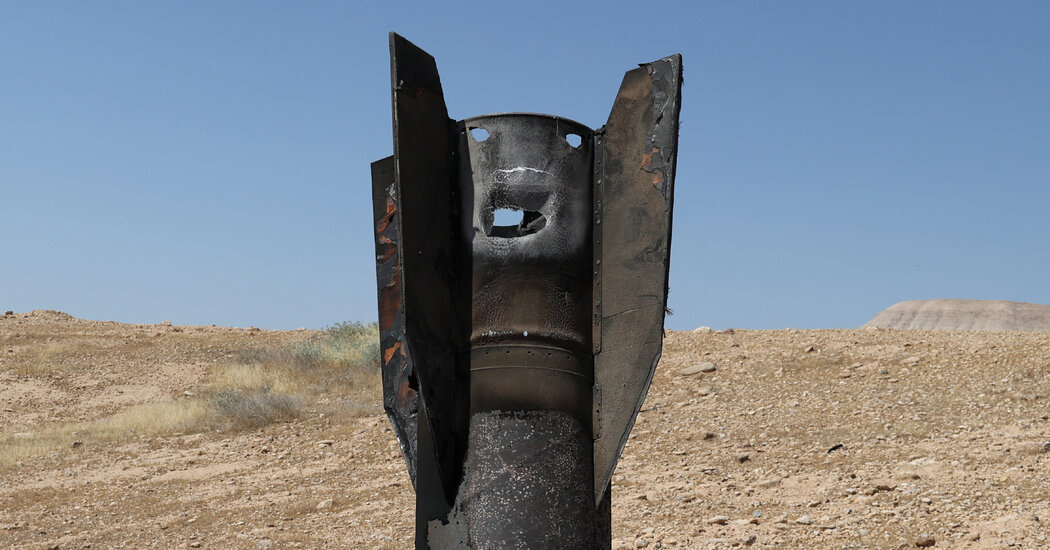
The fallout of this unresolved conflict is already reverberating through the diplomatic corridors of America’s regional allies, who are beginning to question the value of their security partnerships with Washington. Countries that graciously hosted American military bases and personnel suddenly found themselves on the front lines of an asymmetric nightmare, serving as primary targets for Iranian retaliation. Over the course of the three-month war, Iran and its network of regional proxies launched over 1,500 ballistic missiles and 4,700 explosive drones across the Middle East. At least 17 United States installations—including heavily fortified embassies, logistics hubs, and airfields essential for American power projection—sustained significant damage in the onslaught. For the local populations and governments of these host nations, the physical destruction on their doorsteps has sparked a painful realization: hosting American forces might not be a shield of protection, but rather a lightning rod for devastating counterattacks. This growing sense of vulnerability threatens to unravel the carefully constructed network of alliances that has anchored American influence in the Middle East for over half a century.
Beyond the immediate geopolitical shifts, the war has laid bare a quiet but deeply concerning vulnerability within the United States’ own military-industrial complex. While high-tech “wonder weapons” like precision-guided cruise missiles and advanced air-defense interceptors performed exceptionally well on the battlefield, the conflict has revealed that America’s manufacturing base is dangerously unprepared to sustain a prolonged, high-intensity fight. These multi-million-dollar defense systems are incredibly complex and time-consuming to manufacture, and the rate at which they were expended far outpaced the rate at which they can be rebuilt. During an emergency congressional hearing on April 30, Defense Secretary Pete Hegseth delivered a sobering assessment, revealing that it could take months, if not years, to fully replenish the munitions stockpiles depleted during the ninety-day campaign. This supply chain bottleneck has not gone unnoticed by global rivals like Beijing and Moscow, who are carefully analyzing America’s industrial stamina. Analysts warn that the global shortage of critical air-defense interceptors and long-range missiles has severely weakened U.S. military readiness, potentially tempting adversaries to move forward with their own aggressive territorial ambitions while Washington is structurally vulnerable.
Now, as the smoke clears, a fragile and highly secretive framework agreement signed by the United States and Iran has brought a temporary, uneasy quiet to the region. The two nations have entered a tense 60-day window to negotiate a comprehensive treaty that hopes to trade billions of dollars in economic sanctions relief for significant, verifiable security concessions from Tehran. Yet, the hurdles facing negotiators are monumental. They must find a way to permanently secure Iran’s remaining ten tons of enriched uranium, put its active nuclear research program back under strict international supervision, and address its rampant domestic missile production and continued financial backing of regional proxy groups. Failing to address these very issues was the primary criticism leveled against the 2015 joint agreement, and failure to solve them now would render the immense human and financial cost of this war entirely in vain. For now, the world is left to grapple with the bitter fruits of this conflict: thousands of empty chairs at family dinner tables across the Middle East, soaring global energy prices, and a profound, pervasive anxiety about the future, as humanity holds its collective breath and prays that this fragile truce can somehow pave the way for an enduring peace.