

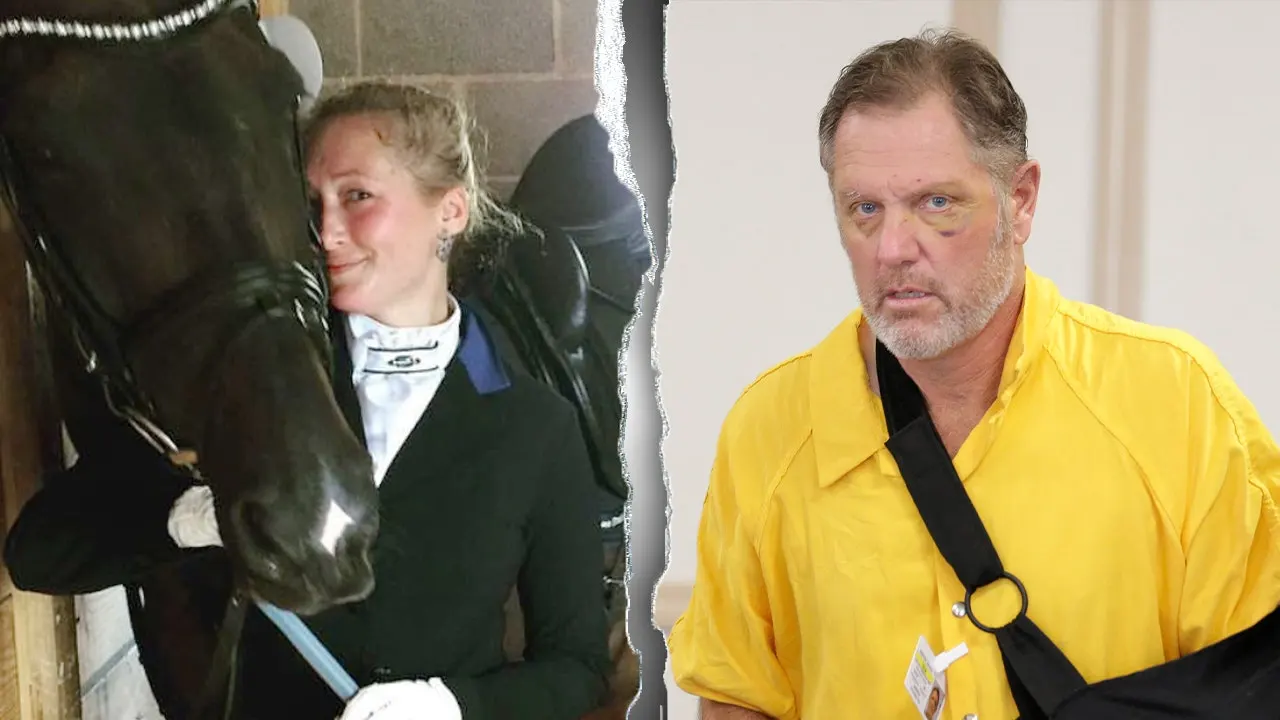
Behind the gleaming trophies, the pristine grassy paddocks, and the high-society allure of elite equestrian sports lies a harrowing tale of survival, institutional failure, and the devastating costs of modern media exploitation. For Lauren Kanarek, a dedicated dressage rider with aspirations of reaching the upper echelons of her sport, the dream turned into a waking nightmare on August 7, 2019, when she was shot twice in the chest by her Olympic trainer, Michael Barisone, at his Long Valley farm in New Jersey. Lauren miraculously survived the point-blank gunfire, embarking on a grueling road to physical recovery that would include a medically induced coma, intensive care, and the permanent loss of a significant portion of her lung capacity. However, as her family has recently and painfully discovered, the physical trauma of surviving an attempted murder was only the first chapter of her ordeal. In the years following the shooting, her story was seized upon by the insatiable engine of true-crime entertainment, culminating in a highly publicized episode of CBS News’ “48 Hours” in 2022 and Netflix’s 2026 documentary series “Untold: The Shooting at Hawthorne Hill.” Instead of offering a nuanced exploration of a survivor’s journey or the dangerous power dynamics inherent in professional sports, these productions have left Lauren’s family utterly devastated and outraged. Her father, Jonathan Kanarek, has stepped forward to publicly condemn the documentaries, alleging that they present a dangerously biased, one-sided narrative that actively humanizes and excuses her attacker while casting Lauren as a manipulative antagonist who drove her coach to violence. This calculated skewing of facts has not only distorted public perception but has also unleashed an unprecedented torrent of virtual hostility against Lauren, transforming her private struggle for healing into a public spectacle of cyberbullying and victim-blaming, illustrating the dark side of a media genre that routinely prioritizes profit, high drama, and high view counts over basic human empathy and truth.
The events that led to that fateful August afternoon at the Hawthorne Hill training facility paint a complex picture of a professional relationship that quickly soured, yet the stark reality of the physical violence that ended it remains indisputable. Lauren had moved onto the property in 2018 with her fiancé, Rob Goodwin, seeking to hone her skills under Barisone, a respected figure in the Olympic dressage community. As living and training quarters merged, interpersonal tensions flared, with both parties attributing the toxic atmosphere to the other’s escalating hostility. True-crime filmmakers heavily focused on Lauren’s social media activity during this period, choosing to frame her online posts as an intentional, psychological campaign designed to systematically dismantle Barisone’s mental stability. While Barisone claimed in his “48 Hours” interview that the online posts threw him into a state of absolute, unglued panic, Lauren and her family have vehemently denied these assertions, explaining that her posts were a defensive, desperate reaction to systemic alienation and efforts by Barisone’s camp to restrict her access to the training grounds. Regardless of the interpersonal discord, the escalation to lethal force remains a shocking, unjustifiable leap. When Barisone confronted Lauren and her fiancé on that hot August afternoon, his demeanor was described as chillingly vacant before he drew a hidden firearm and opened fire. The bullets tore through Lauren’s chest, leaving her to bleed out on the dirt of the farm she had once viewed as a sanctuary of her dreams. She was subsequently rushed to a nearby trauma center, where medical staff placed her in a medically induced coma for several days, performing life-saving cardiothoracic surgeries to reconstruct her shattered chest cavity and repair her damaged left lung. While the physical scars remain a daily, painful reminder of her close brush with death, the emotional toll of seeing her near-assassination transformed into a debatable “he-said, she-said” narrative in corporate documentaries has inflicted a deep, lingering psychological wound that no surgeon’s scalpel can heal, forever altering how she interacts with the sport she once loved.
The legal aftermath of the shooting did little to restore a sense of justice or peace for Lauren and her family, highlighting the profound disconnect that often exists between legal technicalities and moral accountability. In 2022, a Morris County jury found Michael Barisone not guilty of attempted murder by reason of insanity, accepting the defense’s argument that a combination of extreme stress, paranoia, and deep psychological distress had rendered him temporarily incapable of distinguishing right from wrong during the shooting. Consequently, instead of being sent to a correctional facility to serve a lengthy sentence, Barisone was civilly committed to the Ann Klein Forensic Center and later moved to Greystone Park Psychiatric Hospital for psychological evaluation and care. To the utter shock and dismay of the Kanarek family, his institutionalization lasted a mere year; by 2023, psychiatric evaluators deemed him fit for release, allowing him to walk out of the facility as a free man. This rapid return to normal life stood in stark contrast to the life sentence of physical disability, chronic pain, and profound emotional disruption that Lauren was forced to carry. Although the U.S. Olympic and Paralympic SafeSport organization took steps to permanently ban Barisone from participating in sanctioned equestrian events in 2025—citing severe emotional misconduct, sexual harassment, and multiple policy violations—the public damage had already been done, and the ban is still eligible for appeal. To the average viewer of true-crime programming, the insanity verdict, combined with his swift psychiatric release, was interpreted as a form of social exoneration, confirming a dangerous cultural narrative that Lauren’s online behavior was the true catalyst of the tragedy while the man who pulled the trigger was simply a tragic victim of circumstance. This skewed perception has fostered a culture of impunity within the sport, setting a terrifying precedent that a victim’s safety and survival may ultimately be heavily discounted in favor of protecting wealthy, high-profile athletic figures, while the survivor is left to navigate a world that treats her assailant with more empathy than her.
The role of major media networks in perpetuating this damaging narrative is a primary focus of the Kanarek family’s legal counsel, Steven Beer, who has openly challenged the ethical standards of the production companies involved in bringing Lauren’s trauma to the screen. Beer argues that television specials like “48 Hours” and Netflix’s documentary “Untold” can rarely claim to stand for victim advocacy or responsible investigative journalism, choosing instead to lean heavily into sensationalized, victim-blaming tropes to satisfy a global audience’s insatiable appetite for morbid entertainment. The warning signs of this biased framing were apparent to Lauren’s legal team even before the Netflix documentary officially aired. Upon viewing the project’s promotional materials and trailers, which prominently featured sympathetic portrayals of Barisone’s defense, Beer and his team reached out to Netflix and the production company, Propagate, requesting an advance screener of the film. Their goal was deeply compassionate: they wanted to help Lauren manage her severe anxiety and prepare her psychologically for the public fallout that would inevitably accompany the documentary’s release. Shockingly, the corporate entities flatly rejected this request, choosing to ignore the basic mental health needs of the real-life victim whose trauma they were directly capitalizing on for corporate profit. Beer characterizes this rejection as a profound ethical failure and a confirmation of the filmmakers’ single-minded prioritization of views and subscriber metrics over basic human decency. By presenting a narrative that continuously hints that Lauren’s actions could have driven an elite athlete to attempted homicide, the filmmakers actively chose to disregard the vital, ongoing cultural conversation surrounding the protection of young women from powerful, intimidating figures in sports, choosing instead to sell a story of sensationalized madness at the expense of a survivor’s peace of mind, proving that inside the lucrative true-crime industry, empathy and victim safety are often the very first casualties of corporate profitability.
The real-world consequences of this irresponsible storytelling have manifested as a relentless, terrifying campaign of public harassment and digital terror directed at Lauren, illustrating the immense power of true-crime audiences to weaponize physical violence into digital warfare. Following the release of the documentaries, a vocal segment of the true-crime community mobilized online, flooding Lauren’s social media channels and email inboxes with horrific vitriol, abusive slurs, and overt death threats. Her father, Jonathan Kanarek, recalls with immense pain the sheer cruelty of these messages, which frequently declared that Lauren should have died in the shooting, criticized her for surviving, and expressed regret that Barisone had not aimed for her head. This digital onslaught was further损害 and exacerbated by a profound sense of isolation within the equestrian community itself, where a historical culture of deference to high-ranking Olympic trainers led many training facilities to completely ostracize Lauren while actively rallying around her attacker. This disturbing shift in public sympathy is perhaps most clearly demonstrated by the immense financial and social support Barisone has received since his release. A GoFundMe fundraising campaign created on his behalf has successfully raised over $85,000 from sympathetic donors, many of whom view him as a misunderstood hero who was driven to the brink of ruin by a malicious trainee. While Barisone’s legal representation and supporters emphasize that he did not receive financial compensation for his participation in the Netflix documentary—purportedly to maintain the independent integrity of their court documents—the massive financial safety net raised by the public stands as a bitter contrast to Lauren’s reality. While her shooter is met with financial generosity, rehabilitation, and public advocacy, Lauren is left to quietly shoulder the astronomical, ongoing medical bills, surgical expenses, and intensive psychological therapy costs associated with her survival, forced to navigate a hostile world that has chosen to sympathize with the hands that held the gun rather than the body that caught the bullets.
In the face of this systemic betrayal, Lauren Kanarek is courageously fighting to reclaim her own narrative, refusing to allow herself to be defined as a professional victim or a passive casualty of corporate storytelling. With the unwavering support of her family and her lawyer, she is actively working to transition from a survivor of physical violence to a dedicated advocate for institutional reform, media accountability, and athlete safety. Healing, as Steven Beer emphasizes, remains Lauren’s absolute paramount priority, and she has come to realize that a vital component of her recovery involves bringing light out of the profound darkness that has characterized the last five years of her life. She is determined to use her lived experience to spark essential, constructive conversations about the vulnerability of young women in highly competitive, insular sports environments where powerful gatekeepers wield immense control over their careers, housing, and dreams. By speaking out against the manipulative framing of true-crime documentaries, Lauren hopes to educate the public on the realities of victim-blaming, exposing how easily media narratives can be manufactured to protect the powerful at the expense of the vulnerable. Her advocacy is driven by a deep, selfless desire to ensure that future generations of female athletes do not have to endure the same toxic, threatening environments, or face the devastating public trial-by-comment-section that she was forced to survive. Ultimately, Lauren’s journey of survival is not just about physical endurance, but about a profound moral resilience; she is standing firm against the powerful currents of corporate media and internet hostility, determined to transform her tragic circumstances into a legacy of protection, accountability, and hope for survivors everywhere, proving that even the loudest digital mobs cannot silence a voice committed to truth.