





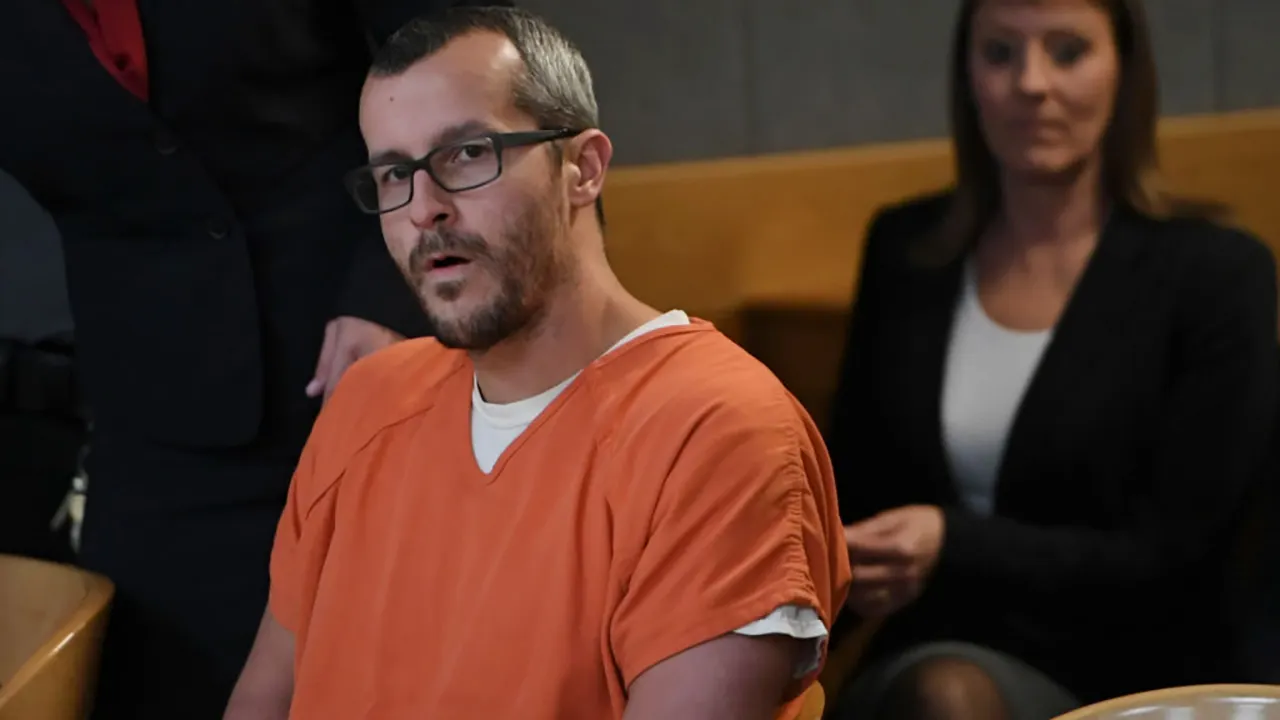
Chris Watts wants to take a wife, again. That simple sentence is enough to make anyone pause, because the name Chris Watts does not belong to an ordinary man. He is a convicted murderer, a former husband and father who, in August 2018, killed his pregnant wife and their two young daughters in one of the most shocking crimes of the decade. Now, while serving life in prison without the possibility of parole, he has reportedly found another woman willing to share his future. Her name is Lizzie Henderson, and according to People, she met Watts while he was locked up at Dodge Correctional Institution, a maximum-security prison in Waupun, Wisconsin. The relationship reportedly developed through the kind of prison correspondence that has become a strange facet of true crime culture: women write to famous or infamous men, sometimes out of curiosity, sometimes out of fascination, and sometimes because something deeper takes root. Henderson is not the first and likely will not be the last woman to become romantically linked to Watts, who has kept up a stream of letters and conversations with female pen pals from his cell. She appears to have taken the connection far further—there are reports that Watts and Henderson applied to marry within the prison system, and that Henderson uprooted her life and moved from Cleveland, Ohio, to Wisconsin to be closer to him. The whole situation is deeply unsettling, yet it is also a strange reminder that the instinct to love, or at least to feel loved, does not disappear even when a person has been condemned to live every remaining day behind bars. For those who followed the case, the news feels like a betrayal of memory and grief. For Henderson, it seems to be something else entirely—a relationship that gives her a sense of purpose, a place in a story that has consumed the public imagination, and a man who, despite everything, tells her what she needs to hear.
To appreciate why this new romance feels so distressing, you have to remember the scale of the loss. Shanann Watts was thirty-four years old and pregnant when she disappeared on August 13, 2018, along with her daughters, Bella, who was four, and Celeste, who was three. Friends grew worried when Shanann failed to show up for plans and missed everyone’s calls. The case quickly drew national attention, and Chris Watts appeared before television cameras with a gentle voice and a grief-stricken face, pleading for help in finding his missing family. But the performance did not survive contact with the truth. Investigators found Shanann’s body and the remains of the two children at a location connected to Watts, and the evidence pointed to the man who had claimed to love them. Under questioning, Watts confessed. He admitted to killing his wife and his daughters, and he did so with the distanced, calculated tone that continues to haunt anyone who listens to the interviews. His motive, investigators said, was an affair that made him believe he could simply walk away from his family and begin again. He pleaded guilty to all charges in exchange for prosecutors not seeking the death penalty, and a judge handed down life sentences without the possibility of parole. In the years since, the Watts case has been dissected in television specials, podcasts, and endless online commentary. But no amount of true crime analysis can restore the four lives that were cut short: Shanann’s unborn child, who never had a chance to take a breath, and two little girls whose entire futures were stolen by the one person who should have protected them. The details of the confession were so haunting that they left even hardened investigators shaken, and the public’s fascination with Watts has never really faded. It is the kind of case that feels like the raw edge of human nature, and that raw edge is now being stretched once again by the story of a new woman in his life.
Prison relationships are a strange and often misunderstood thing. For people like Watts, who will never leave the gates of a maximum-security institution, letters from the outside can become a form of emotional survival. Inmates write back, friendships deepen, and occasionally love blossoms. Watts has reportedly built a collection of female pen pals over the years, but with Henderson, something more serious appears to have happened. She is said to have traveled from Ohio to Wisconsin, relocated her life, and made herself known to the prison system as the woman who wants to marry one of America’s most reviled murderers. People reported that Watts and Henderson applied to marry within the prison system, though the process for inmate marriages is often slow and requires approval from prison officials. Racine County, Wisconsin, court records show that in 2025, a woman named Lizzie Henderson filed for a legal name change that was listed as confidential. While the records do not explicitly say why she requested the name change or how it connects to Watts, the timing and the secrecy have led observers to speculate that it may be related to a possible upcoming union. A confidential name change would help preserve her privacy at a moment when media scrutiny is intense, and perhaps it is the clearest evidence yet that Henderson is preparing for a new identity. None of this is proof that a wedding date has been set, and the Wisconsin Department of Corrections has not confirmed any marriage plan. But the pieces fit together too neatly to ignore. Henderson, the woman who previously built a career in real estate in the Milwaukee area, appears determined to be part of Watts’s life no matter how much the public recoils. In many ways, these relationships are built on fantasy, because prison visits are limited, physical contact is minimal, and all conversations are supervised. A marriage between Watts and Henderson would mostly be a life of letters, phone calls, and brief visits through glass—yet to someone like Henderson, that may feel like enough.
Henderson has not hidden entirely. She spoke to the Daily Mail, and what she said will not satisfy anyone looking for clear answers. “He knows how I feel,” she said of Watts. She also described the murders as “something harsh for anyone to experience” and added, “I don’t know all the people involved but I would want to respect them.” The words are careful, a little awkward, and strangely distant from the horror of what Watts did. She does not say he was wrong to kill Shanann. She does not speak directly to the pain of Shanann’s family or the memory of Bella and Celeste. She speaks about respecting people she hasn’t met, as if she is navigating a situation too heavy for ordinary language. It is possible she is struggling to find words that won’t hurt anyone, but it is also possible she has allowed herself to believe a version of Watts that exists only in letters and conversations. There is a psychological term used for women who develop romantic attachments to men who have committed violent crimes, and while that label can be useful, it does not make an individual story any less complicated. Right now Henderson has become the object of a great deal of public anger and confusion. She was previously listed as a real estate agent at a Milwaukee-area Keller Williams Realty office, but the office confirmed that she is no longer an employee and declined to comment. Fox News Digital reached out to the Wisconsin Department of Corrections for comment but has not received a response. In the absence of official clarity, the public is left to wrestle with the uncomfortable fact that someone, somewhere, is willing to love a man who destroyed his own family. Some people call her naive. Some call her dangerous. Some simply wonder whether she is chasing the dark glow of publicity. But no matter what anyone thinks, Henderson has thrown herself into a situation that will not end well—because for Watts, there is no happy ending, only the slow, closed loop of a life spent behind bars.
The deeper issue is what this relationship tells us about the way we think about crime, punishment, and the strange capacity of human beings to form bonds in the most broken places. Chris Watts is the last person anyone should forgive. He was a husband who had an affair, a father who killed his babies, and a man who lied to reporters while the bodies of his children were waiting to be found. He does not deserve a second chance at love, if such a thing even can be granted to someone in his position. Yet he is also a human being, and human beings are not designed to live entirely without connection. In the vacuum of a prison cell, attention feels like affection. Affection feels like hope. And hope, no matter how misplaced, can convince someone that they are not entirely defined by the worst thing they have ever done. Henderson may be drawn to Watts because he is notorious, because he makes her feel important, because she believes she sees a side of him that no one else does, or because she is living through some emotional need that will never be fully explained from the outside. She is not a victim. She is not a villain. She is a woman who made a choice that most of the world finds incomprehensible. But her choice provides a lens through which we can see the strange ecosystem of prison romance: men serving life sentences who continue to exist in the minds of strangers, women who write to them, and the quiet marriages that happen behind walls we prefer not to think about. Understanding that ecosystem does not mean excusing Watts. It simply means acknowledging that monstrous acts do not erase the human longing to be seen, loved, or remembered. That longing is part of what makes this story so hard to read. It would be much easier if Watts were a monster through and through, with no resemblance to the rest of us. But the truth is that he was once a neighbor, a coworker, a father at a school pickup line. The difference between him and everyone else is not the presence of weaknesses or needs; it is what he chose to do with his rage and resentment.
The story of Chris Watts and Lizzie Henderson will continue to unfold in headlines, gossip, and legal filings. But if we are not careful, it will become just another chapter in a true-crime saga that has already had far too many twists. The real weight of the story rests on the people who never got to live: Shanann Watts, a mother who loved her children and was eagerly expecting a son; Bella, a four-year-old with a smile that could break hearts; Celeste, a three-year-old who should have had years of birthday cakes and first days of school; and the unborn child who never got a name. Every new romance, every prison marriage application, every documentary that revisits the case, threatens to push those victims further into the margins of their own tragedy. But they belong at the center. Chris Watts may have found someone new. He may convince himself that love is possible even after everything. He may marry Henderson in a prison ceremony and become a husband again. But none of that changes the fact that he buried his own family in shallow graves, and that Shanann’s parents will never see their daughter walk through the door again, and that Bella and Celeste will never grow old. The human heart can be astonishingly resilient and astonishingly blind at the same time. That is not a reason to hate Henderson, and it is not a reason to forget what Watts did. It is a reason to hold the truth gently but firmly: there is no happy ending here, only a chapter of a tragedy that can never be rewritten. As long as prisons exist, people will fall in love in strange places, and as long as true crime remains a part of our culture, stories like this one will capture our attention. But the rest of us do not have to celebrate or participate. The best thing we can do is keep our attention fixed where it belongs—on the victims, their memories, and the reminder that the deepest crime of all is the taking of innocent lives.