




In the quiet, dusty stretches of Spokane County, Washington, West Euclid Road exists as a peaceful, dead-end relic of a bygone era, a place where the passage of strangers is both rare and immediately noticeable. It was on this tranquil road, bordered by dense pine trees and dry, golden summer grasses, that grandfather Paul Child was driving his grandson to pick up a friend on a warm Saturday afternoon. The serene atmosphere was abruptly punctured when Child spotted a bald man standing near the local railroad tracks, staring intently into the thick tree line. Though Child initially dismissed the odd sight as a minor curiosity, a lingering sense of unease settled over him, prompting him to keep a watchful eye on the area. Ten minutes later, returning along the same stretch of road, Child’s instincts were confirmed when he saw the exact same man, now bent low over the dry brush, actively manipulating the grass and bushes near the tracks. Upon realizing he was being watched, the stranger stood up abruptly, his body language radiating a nervous, guilty energy that even Child’s young grandson immediately picked up on, asking what the suspicious man was doing. This brief, unsettling encounter on a forgotten road would soon prove to be the critical catalyst in uncovering the origins of one of the region’s most devastating natural disasters, illustrating how a community’s safety often rests on the simple, sharp-eyed vigilance of its everyday citizens.
The true gravity of the situation became terrifyingly clear just moments after the family returned to their home, when Child’s daughter, Ana Dillon, glanced out the window toward the nearby railroad tracks and witnessed a massive column of white smoke rapidly turning into a thick, choking black cloud. In that instant, the pieces of the puzzle fell into place for Child, whose mind flashed back to the nervous stranger in the brush, igniting a wave of anger and dread as he realized they were facing a rapidly spreading arson fire. Acting on pure adrenaline, Child dialed 911 and desperately tried to contact their only neighbor on the dead-end road, eventually reaching him by phone to warn that a ferocious wildfire was bearing down on his property where workers were currently trapped inside a backyard workshop. As the family rushed to the scene to facilitate an evacuation, the reality of the danger became overwhelming; the dry grasslands acted like tinder, allowing the flames to sprint toward their 17-acre property with terrifying speed. With thick ash filling the air and the roar of the approaching inferno growing louder, the family embarked on a frantic, heart-pounding scramble to pack up their lives, loading five dogs and two cats into their vehicles as firefighters began to descend on the smoky, chaotic landscape in a desperate bid to contain the emerging monster.
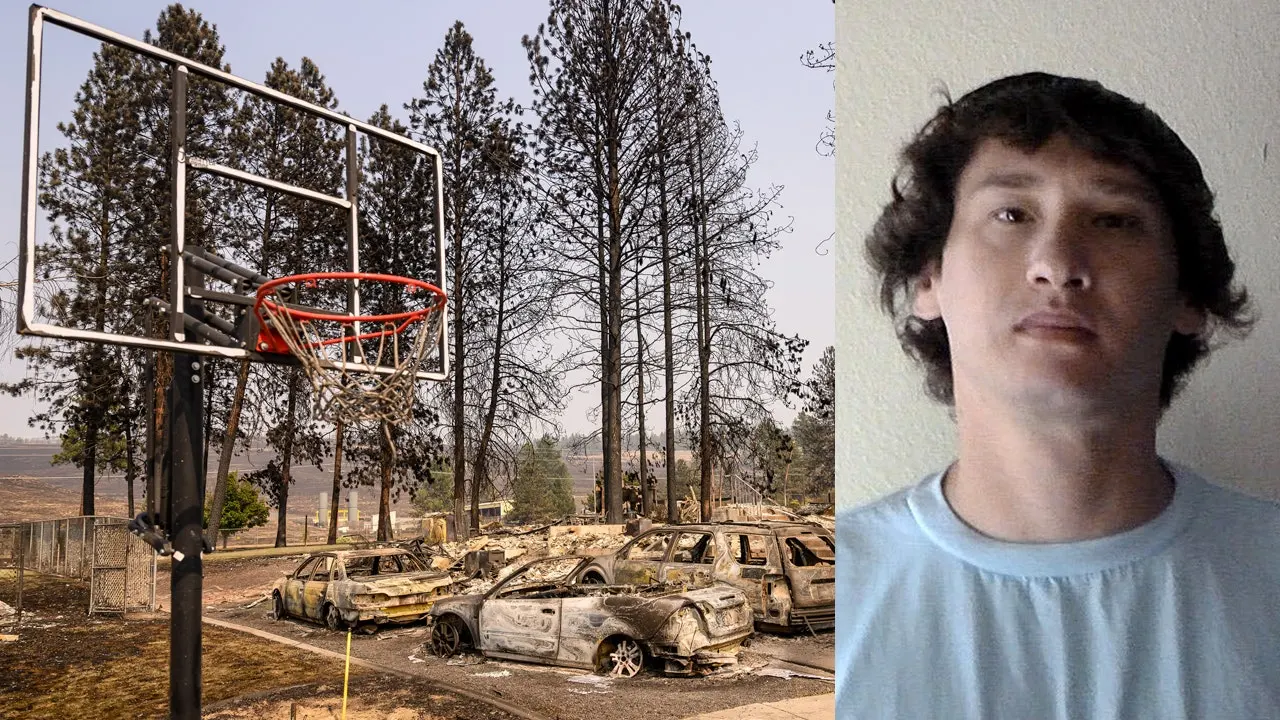
Fleeing the encroaching flames, Child drove away from his threatened home and flagged down an Airway Heights police officer, providing a detailed physical description of the suspicious man—a bald white male in a green T-shirt carrying a backpack—and pointing out the exact location where he had been crouching. Thanks to this swift and precise information, Spokane County sheriff’s deputies were able to locate and detain a suspect matching the description in short order, setting the stage for a tense, dramatic drive-by identification. Sitting in the cab of Child’s pickup truck just fifty yards away, Child, his grandson, and the grandson’s friend watched silently as deputies escorted the man from a patrol vehicle, leaving no doubt in their minds that this was indeed the individual they had observed lurking in the dry brush. However, the family’s initial relief quickly curdled into a deep, chilling sense of vulnerability when they later learned of the suspect’s identity, Aaron F. Farinacci, and his violent criminal history, which included a 2010 conviction for the fatal shooting of his own father. The realization that a convicted killer with a history of extreme violence had been operating so close to their home, and now knew exactly where they lived, cast a long, haunting shadow over the family, transforming their survival story into a sobering reminder of the unseen dangers that can suddenly knock on a family’s door.
While the eyewitness accounts of the Child family provided law enforcement with a crucial starting point, the scientific process of proving wildfire arson in a court of law is an incredibly meticulous and challenging endeavor, as explained by retired Bureau of Alcohol, Tobacco, Firearms and Explosives (ATF) executive Scott Sweetow. Unlike typical crime scenes where evidence is preserved in place, a wildfire is a destructive force of nature that actively consumes, chars, and obliterates the very physical clues investigators need to determine how the blaze started. To build an airtight case, specialized fire investigators must work backward through the physical wreckage, carefully reading the subtle burn patterns left on charred vegetation, tree trunks, and soil to isolate the exact micro-location of the fire’s origin. This painstaking process requires investigators to act as forensic detectors, systematically evaluating and ruling out all plausible accidental and natural ignition sources—such as lightning strikes, malfunctioning electrical power infrastructure, friction from passing trains, or discarded cigarettes—before they can legally and confidently attribute the disaster to human intent. It is a slow, methodical reconstruction of the fire’s earliest moments, blending witness testimony, physical debris, and environmental science to prove that the dry grass did not ignite by chance, but was deliberately set ablaze by a human hand.
In the case against Farinacci, investigators focused heavily on the physical items found in his possession when he was first detained, specifically a butane lighter and a set of highly specialized windproof and waterproof matches. As Sweetow points out, these are not ordinary, easily discarded matches; they are expensive, heavy-duty survival tools designed to burn intensely like miniature portable flares, capable of staying lit in harsh conditions that would easily extinguish a standard flame. Finding remnants of such specialized ignition tools at the designated point of origin is a powerful piece of circumstantial evidence, but investigators had to carefully weigh this discovery against the entire matrix of the case, ensuring that every alternative cause was thoroughly debunked. This need for absolute scientific certainty explains why authorities initially released Farinacci during the height of the evacuation chaos before rearresting him once the physical evidence at the scene was fully processed and matched the witness timeline. This strategic sequence of events, far from being a failure of law enforcement, represents the disciplined reality of modern criminal justice, where investigators prioritize building an ironclad, scientifically sound case over a hasty arrest, ensuring that when a suspect is finally brought to trial, the evidence speaks louder than any lingering doubt.
Ultimately, the deliberate spark on West Euclid Road swelled into the devastating Old Trails Fire, the largest of three catastrophic blazes that swept through the Spokane region, reducing hundreds of homes and buildings to ash and forcing approximately 67,000 residents to flee in terror. The physical scars left on the Washington landscape are mirrored by the deep emotional trauma experienced by the displaced families, many of whom lost everything they owned in a matter of hours due to a single, senseless act of malice. For Paul Child and his family, the chaotic weekend has left them with a profound sense of empathy for their suffering neighbors, as well as a renewed appreciation for the fragile peace of their rural community. Their willingness to speak up, to notice the unusual, and to actively protect their neighbors highlights the indispensable power of human connection in the face of sudden disaster. As the legal system begins the slow process of holding Farinacci accountable for first-degree arson, the community is left to rebuild, drawing strength from the knowledge that even in the darkest, most destructive moments, the watchful eyes and caring hearts of ordinary citizens can help bring light, truth, and a path toward justice.