




A Quiet Return to Routine Amidst a Public Storm
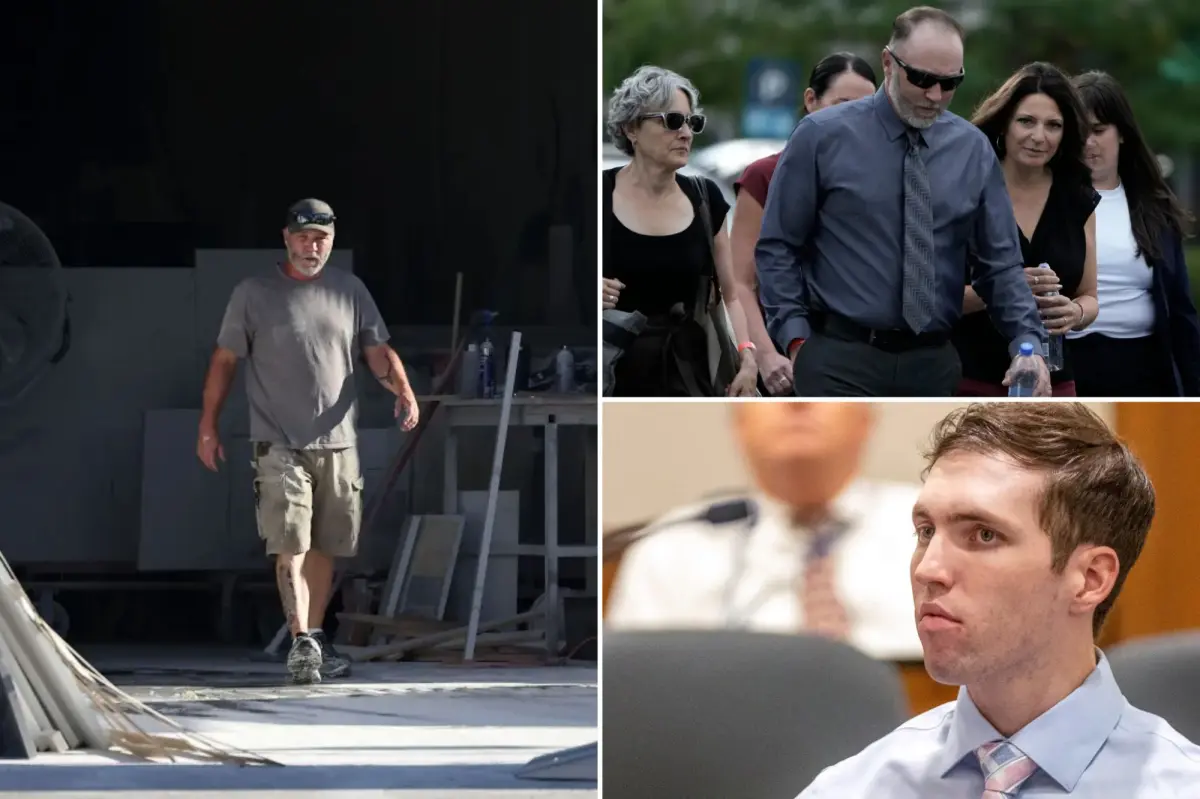
In the sun-drenched, red-rock city of St. George, Utah, life has seemingly returned to a fragile sort of normal for Matthew Robinson. Days after sitting in a tense courtroom—witnessing the public unveiling of devastating evidence against his 23-year-old son, Tyler—Matthew was back behind the wheel of his GMC pickup, commuting to his local masonry business. To the casual observer, it is a routine indistinguishable from the one he kept before his world fractured last September. It was Matthew who originally escorted his son to the sheriff’s office after Tyler allegedly confessed to the high-profile murder of Turning Point USA founder Charlie Kirk. Yet, while Matthew continues to stand by his son as a father, the financial and legal burdens of the defense have shifted entirely to the state. Though the Robinson family lives in a comfortable $600,000 suburban home, Tyler was declared indigent by the court, leaving Utah taxpayers to shoulder a defense bill that experts warn could easily surpass $10 million as the capital-murder trial and its inevitable appeals loom on the horizon.
The Resilience of a Family Business and Shadows of the Past
Operating from an unmarked warehouse on the outskirts of St. George, Matthew’s stone and marble supply business represents a lifetime of hard work, built almost entirely on word-of-mouth reputation and deep-seated local relationships. In a testament to the tight-knit nature of this southern Utah community, most of his clients have quietly chosen to stand by him, separating the sins of the son from the character of the father. Colleagues note that Matthew rarely speaks of the case, preferring to bury his grief and anxiety in the daily rhythm of physical labor. However, this is not the first time the family business has faced scrutiny. Court records reveal a bitter 2014 legal battle between Matthew and his brother Clint, who co-founded the company. Clint had accused Matthew of embezzling $100,000, hiding financial books, and trading company labor for personal favors—even alleging that Matthew warned they would go to jail if authorities ever inspected their financial records. Though that dispute ended in a confidential settlement, the old family fractures add a layer of historical strain to a family now enduring the ultimate public nightmare.
From a Promising Youth to a Dark, Radicalized Path
To those who knew Tyler Robinson growing up, the young man sitting in a jail cell is unrecognizable. Former teachers, neighbors, and childhood friends remember him as a polite, hardworking, and deeply religious kid who grew up in the comforting embrace of the local Latter-day Saints community. He was bright enough to earn a prestigious scholarship to Utah State University, a milestone that seemed to guarantee a successful future. However, that bright trajectory shattered when Tyler abruptly dropped out of college. He retreated into an isolated digital existence, renting a room across town from his parents and spending his days gaming and engaging in radical political echo chambers online. During this period of drift, he moved in with his trans partner, Lance Twiggs, and began down a path of deep ideological radicalization. Prosecutors argue that this volatile mix of isolation, political extremism, and personal instability ultimately culminated in the shocking shooting of Charlie Kirk at Utah Valley University, located a three-hour drive from Tyler’s quiet hometown.
Love Letters, Confessions, and the Turning Point
The prosecution’s case, laid out during a bombshell pre-trial hearing, paints a damning portrait of the hours and days following the murder. Lance Twiggs testified via video, recounting how a highly distressed Tyler confessed to the killing at least three times. Among the most chilling pieces of evidence presented was a love letter Tyler wrote to Twiggs, whom he addressed by his trans furry persona, “Luna,” in which he admitted to the crime. According to Twiggs, Tyler eventually crumbled under the weight of his actions, weeping openly before declaring that he needed to tell his parents the truth. This confession set off the somber sequence of events where Matthew Robinson, accompanied by a retired police officer who was a family friend, walked his son into the hands of law enforcement. Today, Tyler’s high-powered defense team—comprising elite attorneys from both Utah and California—is seeking an additional $2 million in immediate state funding just to prepare for trial, citing the extraordinary resources required to counter the state’s mountain of physical and digital forensic evidence.
The Heavy Burden on a Small Utah Community
For the residents of St. George, a scenic and conservative enclave nestled among the majestic bluffs of the southern Utah desert, the trial is an exhausting, unwanted spectacle. The community has found itself thrust into the center of a national media circus, a bewildering reality for a town that prides itself on quiet faith, neighborly trust, and privacy. Rich Hentosh, a former high school teacher of Tyler’s, attended the pre-trial hearings and expressed the collective heartbreak of the community. Watching the media cameras swarm the courtroom and seeing a former student—once a boy with so much promise—shackled and accused of a historic act of political violence was deeply jarring. Hentosh noted that regardless of the ultimate verdict of guilt or innocence, the emotional toll on those who watched Tyler grow up is immense. The tragedy has cast a long, somber shadow over the local landscape, leaving neighbors to grapple with the disturbing reality of how a boy from their own streets could stray so far.
An Weary Search for Closure and Healing
As the legal machinery slowly grinds forward, the prevailing sentiment in St. George is a profound yearning for closure. The sheer financial scale of the defense, paid for by the very taxpayers who are mourning the tragedy, adds a layer of quiet resentment to the grief. Legal experts point out that capital cases of this magnitude, especially those involving high-profile political figures, inevitably trigger decades of complex constitutional appeals, meaning this case will likely linger in the public consciousness for years to come. Yet, for the people living in the shadow of the Utah cliffs, the desire to move past the scandal is palpable. Neighbors, customers, and old friends are doing their best to support Matthew and Amber Robinson in their quiet grief, hoping to shield them from the harshest glares of the national spotlight. “The community is just done,” Hentosh remarked softly, capturing the exhaustion of a town ready to close a dark chapter, heal its self-inflicted wounds, and find its way back to the quiet peace they once took for granted.