


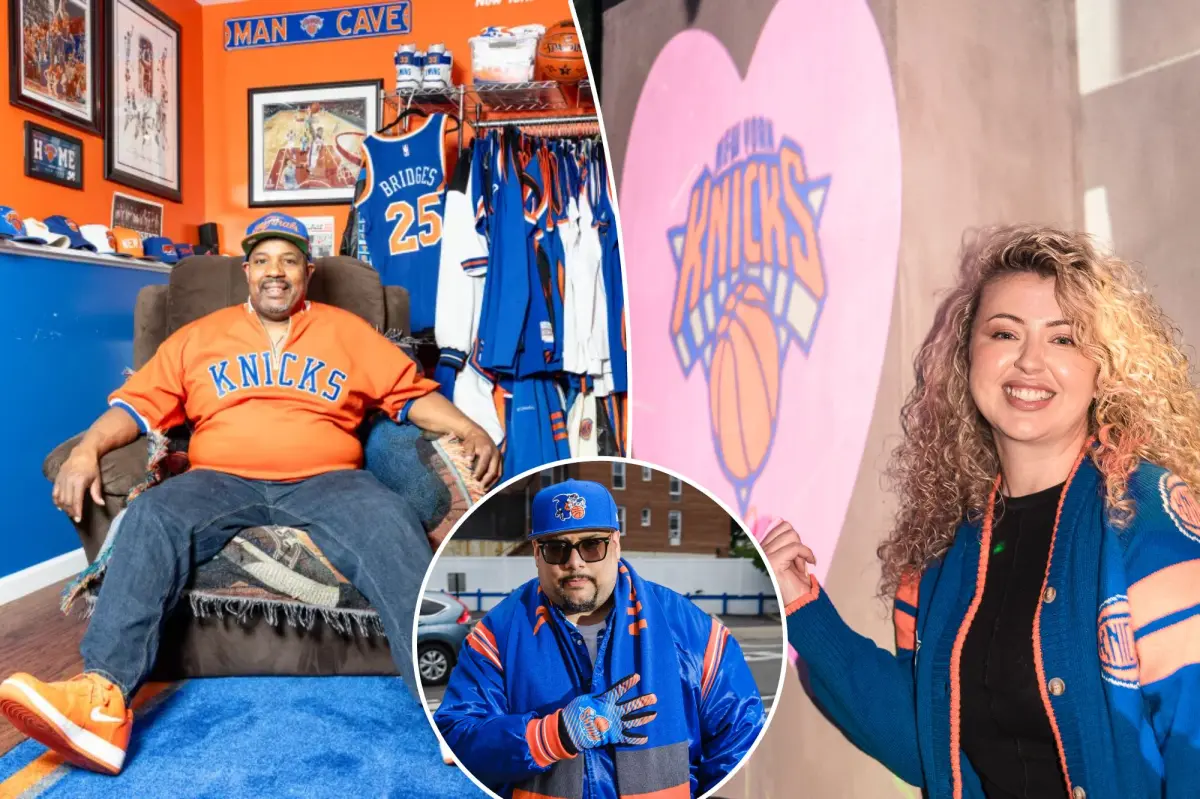
To understand the beating heart of New York City is to understand the tragedy, hope, and unwavering loyalty of a New York Knicks fan. For sixty-two-year-old Bronx native Greg Armstrong, this lifelong obsession is woven directly into his identity, tracing back to 1973—the bittersweet, legendary year the franchise last secured an NBA championship. Now living in Middletown, New York, Armstrong represents the gold standard of athletic devotion, marking his thirty-fourth consecutive year as a season ticket holder. He vividly recalls his earliest days of fandom, huddled around a crackling television set watching games on Channel 9 alongside his older brother, whose bedroom walls were a shrine of posters dedicated to Clyde Frazier. Over the decades, this burning passion has come at a steep financial cost; Armstrong remembers when his full-season ticket package cost a modest $2,000, a figure that has since skyrocketed to $10,000 for the regular season alone, easily ballooning to over $20,000 when factoring in high-stakes playoff tickets. Yet, Armstrong insists that every single penny spent has been priceless. Through his eyes, the high price of admission has granted him front-row access to a rich tapestry of basketball history: the fierce, physical rivalries of the 1990s, the unforgettable runs to the Finals, the towering dominance of Patrick Ewing in his prime, John Starks’ gravity-defying baseline dunk, Larry Johnson’s miraculous four-point play, and even the bizarre, surreal night of the 1994 Finals that was split-screened with the O.J. Simpson white Bronco chase. More than just historic athletic feats, his tickets have bought him a lifetimes’ worth of memories with his sons, personal interactions with players, and deep, lasting friendships with the fellow diehards occupying neighboring seats—including one fan who has sat directly in front of him for all thirty-four years. From waiting outside Madison Square Garden for nine exhausting hours in 1999 just to secure Eastern Conference Finals tickets, to curating a museum-grade collection featuring a piece of the signed 1970 championship floor, Armstrong’s life is defined by this blue-and-orange thread. As he watched the team return to the absolute pinnacle of the sport from his living room, screaming, crying, and feeling the weight of over fifty years of waiting, he admitted that a championship victory would be the most profound moment of his life, second only to the births of his children, a long-overdue catharsis he deeply desires to experience before parting from this earth.
This level of intense, near-religious devotion is echoed in the home of Chris Shammas, whose life is so deeply integrated with the Knicks that his domestic space has quite literally transformed into a monument to the team. What began as a modest display known as the “Knicks Nook” has slowly expanded to take over his entire apartment, creating a breathtaking living archive of relics from the franchise’s storied past. Visitors are greeted by a space overflowing with autographed basketballs, game-worn memorabilia, signed portions of the legendary Garden court, and historical relics that have even been spotlighted in official Madison Square Garden promotional campaigns. The absolute crown jewel of Shammas’ magnificent collection, however, is a pair of physical stadium seats that hold an irreplaceable personal history. These were the exact seats his family occupied from 1986 until the arena underwent massive renovations in 2011. When the stadium began auctioning off its old interior, Shammas refused to settle for any generic, random pair of seats; he repeatedly insisted to stadium officials that he wanted the exact chairs that had cradled his family through decades of cheers, groans, and nail-biting finishes. Despite initially being told that tracing those specific seats would be an impossible logistical nightmare, the Garden staff called him back two weeks later with the miraculous news that they had managed to track them down. Today, those seats serve as the focal point of a room where Shammas gathers with his closest friends to watch current games, surrounded by memorabilia from the eras of Red Holzman, Willis Reed, Bernard King, and contemporary icon Jalen Brunson. For Shammas, this room is a living, breathing emotional ecosystem where superstition reigns supreme; while he does not subscribe to one specific lucky shirt, any bad loss by the team will immediately banish the outfit he was wearing to a temporary, shameful exile on his closet shelves, proving that a fan’s connection to the game is felt in every single thread they wear.
While seasoned veterans carry the memory of the golden years, twenty-three-year-old New York City resident Bobby DeSantis represents the vital new generation of fans keeping the flame alive. For DeSantis, the love of the Knicks was not a choice but a treasured inheritance, a gift hand-delivered by his father that quickly evolved into a shared language, allowing them to debate, analyze, and bond over the team’s fortunes. Coming of age during the polarizing yet electrifying “Knickstape” era—defined by the star power of Carmelo Anthony, Amar’e Stoudemire, J.R. Smith, and Iman Shumpert—DeSantis learned early on that being a fan meant embracing both the dazzling highs and the agonizing lows. Though his collection of sports gear is understandably smaller than those of older collectors due to the practical constraints of youth and cost, the pieces he does own, including his childhood Carmelo Anthony jersey and newer RJ Barrett apparel, carry an immense, sentimental value that far outweighs any monetary worth. DeSantis approaches his fandom with a disciplined consistency, making it a personal priority to tune in for all eighty-two grueling regular-season games whenever humanly possible. In the fast-paced, often overwhelming environment of modern New York City, these games offer him a vital sanctuary—a reliable, exciting anchor at the end of a long day that gives him something consistent to look forward to amidst the stresses of daily life. This generational bridge highlights the unique power of the sport to keep families connected; even as the roster changes and decades flash by, the simple act of sitting down with a parent to watch a game remains an untouched, sacred ritual.
The magnetic pull of the franchise is so powerful that it even captures those who arrived in the city from entirely different worlds, as demonstrated by the journey of thirty-eight-year-old Tanya Mykhaylyuk. Having immigrated to the United States from Ukraine twenty years ago, Mykhaylyuk found herself captivated by the thunderous energy of the basketball games she saw on televisions across the city. She quickly recognized that the Knicks were far more than a mere sports franchise; they were the very soul of the city, an essential cultural cornerstone that brought strangers together and defined the unique, resilient spirit of New York. Driven by this realization, she established the popular fan page @theknicksgirl, spending years operating behind a veil of anonymity as she built a thriving, supportive digital community of passionate supporters. For Mykhaylyuk, the team’s recent historic success provided the ultimate platform to finally step out of the shadows and reveal her identity, celebrating both the team’s triumph and the beautiful network of human connections she had helped foster over the years. This community-focused approach regularly spills over into her physical life, where she hosts vibrant watch parties in her residential building’s lounge, gatherings that have grown from intimate circles of close friends into massive, booming events of over one hundred screaming fans. When the buzzer sounds and the game begins, her shared space undergoes a thrilling transformation, mimicking the electric, deafening ambiance of Madison Square Garden itself and showing how sports can help an outsider find a true, welcoming home in a sprawling metropolis.
This profound sense of family and community is also what drives sisters Jenn and Jazz Gordon, lifelong New Yorkers who have taken their deep personal obsession and molded it into a sprawling community platform known as OmniFan. Their journey began with cherished childhood trips to the Garden with their father, coupled with vivid memories of the physical, hard-nosed 1990s teams that cemented guys like Patrick Ewing and John Starks into their hearts. On nights when they couldn’t afford to be inside the arena, their incredibly supportive mother would wait with them late into the night outside the player exits in the cold Manhattan air, helping her daughters catch a glimpse of their heroes long after homework was finished—a beautiful sacrifice that leads the sisters to proudly declare their mother as the true “MVP” of their childhood. Today, through OmniFan, the sisters have successfully managed to bridge the gap between their childhood dreams and reality, hosting special events featuring their favorite former players like Chris Childs and interacting with legendary figures like Allan Houston. During the team’s current deep run, they have watched the entire city ignite with a collective joy, transforming their casual bar gatherings into massive, high-energy operations hosted in iconic locations such as Mustang Harry’s and the Hard Rock Cafe in Times Square. The sisters also keep a carefully curated, years-in-the-making scrapbook filled with old ticket stubs, newspaper headlines, and physical photographs, charting their beautiful evolution from wide-eyed children into community leaders. They look out at the packed venues they host and marvel at the incredible human connection happening right before their eyes, witnessing strangers from completely different walks of life embracing, laughing, and forging lifelong friendships purely through their shared love of the team.
Ultimately, this collective madness, energy, and unyielding devotion is best summed up by forty-year-old Flushing, Queens native Juan, who freely admits that the sheer, unhinged intensity of the fan base is the direct result of decades of bottled-up hope and championship starvation. Like so many others, Juan’s love for the team was a sacred bond passed down from his father, an absolute Patrick Ewing diehard, and he still treasures the NBA trading cards his father gifted him during the iconic matchups of the 1990s. Juan has developed his own highly personal to game day: he expresses his fandom outwardly through carefully selected, stylish apparel, but once the ball is tipped, he prefers to isolate himself from the distracting world, keeping his focus entirely on the screen while constantly texting back and forth with his father through every emotional twist and turn. For Juan, the current era of the team carries a deeply poetic, almost cinematic quality, spearheaded by the brilliant play of Jalen Brunson. Almost three decades ago, Juan watched alongside his father as Jalen’s own father, Rick Brunson, fought valiantly as a member of the historic 1999 Knicks squad that fell just short of a title in the Finals. Today, watching the son lead the franchise on a spectacular quest to capture the ultimate prize feels like a Hollywood script brought to life—a magnificent, multi-generational story of redemption where the son stands poised to finally avenge the father. As the city continues to rally behind this heroic quest, millions of loyal, long-suffering believers stand united, holding their breath in the hope that this legendary narrative will finally receive the perfect, golden ending they have spent their entire lives waiting to see.