






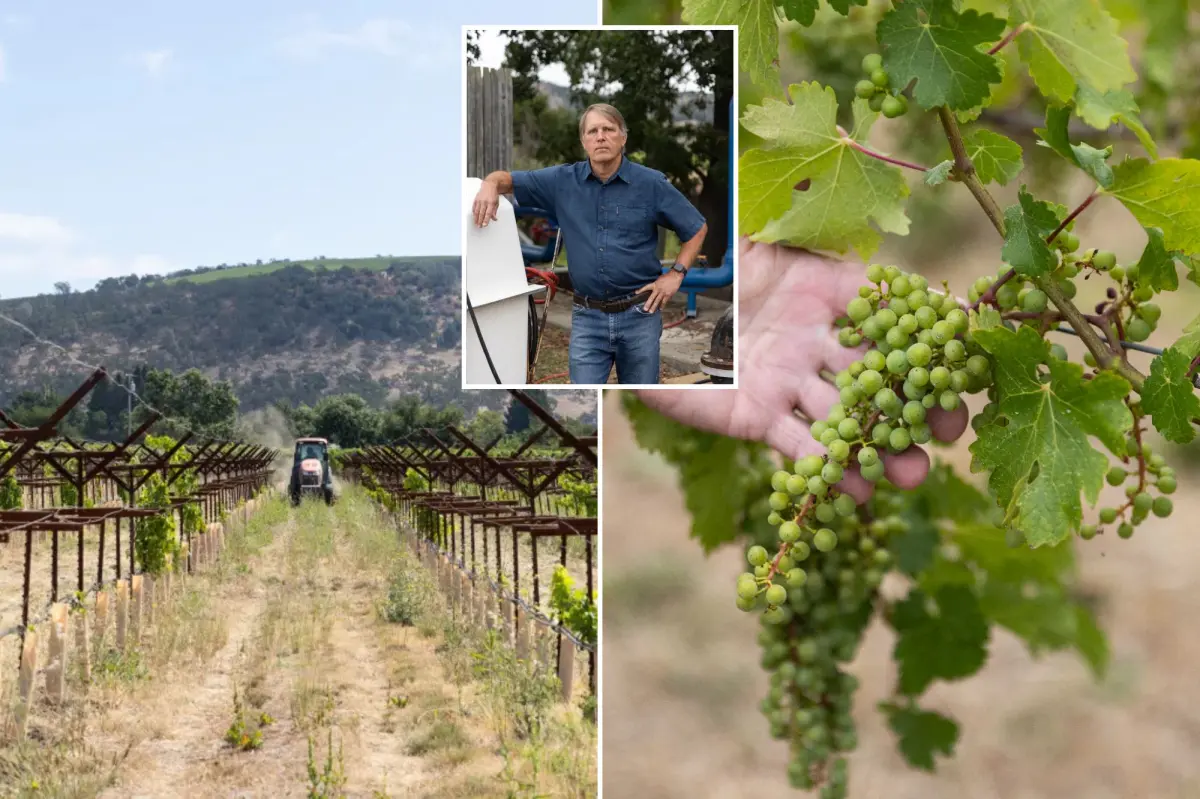
To the outside world, California’s Napa Valley is globally synonymous with sun-drenched, rolling hillsides, pristine vineyard estates, and a lifestyle of sophisticated, agrarian luxury. For decades, this picturesque Northern California enclave has been celebrated as the undisputed crown jewel of American winemaking, attracting millions of affluent tourists and fostering a multi-billion-dollar economy built entirely on the delicate alchemy of soil, climate, and grape. Yet beneath the romantic, mist-shrouded facade of the valley, a quiet, desperate, and bitter revolt is currently brewing among the very people who built its legendary reputation. Farmers and vineyard owners who have spent generations cultivating these historic lands warn that they are currently staring down a fiscal and existential precipice. The catalyst for this localized uprising is a newly minted groundwater fee, a state-mandated financial siphon that growers argue could easily set them back tens of thousands of dollars a year. It is a regulatory blow that arrives at what is perhaps the worst possible moment in the history of the region’s modern wine industry, compounding an escalating series of economic crises—ranging from devastating wildfires and plummeting tourism to skyrocketing labor costs and shifting global drinking habits—that are collectively threatening to crush Napa’s agricultural heritage.
The current wave of outrage is centered on California’s 2014 Sustainable Groundwater Management Act (SGMA), a sweeping piece of environmental legislation championed by Governor Gavin Newsom as a cornerstone of the state’s long-term sustainable water strategy. Under the final iterations of this plan, slated to take effect later this summer, local water authorities will begin charging commercial grape growers $98.74 per planted, irrigated acre each year, while local homeowners operating private wells will be saddled with a structural fee of $62.58 per parcel. Though a massive wave of immediate public backlash forced Napa County officials to temporarily soften the blow by agreeing to absorb half of the operational transition costs for the initial year and committing an annual $500,000 subsidy, the community at large remains deeply skeptical and intensely anxious because the remaining $2.17 million budget deficit must still be recovered directly through these new agricultural fees. For legendary operations like Beckstoffer Vineyards, which commands some of the most respected and historically significant viticultural acreage in the region, this new charge translates to an immediate, unbudgeted overhead cost of roughly $25,000 annually across their 12,000-acre Napa footprint. Jim Lincoln, the general manager of Beckstoffer Vineyards, points out the deeply painful irony of this policy by explaining how premium wine grapes are actually grown. Holding his thumb and index finger just a few inches apart, Lincoln notes that high-end viticulture depends on extreme water conservation; keeping vines moderately water-stressed is crucial for cultivating the concentrated, complex flavors necessary to produce world-class Cabernet Sauvignon and Chardonnay. Ultimately, these premium farmers are already natural, highly motivated stewards of groundwater conservation, making the state’s blunt-force tax feel less like environmental protection and more like a punitive financial shakeup.
The timing of this groundwater levy could hardly be more disastrous for an industry that is already operating in survival mode. The global wine market is currently enduring a profound, structural downturn, fueled by a combination of generational shifts in drinking habits—particularly among younger, increasingly sober-curious consumers—deflated post-pandemic consumer spending, and a marked decline in high-spending tourism. According to the highly respected 2026 wine industry report published by Silicon Valley Bank, approximately half of all wineries across the state of California are currently operating completely without a profit. Tasting rooms that once boasted month-long waiting lists now sit largely quiet, direct-to-consumer sales channels have cooled significantly, and vital wine club memberships have flatlined or entered steep declines. Consequently, the market values of once-coveted vineyard lands are actively dropping as speculative buyers and major agricultural investors retreat to the sidelines. Lincoln highlights that the popular national perception of Napa as an impenetrable oasis of luxury and limitless profit is a complete myth; behind the scenes, operational realities are bleak. Vineyard owners are simultaneously being crushed by a painful economic vise: their commercial winery clients are collectively begging for deep price reductions and ordering smaller quantities of fruit because they cannot move their existing inventories, while the baseline costs of raw materials, tractor fuel, equipment, and agricultural labor continue to march inexorably upward.
In addition to market stagnation and the new water levies, growers are finding themselves increasingly paralyzed by a sprawling, incredibly dense web of government red tape that many argue is designed without any practical understanding of actual farm work. A recent 2025 study conducted by Cal Poly and commissioned by the Napa County Farm Bureau revealed that simple regulatory compliance has become one of the most significant line-item costs on a vineyard’s balance sheet. For large operations in Napa, navigating the labyrinth of state and federal mandates now costs a staggering $1.7 million annually—breaking down to roughly $1,744 per acre, or an astonishing 12.5% of their total production budget. Even a modest, 200-acre multi-generational family-run vineyard, which lacks the administrative staff and financial cushion of a major corporation, must spend more than $226,000 every single year just to ensure they comply with government rules. Growers are currently forced to manage an overwhelming mountain of paperwork and reporting, which includes stringent air quality regulations, complex water discharge permits, continuous groundwater monitoring reports, intensive pesticide logs, newly drafted workplace violence prevention programs, wildfire smoke agricultural protections, heat illness compliance standards, expanded paid sick leave policies, Affordable Care Act mandates, specialized worker safety training, and exhaustive farmworker housing assessments. Rather than spending their days in the fields tending to their vines, Napa’s farmers are increasingly chained to office desks, trying to survive a mounting regulatory burden that is systematically pushing their profit margins far past the point of long-term economic viability.
The human cost of this regulatory onslaught is deeply felt across the valley, where independent farmers and family-owned operations represent the cultural heartbeat of the community. Peter Rumble, the chief executive officer of the Napa County Farm Bureau, paints a grim picture of the quiet desperation currently playing out on the ground, sharing that many local grape growers are entering the current harvest season without any contracts to sell their fruit. Yet, the biological cycle of agricultural farming offers no pause button; even if a farmer has no guaranteed buyer, they are legally and practically obligated to irrigate, prune, fertilize, spray, and keep their vineyards meticulously maintained all year long just to preserve the overall health and future viability of their vines. Rumble emphasizes the absurdity of asking a family farmer—who has already put hundreds of thousands of dollars of uninsured capital into tending a crop that may ultimately rot on the vine—to simply open up their checkbook and pay another government fee on top of their zero-revenue season. It is an excruciating situation that would leave any normal business owner reeling, yet when local representatives reached out to Governor Newsom’s office to highlight the severe financial strain of these combined policies and the crushing nature of the state’s regulatory ecosystem, the administration declined to comment, leaving local farmers feeling completely invisible, isolated, and abandoned by their state’s political leadership.
As the late-summer heat continues to ripen the Cabernet grapes across the valley, Napa is staring down a stark, existential choice about its future identity. The impending implementation of the groundwater fee on property tax bills this December marks a critical turning point in what has become a broader, statewide ideological battle over the limits of bureaucratic overreach. While environmental agencies insist that these fees are necessary to safeguard local water basins from terminal depletion and keep natural resource management under local control rather than risking a direct, heavy-handed intervention from state regulators, farmers feel they are being slowly regulated out of existence by officials who do not know the difference between a tractor and a vineyard plow. If California continues to pile regulatory paperwork and escalating financial penalties onto its agricultural communities during a historic market downturn, it risks permanently dismantling the fragile network of family farms that have defined Napa Valley for over a century. Ultimately, the survival of America’s premier winemaking region will depend on whether policymakers can find a way to balance necessary environmental stewardship with the simple, human economic realities of the people who actually work the land, ensuring that the legacy of Napa Valley remains rooted in thriving soil rather than piles of unaffordable government bills.