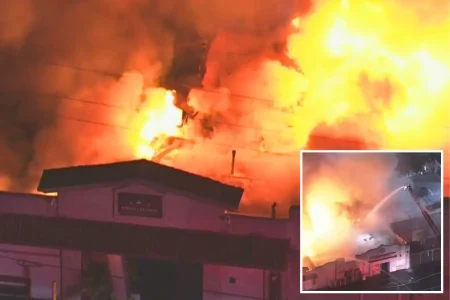







The immense boreal forest of northwestern Ontario, a vast and ancient tapestry of black spruce, jack pine, and deep peat bogs, has long lived in a delicate, seasonal balance with fire. For generations, the remote communities dotted throughout this wilderness—many of them isolated First Nations accessible only by air, water, or seasonal ice roads—have coexisted with the natural rhythms of the land. But on a sweltering afternoon that residents will never forget, that rhythm was violently shattered. What began as a distant, hazy smudge on the horizon swiftly mutated into a towering wall of ash and flame, fueled by historic droughts and unprecedented temperatures that had left the underbrush tinder-dry. The wind, howling and erratic, acted as an accelerant, transforming the creeping ground fires into a high-velocity canopy sprint that leaped over lakes and rivers with terrifying speed. Families in these remote outposts were caught utterly off-guard; there were no gradual warnings, no proactive alerts, and no sirens echoing through the trees. They were simply going about their daily lives—preparing meals, putting children down for naps, or tending to their yards—when the sky suddenly bruised into an apocalyptic palette of deep violet and blood orange. In an instant, the peaceful wilderness they called home became a claustrophobic trap, leaving them with mere minutes to make decisions that would mean the difference between life and death.
The evacuation that followed was not a structured, orderly retreat guided by emergency professionals, but a scene of absolute, bone-chilling panic. As a thick, suffocating blanket of acrid smoke descended upon the communities, blotting out the sun and plunging the afternoon into a premature, unnatural night, residents had to rely purely on instinct and community solidarity to survive. With visibility reduced to near zero and the air so hot it scorched the lungs, mothers grabbed crying infants, neighbors loaded frail elders into the beds of pickup trucks, and families rushed toward the local docks to pile into small aluminum motorboats, hoping the open water would offer a shield against the encroaching heat. On the ground, those fleeing by vehicle had to navigate narrow, single-lane gravel roads flanked on both sides by roaring walls of fire, with embers raining down like a localized meteor shower onto their windshields. There was a glaring absence of official provincial support during these crucial hours; no water bombers arrived to stall the fire’s advance on the evacuation routes, and no emergency coordinates were provided. People fled with nothing but the clothes on their backs, their pets clutched in their arms, and their vital medications left behind, leaving a trail of abandoned vehicles and half-packed bags as they fled into the blinding gray haze.
Now scattered across distant urban centers in temporary shelters, crowded hockey arenas, and sterile hotel rooms, the displaced residents are grappling with the profound psychological and physical toll of their displacement. The immediate relief of physical safety has quickly given way to a heavy, lingering trauma, made worse by the clinical and impersonal nature of the evacuation facilities. For many Indigenous elders, who hold an block of ancestral knowledge and a deep spiritual connection to the land, being confined to concrete sports complexes hundreds of kilometers away is a form of cultural dislocation that inflicts deep emotional wounds. Children, stripped of their routines, toys, and sense of security, wander the crowded aisles of cots, their eyes reflecting the confusion and anxiety of their parents. Information about the state of their communities is agonizingly sparse, leaving families in a torturous limbo as they continuously refresh social media feeds and place desperate phone calls back home, searching for any news of whether their houses, ancestral graves, and beloved forests have survived. This state of purgatory is defined by a heavy, communal grief, as people realize that even if their physical structures are spared, the landscape that defines their heritage and provides their sustenance has been permanently scarred.
As the initial shock of the escape begins to fade, it is being rapidly replaced by a collective, burning anger directed at provincial officials and emergency management agencies. The central, unavoidable question being asked by every evacuee, community leader, and northern advocate is simple and devastating: why were they left so utterly unprepared? For months leading up to the fire season, climate scientists and meteorological agencies had issued stark warnings about the severe drought conditions gripping northwestern Ontario, predicting a highly volatile and dangerous summer. Yet, when the crisis inevitably erupted, the provincial government’s response appeared hopelessly sluggish, paralyzed by bureaucratic red tape and caught flat-footed by a scenario that was entirely foreseeable. Residents are demanding to know why fire suppression crews had not been pre-positioned in high-risk northern zones, why the initial small flare-ups were allowed to burn unchecked until they became uncontrollable monsters, and why the communication systems between provincial authorities and remote communities broke down so catastrophically. The failure to mobilize resources proactively is being viewed not as an honest mistake, but as a severe, systemic neglect of the safety and well-being of the province’s northernmost inhabitants.
This lack of preparedness and sluggish response has laid bare a deep-seated, systemic inequity that has long divided Ontario along geographic and socioeconomic lines. It is an uncomfortable but widely recognized truth among northern residents that if a wildfire of this scale were threatening a wealthy, densely populated suburb in southern Ontario, the response from Queen’s Park would be swift, overwhelming, and highly coordinated. Instead, remote communities—many of which are marginalized First Nations—are routinely subjected to a second-class tier of disaster management, forced to rely on underfunded local volunteer fire departments and outdated equipment. Decades of chronic underfunding, coupled with recent provincial budget cuts to forest fire management programs, have left these regions exposed to the frontlines of climate change without the necessary defenses. This systemic indifference is further illustrated by the tiresome, bureaucratic finger-pointing that occurs between federal and provincial departments regarding who is responsible for funding and organizing evacuations, leaving vulnerable people stranded in the crossfire of jurisdictional disputes while their homes burn.
Ultimately, the survivors of the northwestern Ontario wildfires are refusing to allow their ordeal to be swept under the rug or dismissed as an unavoidable tragedy of a changing climate. While they fully recognize that global warming is driving more intense, frequent, and erratic wildfire behavior, they reject the narrative that their displacement and suffering were inevitable. Community chiefs, local mayors, and grassroots organizers are banding together to demand a fundamental structural overhaul of how emergency management is handled in the north, insisting on a model that champions local self-determination and financial empowerment. They argue that true preparedness must involve transferring funding and decision-making power directly to the communities themselves, allowing them to train local fire crews, maintain their own equipment, and integrate cutting-edge modern science with traditional ecological knowledge that has managed these forests for thousands of years. As they face the long, emotionally exhausting road of rebuilding their lives from the ashes, their message to the government is clear and uncompromising: they will no longer accept being treated as an afterthought in their own homeland, and they will fight to ensure that they are never again left to face the flames alone, undefended, and forgotten.