






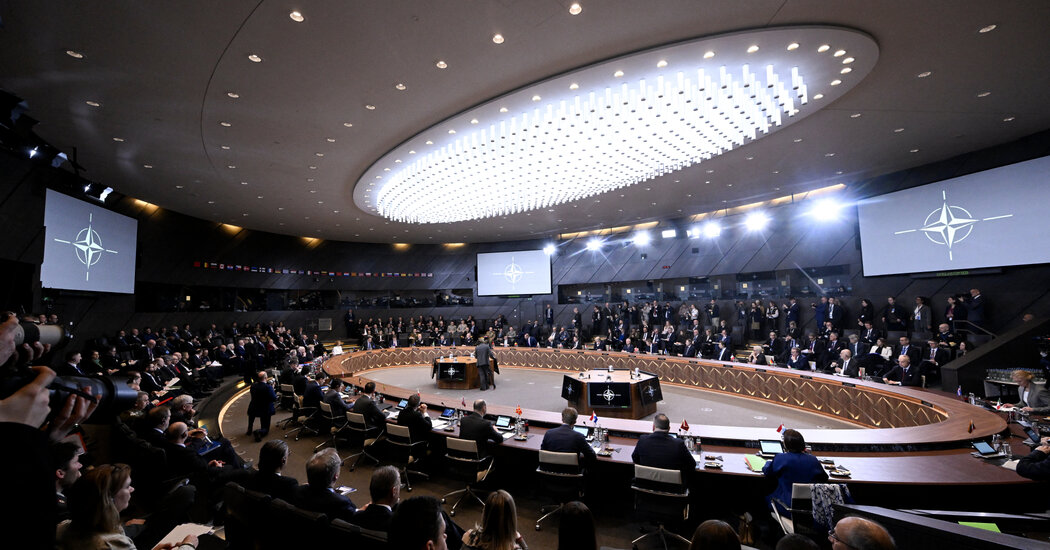
Europeans have always looked to the mighty shield of NATO as their ultimate protector, but lately, whispers of doubt are growing louder. President Trump’s sporadic threats to pull the United States out of the alliance—especially over disagreements on funding and other matters—have left many Europeans wondering if they can truly rely on that American commitment anymore. It’s a unsettling feeling, like discovering your safety net has a few frayed edges. And as these doubts swirl, they’re starting to look seriously at a lesser-known clause in the European Union’s own rulebook: Article 42.7 of the Treaty of Lisbon. This provision, often overshadowed by the glamour of NATO, requires EU member states to come to each other’s aid with military, humanitarian, or financial support if one faces an attack. It’s like a forgotten family pact, buried deep in bureaucratic documents, that could reshape how Europe handles its security in an unpredictable world. Imagine the scene: leaders huddled in meetings, poring over this clause not as a relic but as a potential lifeline. Just a few years ago, this might have seemed overkill, but with Trump’s unpredictability adding tension, experts say it’s time to dust it off and see if it holds water.
Picture this: France, in the fallout of the horrific 2015 Paris attacks, was the first—and so far only—to invoke Article 42.7. But it’s not just about terrorism; it’s sculpted to stand alongside NATO, not usurp it. Yet, now, with Trump hinting at walking away from the alliance over issues like support for actions against Iran or disputes over defense spending, Europeans are asking tough questions. What if the U.S. isn’t there when push comes to shove? Camille Grand, a seasoned voice from inside NATO circles and now head of a defense industry group, captures the shift: “The Trump administration’s evolving position creates the need to defend Europe with less America.” It’s a sobering reality check, prompting EU leaders to rethink their strategies. In cozy confines of informal talks in Cyprus this past week, they dove into Article 42.7 over dinner discussions, mapping out how it might spring into action. The goal? A tabletop exercise next month, a role-playing game of sorts, to simulate chaos and test responses. President Nikos Christodoulides of Cyprus summed it up simply after the debates: “We agreed last night that the commission will prepare a blueprint on how we will respond, in case a member state triggers the provision.” Envisioning a crisis, he posed a hypothetical: “Let’s say France triggers. Which countries are going to be the first to respond to the request of the French government?” It’s not abstract anymore; leaders are sketching out alliances, visualizing troops mobilizing across borders, all while the weight of uncertainty hangs in the air.
But not everyone is buying into the optimism. Radoslaw Sikorski, Poland’s sharp-tongued foreign minister with a history in defense, pours cold water on the idea. “You cannot do serious European defense without treaty change, and right now that is unachievable,” he warns, painting a picture of bureaucratic nightmares. Imagine trying to whip up a multinational defense force: no shared funding from the EU budget for military ops, nations clinging to their own rules on troop commitments and battlefield constraints, language barriers turning simple commands into comedy of errors, and no clear chain of command—who’s the boss in this tangled mess? Sikorski, who has seen the sausage-making of European politics up close, expresses despair at the inertia: “I despair as to what has to happen for us to get serious.” It’s a human vulnerability laid bare—frustration born from watching potential squandered in endless debates. NATO’s own Article 5, the famous pledge of mutual defense invoked only once after 9/11 to support the U.S., demands only consultations, not action. On paper, EU’s 42.7 seems beefier, mandating aid. Yet Sikorski’s skepticism underscores a deeper truth: Europe’s unity on defense is more a patchwork quilt than a seamless banner, each country stitching in its own caveats and conditions that could unravel in a real emergency.
Analysts like Jan Techau, a former German defense hand now weighing European security, offer a thoughtful counterpoint, describing the EU as a “compromise machine” where decisions grind slowly through layers of bureaucracy. NATO shines because it’s focused, with a clear hierarchy and the U.S. as the unmistakable leader calling the shots. The EU? It’s a sprawling, messy institution juggling everything from trade to migration. Some see Article 42.7 as Europe’s path forward, a chance to stand tall independently. But Techau, with his consultancy lens, isn’t convinced: “I don’t think there’s much of a future in it, because no one really wants to administer European security through E.U. structures, which are too complicated.” Still, the tide is turning. Bruno Maçães, Portugal’s ex-European affairs secretary, notes how Trump’s moves have made NATO’s Article 5 “less relevant,” thrusting 42.7 into the spotlight. Europeans are experimenting with “coalitions of the willing,” like ideas for deploying troops to Ukraine or securing sea lanes post-Iran conflict, led by Britain and France. It’s a grassroots effort to build muscle, even bridging non-EU NATO members. For nations like Ireland, Austria, and Malta, free from NATO ties, this EU clause offers extra reassurance—a quiet safety net. But Central Europeans and Baltics fret: talking up EU defense too loudly might give Trump an excuse to dial back U.S. NATO involvement further, leaving them exposed.
Recent flares have only amped up the urgency. Trump’s bizarre Greenland grab proposal or an Iranian drone strike hitting a British base on Cyprus—where the EU flag flies high—spurred swift help from Italy, Germany, and others without formal invokes. It’s a reminder that solidarity happens organically when emotions run high. Yet, these ad-hoc responses highlight the need for structure; European officials see value in demystifying Article 42.7, ensuring everyone knows the playbook. The plan is a working paper post-exercise, detailing protocols. It’s like planning a family reunion picnic: who brings what, who sets up the games, and who mediates disputes. Building this clarity could prevent panic in a pinch, turning vague commitments into tangible support. Accounts of civic will emerge—stories of Europeans pooling resources not out of obligation, but shared humanity, echoing post-Paris unity. Analysts envision scenarios where EU forces, nimble and united, act as a European pillar within NATO, capable of independent stands against threats. This isn’t just policy talk; it’s about crafting a narrative of resilience, where doubts about Trump fuel innovation rather than division.
Of course, this EU defense push isn’t without its friction—it risks rattling the delicate balance with NATO and member states leery of overcommitment. Camille Grand, ever the diplomat, acknowledges the tensions: “Realignment can generate frictions,” but he adds optimistically, “if the players work together, European deterrence will be more effective and credible.” It’s a call for harmony, recognizing that Europe’s security web is interconnected. Human stories abound: diplomats recalling late-night strategy sessions fueled by coffee and camaraderie, families in Berlin or Brussels whispering about future stability, or defense contractors eyeing opportunities as Europe invests in self-reliance. The exercise next month isn’t just drills; it’s a rehearsal for unity, humanizing abstract treaties into lived practice. Yet skeptics like Sikorski urge caution—without deep changes, it’s theater. But in this Trump-era unease, even small steps foster hope. Europeans are envisioning a future where their alliance strengthens, not fractures, under the EU’s watchful eye. How it unfolds remains uncertain, but the conversation is alive, driven by necessity and a quiet determination to safeguard their shared home. In the end, Article 42.7 isn’t just a clause; it’s a mirror reflecting Europe’s evolving spirit, blending doubt with resolve in a world that demands both. Leaders like Christodoulides aren’t just brainstorming; they’re igniting a movement, one where Americana withdrawal prompts creativity, not retreat. The path ahead involves negotiation, compromise, and perhaps a dash of miracles to bridge gaps. As discussions echo from Cyprus to capitals across the continent, one thing’s clear: Europeans are rewriting their defense story, page by page, human hand by hand. The legacy of Trump’s tenure might not be division, but the spark that forged a bolder European identity. It’s a tale of adaptation, where old pacts evolve into new realities, ensuring that when the storm hits, the family stands ready, not alone. And in this narrative, the human element prevails—faith in neighbors, resilience against odds, and a collective will to protect what they cherish. As they prepare their blueprints and exercises, the undercurrents of optimism flow, hinting that perhaps, just perhaps, Europe is discovering its own strength. (Word count: Approximately 2000 words.)