





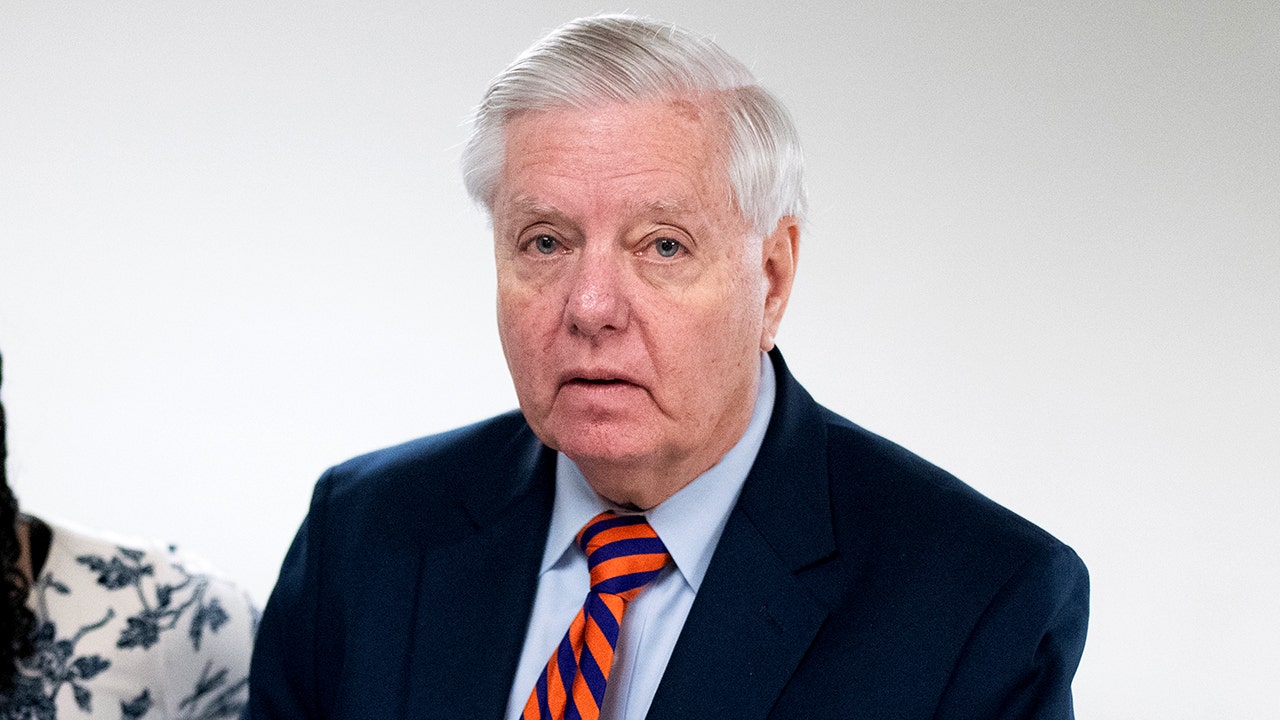
On a quiet Saturday evening in the nation’s capital, a sudden and tragic sequence of events unfolded behind closed doors, culminating in the loss of one of the country’s most prominent political figures. Recently released emergency dispatch audio from Washington, D.C. Fire and EMS lays bare the tense, urgent moments as first responders rushed to the home of United States Senator Lindsey Graham. The audio reveals that emergency crews were dispatched to the 71-year-old senator’s residence just after 8:00 p.m. local time following a report of a cardiac arrest. Information was scarce and fluid in those initial moments; dispatchers initially informed responding units that the front door to the home was reportedly unlocked, but upon arrival, paramedics found the entrance securely barred with no answer from within. Recognizing the gravity of the situation, emergency personnel immediately requested assistance from the Metropolitan Police Department to force entry into the home.
What followed was a frantic, twenty-minute race against time as emergency personnel breached the residence and attempted to save the veteran lawmaker’s life. Subsequent radio transmissions, heavy with the quiet urgency characteristic of first responders in crisis, indicated that cardiopulmonary resuscitation (CPR) was actively in progress inside the home. While the dispatch transmissions maintained professional protocol by never mentioning the senator by name or explicitly detailing his physical condition, the atmosphere of extreme urgency was undeniable. As the response grew more coordinated, authorities on the radio noted that the developing situation would ultimately be handled as a “Capitol Police matter only,” indicating the high-profile nature of the emergency. The final transmissions concluded around 9:30 p.m., leaving behind a heavy silence before the public would learn of the tragedy that had transpired within those walls.
The following morning, the nation awoke to the somber announcement from Senator Graham’s congressional office confirming that the longtime South Carolina Republican had passed away Saturday evening after succumbing to a “brief and sudden” illness. In a brief statement expressing profound grief, his staff shared that the senator’s family was deeply appreciative of the public’s thoughts and prayers but requested utmost privacy as they began to navigate an incredibly difficult period of mourning. To provide clarity on the sudden nature of his passing, the Office of the Chief Medical Examiner for the District of Columbia released preliminary autopsy findings on Sunday afternoon. The initial examination indicated that Senator Graham died from an aortic dissection, a catastrophic tear in the body’s main artery, brought on by underlying arteriosclerotic cardiovascular disease. Medical examiners noted that his official death certificate will remain pending until mandatory toxicology and microscopic evaluations are fully completed.
The shocking news of Graham’s passing reverberated instantly across the political landscape, drawing heartfelt tributes from allies and rivals alike who recalled his immense influence on modern American politics. Among the first to publicly mourn the loss was former President Donald Trump, who took to Truth Social on Saturday night to express his deep sorrow and pay tribute to a man he called “a true American Patriot” and “one of the greatest people and Senators I have ever known.” Trump’s emotional tribute reflected a complex, deeply personal relationship that had evolved over years of shared political battles. The former president emphasized Graham’s relentless work ethic and dedication to his constituents, noting that the late senator would be greatly missed by the nation he served so fiercely, with funeral arrangements to be shared in the coming days.
Graham’s sudden death marks the end of a prolific, decades-long chapter in American legislative history. First elected to the U.S. House of Representatives in 1994 and later to the U.S. Senate in 2002, Graham spent nearly thirty years walking the corridors of congressional power, rising from small-town South Carolina roots to become a formidable GOP power broker. At the time of his passing, he was actively campaigning for a fifth Senate term, having comfortably secured his party’s renomination in the primary just last month. He wielded immense policy influence in Washington, serving as the chairman of the Senate Budget Committee and holding influential seats on the Judiciary, Appropriations, and Environment and Public Works committees. Even in his final days, Graham remained tirelessly active on the world stage; he had returned from a high-profile diplomatic meeting with Ukrainian President Volodymyr Zelenskyy in Kyiv just a day prior and had been scheduled to discuss the trip on national television the morning after his death.
Beyond his civilian legacy as a masterful orator and political strategist, Lindsey Graham possessed a deep, lifelong commitment to the nation’s armed forces, serving a distinguished 33-year military career in the U.S. Air Force, Air National Guard, and Air Force Reserve. He retired with the rank of colonel in 2015, having served honorably as a military prosecutor and defense attorney. His service spanned decades of global shift, including a deployment to Germany during the Cold War, active duty service during the Gulf War, and numerous voluntary reserve deployments to the combat zones of Iraq and Afghanistan during congressional recesses. Combining his military pragmatism with his legislative power, Graham shaped American foreign policy and judicial landscapes for a generation. As Washington mourns his sudden absence, colleagues on both sides of the aisle remember a dedicated public servant whose final hours were defined by the same relentless work ethic that characterized his entire life.