


A Whale’s Odyssey: Timmy’s Triumphant Return to the Sea
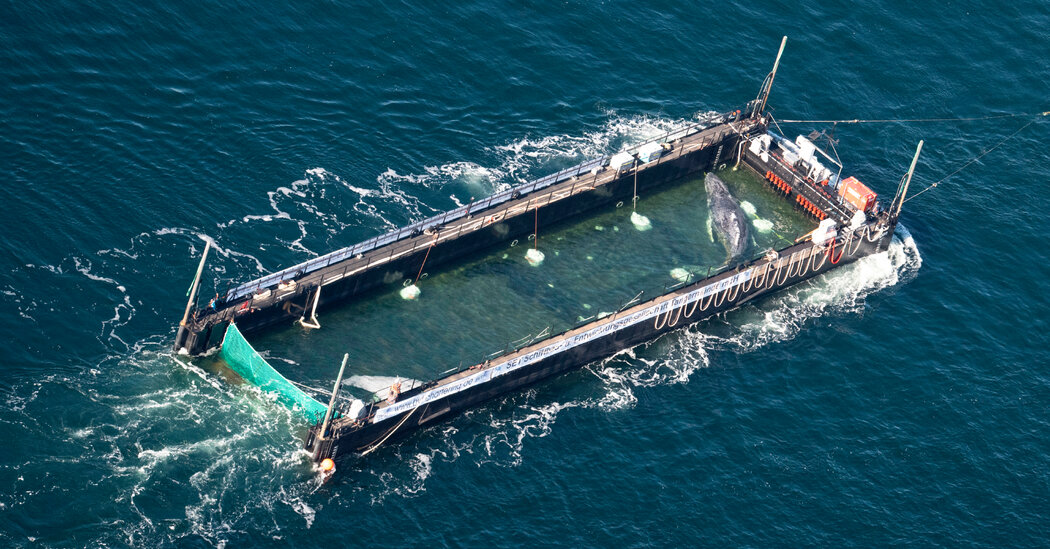
In a heartwarming victory for marine conservation and human ingenuity, a massive humpback whale dubbed Timmy by the German press was finally set free in the North Sea on a brisk Saturday morning. This dramatic outcome capped off weeks of relentless efforts to rescue the majestic creature from the shallow waters off Germany’s Baltic coast, where it had become an unwitting icon of perseverance and public empathy. Standing an impressive 40 feet and tipping the scales at around 26,000 pounds, Timmy had endured a perilous ordeal that drew national fascination and sparked debates on the ethics of wildlife rescue. Funded by two generous German millionaires, the operation involved an unprecedented move: coaxing the whale into a specially designed barge filled with seawater, then towing it hundreds of miles to deeper, more hospitable waters. As the barge was released near the northern tip of Denmark, timbers groaned and the whale exhaled a triumphant spout, signaling its bid for freedom. This rescue not only marked a rare success in such endeavors but also underscored the growing challenges humpback whales face in an era of human disruption to oceanic habitats.
Timmy’s saga began on March 23 when beachgoers first spotted the solitary whale stranded in the Baltic Sea’s shallows, far from its usual migratory paths in the North Atlantic. Humpback whales are not native to these enclosed, brackish waters, and experts point to rising instances of strandings among these gentle giants—often attributed to factors like climate change altering ocean temperatures, depleting food supplies, and interfering with their sophisticated echolocation abilities. Compounding the issue, the whale suffered from freshwater skin disease, a debilitating condition exacerbated by prolonged exposure to the region’s freshwater influxes, causing irritation and potential infection. Initial rescue attempts started small: teams from local marine authorities disentangled much of a fishing net ensnaring Timmy’s fins, hoping the trauma’s weight would lift and allow a natural escape. When that proved insufficient, a trench was dug with heavy machinery, creating a channel toward deeper water. Timmy did swim into it, but soon found himself beached again, a frustrating loop that tested everyone’s resolve. Yet, throughout these setbacks, the whale’s refusal to succumb became a metaphor for resilience, as it clung to life despite dwindling health and mobility.
What began as a local wildlife drama quickly morphed into a national spectacle, with crowds flocking to Timmendorf Beach on Poel Island, about 60 miles northeast of Hamburg. Enthusiastic onlookers drove for hours to catch a glimpse of Timmy, his back partially exposed above the waterline, evoking a mix of awe and sorrow. European media outlets, from serious dailies to tabloids like Bild, provided round-the-clock coverage, updating fans on every twitch of the whale’s fin or faint breach. “Timmy gives a little wave with his tail!” one breathless post read, fueling a social media frenzy that kept hope alive even as officials grew pessimistic. Amid this outpouring, officials initially deemed further interventions futile and declared plans to let nature take its course. But the public’s outcry was palpable; over 300,000 whales and dolphins die annually worldwide from fishing gear entanglements, yet Timmy’s story struck a chord, inspiring vigils where strangers shared stories of marine loss. Even an elderly woman risked a splash into the shallows to approach closer, only to be gently redirected, highlighting how one whale had bridged divides in a fractured world.
Hope flickered anew in mid-April when local authorities greenlit an ambitious plan backed by multimillionaires Walter Gunz and a partner. Gunz, founder of electronics giant MediaMarkt, poured undisclosed sums into the effort, driven by a deep-seated belief that no creature in distress should be abandoned. This wasn’t philanthropy as usual; it was a high-stakes gamble involving inflatable air cushions and pontoons to maneuver the immense mammal into a purpose-built barge half the length of a football field. Previous air-cushion trials had faltered, but the barge concept won the day—a floating aquatic suite where Timmy could be shielded from the journey’s stresses. On Thursday, as preparations peaked, Gunz recounted the whale’s voluntary entry into the barge, a moment of profound connection. “He sensed we were there to help,” he told reporters, crediting Timmy’s spirit for defying skeptics who wrote off its swimming capabilities. The barge was then towed meticulously out of the Baltic, circumnavigating Denmark’s Jutland peninsula, to reach the open North Sea, where saltier waters promised better recovery chances.
Critics, however, voiced measured skepticism about prolonging the ordeal. Kevin Robinson, head of Scotland’s Cetacean Research and Rescue Unit, praised the barge as a last-resort innovation—he’d never seen a whale survive such extended confinement—but lamented it wasn’t tried sooner. He emphasized weighing animal suffering against intervention’s toll, warning that rescue operations can inadvertently extend agony. “If the goal is mercy, sometimes stepping back is kinder,” Robinson reflected, drawing parallels to debates in veterinary ethics. Burkard Baschek, director of Germany’s Ocean Museum and a key scientific advisor, echoed concerns, noting Timmy’s frailty from weeks of minimal movement and the barge’s jarring acoustics that could heighten stress. “The echo against the steel hull—imagine the disorientation,” Baschek described in an interview, his voice tinged with empathy for the spectacle’s human side. Yet, he acknowledged the rescue as a testament to collective care, even if it didn’t boost survival odds. For Gunz and the team, though, success was personal; they watched Timmy’s spout fade into the horizon, a “great fountain” as Gunz termed it, affirming their faith in compassionate action.
Looking ahead, Timmy’s uncertain fate serves as a poignant reminder of broader threats to marine life. Released over 200 nautical miles from its stranding site, the whale now navigates familiar depths, but experts remain cautiously optimistic. Short-term survival is dubious, given its weakened state and compounded ailments beyond the freshwater affliction, such as dehydration and internal stresses. Baschek urged shifting focus from reactive heroism to proactive prevention, highlighting the scourge of ocean pollution and unsustainable fishing that claim more lives than rescues can reclaim. This incident has galvanized global awareness, with calls for stricter regulations on sea gear and protected sanctuaries. As the story of Timmy fades, it leaves a legacy: in a world quick to despair, one whale’s journey shows humanity’s capacity for wonder and responsibility toward the blue expanse we share.
By John Yoon and Tatiana Firsova, with reporting from Berlin and Scotland. (Article word count: 2,012)