






Terrifying Night in Gilgil: How a Safe Haven Became a Fiery Trap
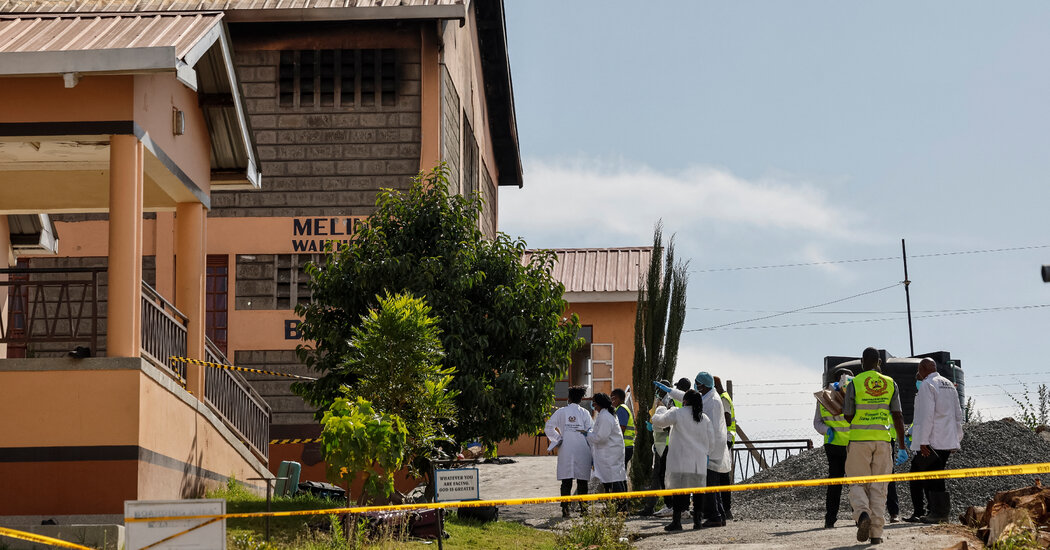
The quiet, pre-dawn serenity of Gilgil, a Rift Valley town situated approximately 75 miles northwest of Kenya’s bustling capital of Nairobi, was shattered into a landscape of horror and unimaginable grief shortly before 1:00 AM on Thursday, when a devastating fire tore through a crowded dormitory at the Utumishi Girls Academy. This institution, uniquely managed and operated by the Kenyan police force and long regarded by parents as an exceptionally secure sanctuary for academic excellence, transformed in mere moments into a suffocating chamber of smoke, panic, and death. As the flames rapidly consumed the building, trapped students woke to a dark, smoke-filled nightmare, their frantic screams echoing through the corridors as they realized their primary escape routes were blocked. By the time emergency responders, local volunteers, and security personnel managed to bring the inferno under control around 3:00 AM, the physical and emotional devastation was absolute: 16 young girls had lost their lives, their bodies left unrecognizable by the intense heat, while another 79 students suffered a range of severe physical injuries and profound psychological trauma. The aftermath of the blaze left the local community paralyzed with grief, turning a national spotlight back onto the structural vulnerabilities of Kenya’s boarding school system, where thousands of families entrust their children to the care of institutions that are increasingly under scrutiny for safety lapses. As smoke cleared to reveal the blackened, skeletal remains of the dormitory building, a wave of profound shock swept across the nation, forcing citizens and policymakers alike to confront the terrifying reality that the very places designed to protect and nurture the country’s youth are repeatedly failing to guarantee their basic survival.
The Investigation Unfolds: Eight Students in the Crosshairs of Justice
In the immediate wake of this catastrophic loss, the wheels of justice began to turn with urgent pressure, culminating on Friday when the Directorate of Criminal Investigations (DCI) announced the arrest of eight female students from the academy, identifying them as key “persons of interest” in what is now being treated as a coordinated act of premeditated arson. Investigating authorities disclosed that their initial findings—pieced together through exhaustive interviews with traumatized survivors, forensic sweeps of the charred ruins, and a meticulous, frame-by-frame review of the school’s closed-circuit television (CCTV) security footage—strongly point to a highly organized conspiracy hatched within the student body itself to burn down the dormitory. While the precise motives driving these young girls to orchestrate such a lethal catastrophe remain deeply shrouded in mystery, Kenya’s Education Minister, Julius Ogamba, confirmed to reporters that the state intends to bring official criminal charges against the suspects in a court of law as early as Tuesday, once preliminary forensic examinations and witness statements are formalized. This shocking revelation has sent shockwaves through the educational landscape, forcing both criminologists and the public to grapple with the disturbing psychological undercurrents of boarding school arson in East Africa, a phenomenon where students occasionally resort to extreme, destructive violence as a misguided expression of rebellion, academic stress, or structural grievances against school administrations.
Criminal Neglect and Systemic Accountability: Behind Locked Doors
As the criminal investigation into the eight suspects intensified, a parallel inquiry exposed a series of catastrophic safety failures and institutional neglect that directly contributed to the high death toll inside the Utumishi Girls Academy dormitory. Education Minister Julius Ogamba delivered a scathing indictment of the school’s administration, revealing that the dormitory in question was severely overcrowded, holding far more students than its designated physical capacity, and that a critical, legally mandated emergency exit door had been locked shut from the outside—directly violating clear, national safety regulations. In response to this egregious security failure, the government took immediate and decisive administrative action, dissolving the school’s entire board of management and initiating formal disciplinary and criminal proceedings against two teachers who had reportedly received explicit, advanced warnings regarding a planned arson plot but chose to dismiss or ignore the threat entirely. This devastating revelation of locked exits and ignored warnings has ignited a fierce national conversation regarding the culture of complacency and absolute lack of accountability among school administrators, whose failure to enforce basic fire safety protocols effectively transformed a manageable localized fire into an inescapable, lethal deathtrap for dozens of sleeping children.
A Parent’s Nightmare: Desperation, Injuries, and the Struggle for Answers
For families who rushed to the scene as news of the fire spread, the unfolding tragedy was characterized by a painful lack of official information and a desperate, frantic search for their daughters among the ruins and local medical facilities. Desperate parents gathered outside the cordoned-off academy on Friday, tearfully demanding to know the whereabouts and physical status of their children, with many expressing deep anger at authorities who offered minimal updates while autopsies and DNA identification processes got underway at a nearby hospital morgue. Survivors’ accounts captured the sheer chaos of the escape, with parents recounting how terrified young girls, finding the main dormitory doors locked, were forced to shatter glass windows and jump from multiple stories to the hard ground below, sustaining severe head traumas, deep lacerations, and multiple bone fractures in the process. The severity of the injuries required an extraordinary medical response: while dozens were treated at local clinics, seven students in critical condition were airlifted to the Kenyatta National Hospital in Nairobi—the country’s premier referral facility—where specialized medical teams continue to fight to stabilize them, leaving their families in a state of suspended agony as they wait to see if their children will survive.
A Dark Legacy: Kenya’s Recurring Epidemic of Boarding School Fires
The tragedy at Utumishi Girls Academy is not an isolated incident, but rather the latest chapter in a long, deeply troubling history of school fires that have plagued Kenya’s educational institutions for over two decades. Despite a comprehensive government audit conducted in 2020 which explicitly warned that the vast majority of Kenyan boarding schools were entirely unprepared for fire emergencies, and despite the formulation of a highly detailed national safety manual in 2008 following a previous wave of student unrest, many schools continue to systematically lack functional smoke detectors, fire extinguishers, or organized evacuation plans. The modern history of these disasters is written in ash: in 2024, a fire at an elementary school dormitory claimed the lives of 21 young children, and the nation’s deadliest educational disaster occurred in 2001, when disgruntled students set fire to a high school dormitory in Machakos, southeast of Nairobi, resulting in the horrific deaths of 67 students. This recurring pattern of arson highlight a deeply entrenched, systemic crisis in the boarding school model, where intense academic pressures, inadequate adult supervision, poor mental health support, and failing physical infrastructure create volatile conditions that repeatedly put young lives at risk.
Reimagining School Safety: The Urgent Need for Reform and Healing
As Kenya mourns the sixteen young souls lost in Gilgil, there is a growing, collective realization that administrative dismissals and retroactive arrests are no longer sufficient to address the deep-seated rot within the nation’s educational infrastructure. True justice for the victims of the Utumishi Girls Academy disaster requires a fundamental, nationwide overhaul of school safety standards, beginning with rigorous, unannounced physical inspections of all boarding facilities, zero-tolerance policies for locked emergency doors, and the immediate criminalization of administrative negligence. Beyond the physical structures, there must be a profound shift toward addressing the psychological well-being of students, implementing comprehensive counseling programs, and dismantling the high-pressure, isolating environments that drive young individuals toward destructive acts of desperation. Only by transforming boarding schools from highly insecure, overcrowded enclosures into transparent, safe, and emotionally supportive centers of learning can Kenya hope to honor the memory of those who perished in the flames of Gilgil and ensure that no parent ever again has to search through the ashes of a dormitory for the remains of their child.