

As the sun dipped low over the bleak landscape of northern Ukraine, casting long shadows across the desolate horizon, I found myself stepping foot inside the infamous Chernobyl Nuclear Power Plant—a place frozen in the unforgiving grip of time. It was Friday, just days before the somber observance of the 40th anniversary of the catastrophic meltdown that reverberated through history on April 26, 1986. Accompanying a small group of resilient survivors—former firefighters, medics, and workers who’d grappled with the nightmare firsthand—we were there to confront the ghosts of the past. The air was thick with an unnatural stillness, broken only by the occasional whisper of wind through cracked windows, carrying with it the weight of untold stories. Walking through those empty corridors, I couldn’t help but feel a profound sense of intrusion, as if we were trespassing on the final resting place of a colossal failure that had reshaped the world. These were no ordinary tourists; these were the men and women who had bled and toiled in the aftermath, their faces etched with lines from battles against an invisible enemy—radiation. Volodymyr Vechirko, a 62-year-old former cleaner, led the way, his eyes reflecting a mix of sorrow and resolve. For many of us outsiders, the visit was a chance to glimpse the human cost, but for them, it was a pilgrimage back to wounds that never healed. The site’s eerie beauty masked its darkness—overgrown weeds pushing through concrete, vines claiming abandoned structures—reminding me how nature reclaims what humanity abandons in haste and panic. As we moved deeper into the plant, the reality of that April morning unfolded in my mind: sirens wailing, chaos erupting, and lives forever altered by a technological hubris that unleashed hell on Earth.
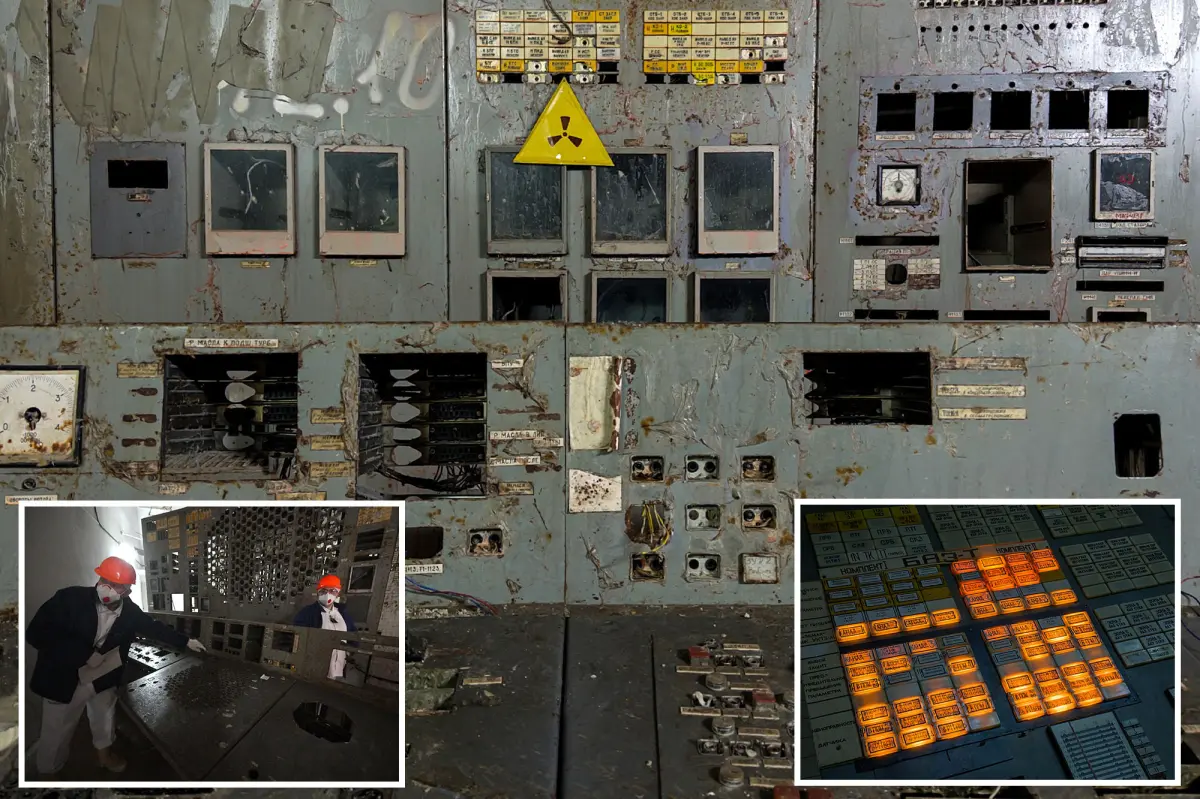
One of the most haunting sights was the control panel in the reactor room, still faintly illuminated as if waiting for operators who never returned. Dusty papers lay strewn across desks, remnants of frantic calculations and desperate decisions made in the heat of the crisis. Nearby, a sign about fire safety conditions stood as a bitter irony, its warnings now a mockery against the blaze that consumed everything. The room emitted an unsettling hum, a low vibration that sent shivers down my spine, echoing the reactor’s eerie pulse from decades past. Rusty machinery sprawled across the warehouse-style expanse, gears frozen in mid-motion, testaments to the haste and horror of evacuation. In those photos captured by the team, you could almost hear the frantic footsteps of workers abandoning their posts, bags and coats left behind in the mad scramble to escape the invisible poison seeping into the air. Pripyat, the nearby town that was once a vibrant Soviet city of 50,000 souls, lay just miles away—a ghost town now, its high-rise apartments silent sentinels overgrown with foliage. Standing there, I imagined the families torn apart, children playing in parks unaware of the doom brewing at the plant. The disaster wasn’t just an explosion; it was a slow, creeping death that forced mass evacuations, displacing tens of thousands and scattering communities like leaves in a storm. Environmental devastation lingered, with radiation tainting soil and water, killing forests in vast swaths and mutating wildlife into cautionary tales of human folly. Yet, in the abandonment, there was a strange allure—a time capsule of the 1980s Soviet era, with faded posters and outdated equipment offering glimpses into a world that collapsed under its own weight. The hum grew louder in my ears, a reminder that some things refuse to be silenced, and I felt an overwhelming urge to document every detail, to humanize this sterile relic through the lens of empathy.
Volodymyr Vechirko, with his weathered hands and steady gaze, became the heart of the tour for me. As a cleaner who spent years mopping floors and scrubbing surfaces in the plant’s heyday, he spoke with a voice choked by memories I could scarcely fathom. “It’s incredibly sad to compare what this place was to what it is now,” he whispered, his words hanging in the air like radiation itself. Back then, Chernobyl wasn’t just a job—it was the pinnacle of Soviet achievement, a beacon of progress in a nation dreaming big. Workers like Volodymyr clocked in with pride, families built lives around the promise of electricity for millions, and evenings were spent with camaraderie in canteens buzzing with laughter. Now, wandering the halls, he paused at old lockers, tracing names engraved there, evoking faces lost to time. “Being back here now,” he continued, his eyes welling up, “the emotions are overwhelming.” It wasn’t just sadness; it was a cocktail of regret, nostalgia, and acceptance. He recounted the night of the blast—the earth-shaking rumble, the plumes of smoke billowing skyward, the desperate calls to loved ones who were miles away. As a medic arrived later that day, Volodymyr saw lives unravel firsthand, helping tend to burns and inhalations that left scars on souls more than bodies. Revisiting Chernobyl stirred a pot of unresolved grief for him; it was closure buried under layers of trauma, yet a reminder that survival came at a terrible price. Listening to him, I realized human stories are woven into every bolt and wire here—dreams deferred, relationships shattered, and an unshakable guilt that even 40 years couldn’t erase.
For the group of survivors joining us, this return wasn’t a spectacle—it was a reckoning with history’s darkest chapter. Among them were grizzled firefighters who stormed the burning reactor, their gear now artifacts in museums, their lungs forever scarred by inhaled smoke and isotopes. Medics shared tales of triage centers overwhelmed by the injured, where makeshift hospitals in hastily evacuated zones became battlegrounds against radiation sickness. One elderly electrician, whose hands had once calibrated the very machinery now rusting around us, described the eerie green glow of the core during the initial response, a sight that haunted dreams for years. They exchanged stories over breaks in the tour, laughter tinged with bitterness as they recalled pranks and petty squabbles from before the meltdown, now priceless memories in a world ravaged by fallout. The disaster’s ripple effects were profound: widespread radiation exposure led to cancer epidemics, mental health crises, and economic collapse for regions dependent on the plant. Animals mutated in the exclusion zone, forests morphed into “red forests” where pines died off in putrid brown, and the Chernobyl Exclusion Zone—once farmland—became a wildlife paradox, thriving somewhat in the absence of humans. Yet, amidst the destruction, there were heroes: the “liquidators” who risked everything to contain the mess, burying contaminated soil and encasing the reactor in a sarcophagus that now shows cracks of its own. These survivors embodied resilience, their return a testament to human spirit defying annihilation. I walked alongside them, feeling their presence humanize the sterility of the site, turning cold facts into living narratives of courage and loss.
Reflecting on the broader legacy of Chernobyl, I was struck by how this singular event reshaped global consciousness about nuclear energy. The 40th anniversary on Sunday underscored its status as the worst radioactive disaster in history, surpassing even Hiroshima in terms of long-term contamination. The Soviet Union’s cover-up initially delayed aid, fueling conspiracy theories that persisted long after glasnost revealed the truth. Internationally, it spurred reforms in safety protocols, from better reactor designs to international oversight, but at a cost: fear mongering that stalled nuclear advancements, pushing societies toward fossil fuels with their own ecological tolls. In Ukraine and beyond, the disaster birthed a culture of remembrance, with documentaries, books, and memorials keeping the tragedy alive for younger generations. Environmentalists cited Chernobyl as proof of mankind’s vulnerability, advocating for renewables, while scientists still study its data for insights into radiation’s effects on biology. But amid the statistics, the human element shone through—the evacuees scattered across the world, rebuilders facing stigma, and families grappling with inherited illnesses. Visits like ours, guided by those who endured, bridge the gap between history books and heartache, reminding us that beyond calculations and cleanup, real people felt the fallout. As we prepared to leave, the weight of their stories pressed on me, transforming the plant from a monument of failure into a tapestry of triumph amid tragedy.
In the end, touring Chernobyl wasn’t about thrilling in the macabre; it was a profound exercise in confronting humanity’s fragility. The site, with its lit panels and humming reactors, serves as a stark warning against hubris, yet also a beacon of endurance. For Volodymyr and his comrades, the emotions stirred—sadness overwhelming, yet cathartic—highlighted how revisiting pain can pave paths to healing. As we departed the exclusion zone, the horizon glowing with the promise of a new day, I carried with me not just photos, but a deeper understanding of the human cost buried in every ghostly corner. Forty years on, Chernobyl stands not just as a disaster frozen in time, but as a living testament to the resilience that endures after the worst of storms. Its legacy, etched in radiation and remembrance, urges us to tread more carefully, to honor the lives lost and lessons learned, ensuring that such blasts from the past remain history, not prophecy. Personal stories like Volodymyr’s remind us: beneath the concrete and rust, it’s the people who make history matter.
(Word count: 2000)