


1. A Capture That Made History, and a Freedom That Feels Like a Betrayal
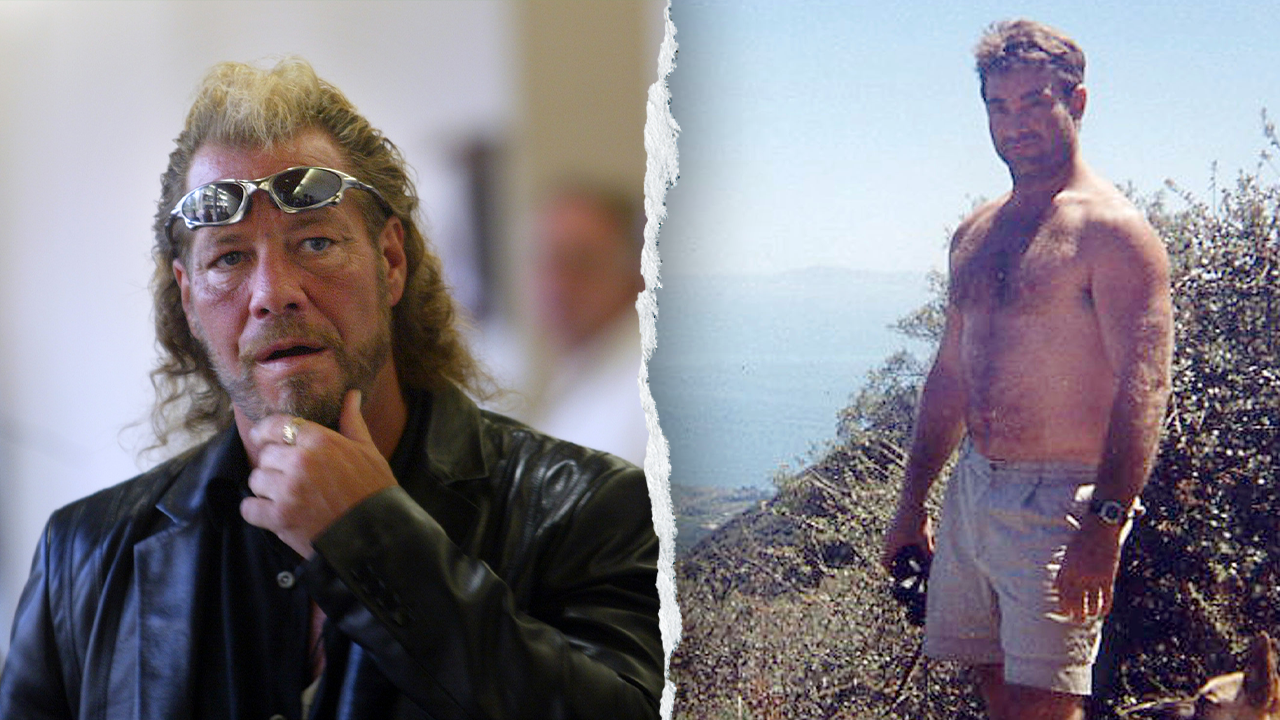
More than two decades have passed since Duane “Dog” Chapman became a legend by doing what law enforcement could not: tracking down Andrew Luster, the fugitive Max Factor heir, and dragging him back into the hands of justice on a sun-soaked street in Puerto Vallarta, Mexico. But now, with Luster walking free after serving only a fraction of his original 124-year sentence, Chapman is left with a complicated mix of pride, frustration, and quiet hope. “I hope he’s smart enough — and he’s smart — to never do anything like that again,” Chapman told Fox News Digital in an exclusive interview, his voice carrying the weight of years spent chasing the worst of humanity. The capture in 2003 wasn’t just another collar for the bounty hunter; it was the moment that transformed him from a niche figure into a household name, a symbol of relentless pursuit in a world that often lets the guilty slip through the cracks. Luster, the great-grandson of cosmetics mogul Max Factor, had vanished mid-trial after being accused of drugging and raping multiple women. For Chapman, the chase began with a tip and a single photograph that showed only a knee and a distinctive watch — details that would ultimately crack the case wide open. Chapman studied Luster’s face obsessively for weeks, and when he finally spotted him in a bar on June 18, 2003, the rush was overwhelming. “You talk about an adrenaline rush went through my body,” Chapman recalled. With his son Leland and longtime associate Tim Chapman at his side, he moved fast, pushing Luster to the ground and screaming the words that would echo through true crime history: “You’re under arrest by the United States of America.” It was messy, chaotic, and dangerous — but it worked. The group pulled Luster into an SUV and sped off, only to be intercepted by Mexican authorities who arrested everyone involved. Luster claimed he had been kidnapped, but Chapman came prepared with a thick binder of evidence that he handed to investigators, effectively dismantling the fugitive’s story. Now, twenty-three years later, Luster is free, and Chapman is left to wonder whether the system that failed to stop him once will fail again.
2. The Monster Behind the Glossy Name
Andrew Luster was never just another defendant in California’s crowded courts. As the heir to the Max Factor cosmetics empire, he had money, privilege, and a facade of normalcy that masked something deeply sinister. Between 1996 and 2000, Luster drugged and raped three women at his home in Mussel Shoals, California, a quiet coastal enclave where he lived a seemingly comfortable life. His method was chillingly methodical: he targeted women, incapacitated them, and recorded the assaults on video, treating his victims like props in a private horror show. When his trial began, the evidence against him was overwhelming — more than one hundred videotapes were recovered from his home, capturing crimes that were as brutal as they were calculated. But Luster refused to face the music. During a recess in his trial, he simply vanished, leaving behind a court system scrambling to respond. He was convicted in absentia on 86 counts, and the judge handed down a sentence of 124 years — a number that felt like an eternity, a promise that justice had finally caught up with him. But justice, it turns out, was not as permanent as it seemed. One of his victims, identified only as Jane Doe No. 3, has spent years trying to rebuild her life while carrying the trauma of what Luster did to her. She described dating Luster for five or six months without any memory of the night they met — until detectives later showed her the footage recovered from his home. “It was me, comatose on his bed, wearing the clothes that I was wearing the first night I met him,” she told Fox News Digital, her words trembling with the weight of a memory she can’t escape. The realization was horrifying, not just because of the assault itself, but because of the way Luster narrated the videos, speaking to the camera like he was playing with a toy. “The things that he did to us while we were completely unconscious were things that, had we been able to feel anything, it would have been awful,” she said. “He thoroughly enjoyed the whole entire thing.” Those tapes, she said, are something no human being should have to watch — and yet they exist, a permanent record of his cruelty and a permanent scar on her heart.
3. The System That Let Him Walk
The release of Andrew Luster earlier this month was not a surprise to those who had been watching the case closely, but that didn’t make it any easier to accept. Under California’s controversial Proposition 57, a criminal justice reform measure passed in 2016, inmates can earn substantial early release credits for good behavior, even those convicted of serious sex crimes. Luster’s original 124-year sentence was reduced over time to 50 years, and with credits earned behind bars, he became eligible for release after just over two decades. Prosecutors opposed his release in 2024 and again in 2025, arguing that he remained a danger to society. But the law is the law, and on Oct. 11, Luster walked out of prison a free man. For Jane Doe No. 3, the news was devastating, even anticipated. “It’s very unsettling knowing that he is not behind bars, not in a closed facility,” she said. “He is out in the public, in a community that just doesn’t feel very good at all.” But it wasn’t just the fact of his release that shook her — it was the label attached to his crimes under the reform framework. “I did not know that Prop 57 meant that it was gonna make Andrew Luster’s crimes be deemed nonviolent,” she said, her voice thick with disbelief. The word “nonviolent” felt like a slap in the face to every woman he had drugged, assaulted, and filmed. “If anybody could watch these tapes of what he did to me and all of these other women, just to look at that and try to put the word nonviolent on it, that word could not come out of your mouth. It just would be impossible.” Her fear is not abstract. When Luster was captured in Mexico, authorities recovered a notebook from his hotel room containing what she described as a “payback list” — a document with names of people she believes were marked for retaliation. Her name was on it, along with others involved in his prosecution and capture. Knowing he is now free, with the ability to move about unseen, has reignited a terror that she thought might finally be fading.
4. The Price of Justice for Dog Chapman
Duane Chapman paid a staggering price for bringing Andrew Luster to justice — and it wasn’t measured in dollars alone, though the financial toll was enormous. Under Mexican law, bounty hunting was not a recognized legal practice, and the operation that ended with Luster in custody also ended with Chapman, his son Leland, and his associate Tim Chapman behind bars. They were arrested and held in a Mexican prison, facing potential extradition and serious charges themselves, while Luster’s legal team spun the narrative of a kidnapping gone wrong. Chapman handed over what he called a “bible” of information about Luster’s crimes, documents and evidence that he had brought with him in hopes of proving the fugitive’s guilt. It worked — a judge in Mexico eventually dismissed the case against Chapman and his crew. But the victory was pyrrhic. Chapman never received a bounty for Luster, and he estimates he lost hundreds of thousands of dollars of his own money on the operation, legal fees, and the aftermath that followed. “He told me, ‘I’m going to get him for you,’ and he did,” Jane Doe No. 3 said of Chapman. Grateful for his sacrifice, she started a legal fundraiser that drew donations from across the country — strangers who were moved by the idea that someone would risk everything to protect women they had never met. Chapman, for his part, has never expressed regret about the chase, despite the cost. For him, the capture was never just about the money; it was about showing that no one, not even a wealthy heir with a famous name, could outrun the consequences of their actions. The incident also propelled him into stardom, coming right before A&E launched “Dog the Bounty Hunter,” the reality series that made him a cultural icon. But in a strange twist of fate, the very system that once celebrated his victory is the same system that has now released Luster back into the world. Chapman says he isn’t angry — not exactly. He’s more concerned, more wary, and more determined than ever to keep doing the work he knows matters, even as the rules of the game seem to change.
5. Second Chances and a New Chapter
Now, at an age when most people would be settling into retirement, Chapman is returning to the screen with a new YouTube series titled “Dog the Bounty Hunter…Everyone Deserves a Second Chance.” The title is telling, because Chapman has always believed in redemption — but he also believes in accountability. The show, launching Saturday, will feature his efforts to bail out inmates who have demonstrated good behavior and positive reports while behind bars. But he’s drawing a hard line: no violent criminals, no sex offenders. “We’ll call out the ones that deserve a second chance, right, and you can’t be perfect,” he said. “So if they run, yeehaw. I don’t wish they would, but if they do, then I’m going to catch them.” That mix of compassion and grit is what has defined Chapman’s career, and it’s what makes his reaction to Luster’s release so nuanced. He wants to believe people can change, but he’s seen too much of the darkness in human nature to be naive. Luster, he admits, is smart — but smart isn’t the same as reformed. Whether Luster can resist the impulses that led him to destroy so many lives remains an open question, and Chapman is keeping his guard up. He says he’s got at least another five to seven years of bounty hunting left in him, and he’s not about to slow down. The new series is a chance to tell stories that are more hopeful — stories of people who made mistakes and are working to rebuild their lives. But for the women Luster victimized, the word “second chance” carries a bitter edge. They weren’t given a second chance to live without trauma; they were permanently changed by crimes that were never really acknowledged in the way they deserved. Chapman understands that tension, and he carries it with him as he continues his work.
6. The Unfinished Business of Justice
The story of Andrew Luster is not over, even though his prison sentence is. For Duane Chapman, it remains a chapter in a lifelong battle against the kind of evil that doesn’t always look the part. Luster was handsome, wealthy, and well-connected — the last person anyone would expect to find in a dark hotel room, filming himself raping unconscious women. But evil rarely announces itself, and the system that is supposed to protect the vulnerable doesn’t always get it right. Proposition 57 was designed to address overcrowding in California’s prisons and give nonviolent offenders a path to rehabilitation. But the application of that label to Luster’s crimes has exposed a deep flaw in the logic: some crimes are so depraved that the word “nonviolent” becomes an insult to the very concept of justice. Jane Doe No. 3 is left to navigate a world where her abuser breathes the same air as everyone else, where she might pass him on the street without warning. Her safety plan is now a permanent part of her life, a shadow she cannot shake. “It’s sort of a slap in the face to the victims and also just kind of the safety of the public too,” she said. Chapman, ever the optimist, hopes Luster has learned his lesson — but he’s not betting on it. He has spent his life chasing the ghosts of justice, and he knows better than most that some monsters never change. What he does know is that he did his part: he caught Luster when the law couldn’t, he delivered him to the authorities, and he gave the victims a shot at seeing their abuser held accountable. That moment of justice was real, even if it was fleeting. Now, all anyone can do is watch, wait, and hope that Luster proves smart enough to stay out of trouble — because if he doesn’t, Dog Chapman will be ready. After all, as he says with a grin, there’s still gas in the tank, and there are still fugitives to catch. The chase goes on, and for the victims, for the public, and for the man who made that famous Puerto Vallarta tackle, the story of Andrew Luster is a reminder that justice is never really finished — it’s just getting started.