





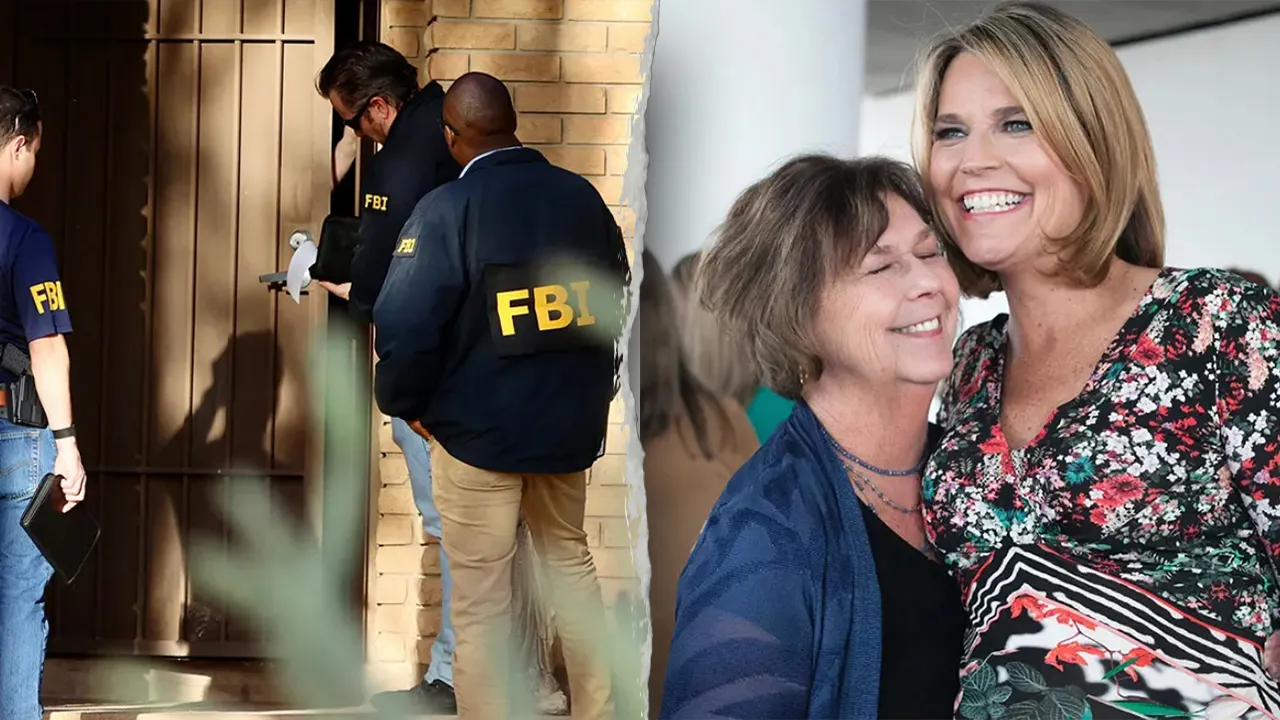
The Heartbreaking Disappearance of Nancy Guthrie
Imagine waking up one day and hearing that your 84-year-old mother, a vibrant woman who’s always been the heart of the family, has vanished from her home without a trace. That’s the nightmare Savannah Guthrie, the beloved co-host of NBC’s “Today” show, has been living for over 80 days now. Nancy Guthrie was last seen in her cozy home in the Catalina Foothills, nestled in northern Tucson, Arizona, a place where life should have been peaceful and secure for a woman of her age. It’s a story that tugs at the heartstrings, reminding us how vulnerable we all are, no matter how loved or known we might be. The community rallied, the news buzzed with updates, but as the days turned into weeks, frustration grew. Why hasn’t there been more progress? That’s the question echoing in the minds of her family, friends, and now, millions of Americans following along. From what we know, it started as a suspected abduction, with no signs of forced entry or a struggle, leaving investigators scratching their heads. Savannah’s public pleas have brought tears to many eyes, and her mother’s case has become a symbol of how even high-profile families aren’t immune to these chilling unknowns. It’s not just about a celebrity’s relative; it’s about a human life’s value, a grandmother who’s missed at holiday gatherings, the stories untold of her laughter and wisdom. The timeline is stark: more than 11 weeks have passed since that fateful day, and the investigation has hit roadblocks that feel almost cruel. Authorities have combed through her life, her routines, her home, but clues are scarce. Police reports mention unusual details, like a car observed in the area, but nothing concrete has been disclosed to the public. It’s the kind of uncertainty that eats away at hope, making you wonder if justice will ever prevail for someone so visibly innocent. And yet, in this darkness, there’s a glimmer: a hair sample collected from her home, potentially holding the DNA key to unlocking the truth. But getting answers isn’t quick; it’s a painstaking process that tests patience. The local Pima County Sheriff’s Department didn’t send it directly to the federal experts—they chose a private lab in Florida first, sparking some tension with the FBI. That decision delayed things, and now, after weeks of waiting with no breakthroughs, the sample has been handed over to the bureau. To humanize this, think about the sheriff’s office, probably overworked county employees doing their best under the spotlight, or the family members waiting by the phone, each ring a potential earthquake. Why the choice for a private lab? Some speculate cost, speed, or expertise, but it backfired here. We’ve all heard stories like this—cases where a single misstep slows everything down, and you can’t help but empathize with both sides: the investigators racing against time, aware that every delay could mean another clue lost to the wind, and the family whose world is frozen in grief. This isn’t just a news item; it’s a reminder of how personal these tragedies are. I picture Nancy as the kind of grandmother who bakes cookies for grandkids or shares stories of bygone eras. Who is out there taking away that light? And when will they hand back some answers? The community is buzzing—online forums, local vigils, people sharing their own brushes with uncertainty. But it all boils down to that elusive lead: the hair that might not even belong to the kidnapper. Fingers crossed it’s gold. In the meantime, this case highlights the human side of policing; fallible, yes, but dedicated. It’s a rollercoaster of hope and despair, one that Savannah has turned into a platform, urging everyone to keep an eye out and speak up. If you’ve ever lost someone, you know the agony of waiting. Nancy’s story is ours too—a universal plea for safety and resolution.
The Unexpected Twist in the Investigation
Diving deeper into the investigation, there’s a layer of complexity that makes your head spin, especially when you’re trying to empathize with the tireless folks on the ground. Early on, there was some behind-the-scenes drama that added fuel to the fire. The Pima County Sheriff’s Department decided to send that crucial hair sample to a private lab in Florida called DNA Labs International, instead of handing it straight to the FBI’s advanced forensics team. Why? It might have been about speed or cost, but it certainly raised eyebrows, particularly when nothing came of it for over 11 weeks. Experts were itching for updates, and finally, the FBI stepped in, seizing control of the sample. Ben Williamson, the bureau’s assistant director of public affairs, put it bluntly to Fox News: “FBI asked to test this DNA 2 months ago with the same technology we’ve always had—when the local sheriff instead sent it to a private lab. Any further developments we will share as soon as appropriate.” Ouch—that public friction must have stung, like a family argument aired out in the newspapers. You can almost hear the sighs of relief when the transfer happened, but by then, precious time had slipped away. On our end, as everyday people, we think of investigations as seamless, like in crime shows, but reality is messy. Imagine the lab technicians, poring over microscopes in dimly lit rooms, their own lives on hold for these cases. Or the detectives, juggling multiple leads, feeling the pressure from the public eye. Nancy’s disappearance isn’t just another file; it’s high-stakes because of Savannah’s prominence, yet the human element persists—agents with families of their own, wondering if they’d do anything differently when roles reverse. The hair itself? It’s described as rootless, which complicates DNA extraction, but not impossibly so. That’s where forensic science shines: turning the tiniest fragment into a story. We’ve all seen those CSI episodes where a hair solves everything, but here, it’s a reminder that patience is key. And luck—yes, luck plays a part, because sometimes multiple attempts are needed before the genetic code reveals itself. In this waiting game, it’s easy to feel frustrated, almost angry at the system. Why not expedite it? But humanizing it, the lab folks are likely heroes, working overtime, perhaps skipping lunches to chase leads. The private lab choice—well, maybe it was a gamble that didn’t pay off, but it shows the decentralized world of policing. Pima County, with its desert landscapes and tight-knit community, might not have the FBI’s resources daily. This case exposes those gaps, urging better collaboration. If you or someone you know has dealt with similar investigations, you understand the rollercoaster: elation at a new development, followed by the crushing weight of no news. Nancy’s story is a nudge to support law enforcement, to appreciate the grind. And hopefully, soon, that hair will whisper secrets—pointing fingers at the right person, bringing peace to a family in turmoil. Until then, it’s a testament to human resilience, both in the victims’ loved ones holding on, and the investigators refusing to let go.
Enter the Genetic Genealogists: Unsung Heroes in the Quest for Truth
Now, let’s talk about the unsung heroes who are at the forefront of cracking cases like Nancy Guthrie’s—the genetic genealogists, those modern-day detectives blending science with old-fashioned sleuthing. CeCe Moore, one of the nation’s leading experts at Parabon Nanolabs in Virginia, has brought hope to this stalled probe. She’s the kind of person who makes you believe in miracles, with her background in investigative genetic genealogy (IGG), where DNA meets detective work. Moore predicts it could take months for results on that hair sample, but she’s optimistic it might happen quicker given the priority status—unlike typical cold cases gathering dust. “In my experience, it usually takes months, but I am assuming they will make it a top priority since most of the other cases are generally cold cases so it may be much quicker,” she shared with Fox News Digital. And that luck factor? It’s real; sometimes the DNA sings on the first try, other times it’s a stubborn puzzle requiring retries. To humanize this, picture CeCe as a passionate puzzle-solver, perhaps a mom herself, juggling lab work with life, losing sleep over unresolved mysteries. IGG isn’t just tech—it’s art, combining SNP profiles (that’s single nucleotide polymorphisms, the genetic building blocks) with genealogy records, public databases, and good old human intuition. It’s like piecing together a family tree backward from a single strand of hair to identify a person of interest. We’ve seen this in real life; it’s not fiction. Moore explains it could yield a SNP profile faster than usual if the hair cooperates, allowing researchers to start mapping heritage and narrowing suspects. But here’s the catch that’s both thrilling and heartbreaking: the hair might not even belong to Nancy’s alleged kidnapper. It could be from a visitor, a family friend, or somehow transferred innocently. “At that point, we just have to hope that the hair actually belongs to Nancy’s kidnapper and not someone else who happened to visit her or had their hair transferred to her home,” Moore warns. That uncertainty keeps everyone on edge, yet it fuels the drive to delve deeper. Humanizing this further, think of the researchers as empathetic storytellers, sifting through records to honor lives lost or in limbo. Nancy’s case isn’t isolated; it’s part of a growing field where science rescues justice from the abyss. Remember the Gilgo Beach killer, Rex Heuermann, convicted thanks to rootless hair samples? Decades-old crimes solved because forensics evolved. Moore’s optimism stems from that momentum—cases like that show it’s possible. But for the families, including Savannah and her siblings, it’s relentless waiting, each day a blend of hope and heartache. You can imagine them scrolling through ancestry sites, wondering if their own DNA could connect dots. And the genealogists? They’re the bridge between loss and answers, often driven by personal tragedies or sheer calling. If you’ve ever traced your family history, you’ll appreciate the thrill of discovery mixed with the fear of the unknown. In Nancy’s world, IGG is the lifeline, promising not just leads, but closure. It’s a beautiful, human endeavor, proving that in our tech-driven age, connection and compassion still reign supreme.
Lessons from Gilgo Beach: How Similar Cases Inspire Hope
Drawing parallels to other high-profile disappearances adds a layer of urgency to Nancy Guthrie’s story, making the human drama even more palpable. Take the Gilgo Beach killer case, a nightmare that dragged on for years before a breakthrough—through rootless hair samples, just like the one in Arizona. Rex Heuermann, the man behind the gruesome murders along Long Island, pleaded guilty earlier this month and faces multiple life sentences come June. Decades passed since his first known kill, yet forensics turned the tide, landing him behind bars. It’s stories like these that flicker hope in dark times, proving justice can outlast the shadows. In Nancy’s investigation, a similar lab—Astrea Forensics from San Francisco, which partnered with the FBI on the Heuermann case—is now poised to jump in. They’ve been tapped for Guthrie’s probe, their expertise in genetic tracing potentially the game-changer. When reached by Fox News Digital, lab officials kept mum, but the implication is electric: proven methods meeting a fresh mystery. To humanize this, think of the families of Gilgo’s victims, finally exhaling after years of anguish, or Heuermann’s own twisted life unraveling. It’s a reminder of how one person’s evil affects so many, but also how science triumphs over time. We all cheer those victories, feeling a collective sigh of relief. Now, for Nancy, it’s about harnessing that same success. Sutton Hoo and other cases show IGG’s power, but each involves luck, persistence, and—crucially—cooperation. Ultimately, these successes aren’t just wins for law enforcement; they’re victories for humanity, restoring faith in a world that sometimes feels unjust. As we wait for updates on Nancy’s hair, we cling to these precedents, hoping history repeats with swift justice.
The FBI’s Role and the Lingering Quiet
Shifting gears, the FBI’s involvement brings a rush of anticipation, yet a shroud of silence that weighs on the soul. After the Pima County Sheriff’s delay in turning over the hair sample, the bureau took center stage, wielding their tried-and-true DNA tech. But why the tardy handover? Theories swirl—bureaucracy, resource allocation, or perhaps a nudge toward modernization. Whatever the reason, it’s human, fallible, like any large organization. Agents, trained to stoic perfection, probably feel the pressure too, aware of Savannah’s pleas and the world’s gaze. Publicly, the FBI promises transparency: “Any further developments we will share as soon as appropriate.” Noble words, but for the Guthries, it’s an endless watch. Humanizing this, picture the FBI lab—not cold and sterile, but bustling with dedicated souls, caffeinated and committed, perhaps joking amid the intensity to keep spirits up. Their work is grueling, often thankless, bridging the gap where local efforts falter. In this case, it’s about unity: state and federal forces aligning against a common foe. We’ve all seen portrayals in media—cloak-and-dagger operations, but reality’s grayer. Delays breed distrust, yet the FBI’s track record shines in complex abductions. Hopefully, their grip on the sample will yield fruit soon. Until then, it’s a waiting game, one that tests our collective empathy for law enforcers juggling crises. Nancy deserves swift action; the family craves peace.
A Call to Action: Clues Linger, Rewards Await
Finally, amidst the wait, there’s a collective call to arms—a stark reminder that everyday people hold power in these tales. For Nancy Guthrie, the reward pot exceeds $1.2 million, unclaimed and ready for the tip that cracks it all. If you’ve seen something, heard a whisper, or stumbled upon a clue—reach out to 1-800-CALL-FBI. It’s not just duty; it’s humanity rallying. Savannah’s story urges vigilance, showing how ordinary citizens tip the scales. In human terms, think of the informants who’ve changed cases, driven by conscience or coincidence. Join the movement: share, listen, act. Nancy’s fate hangs in balance, her community yearning. Let’s bridge the gap, turning silence into salvation.