





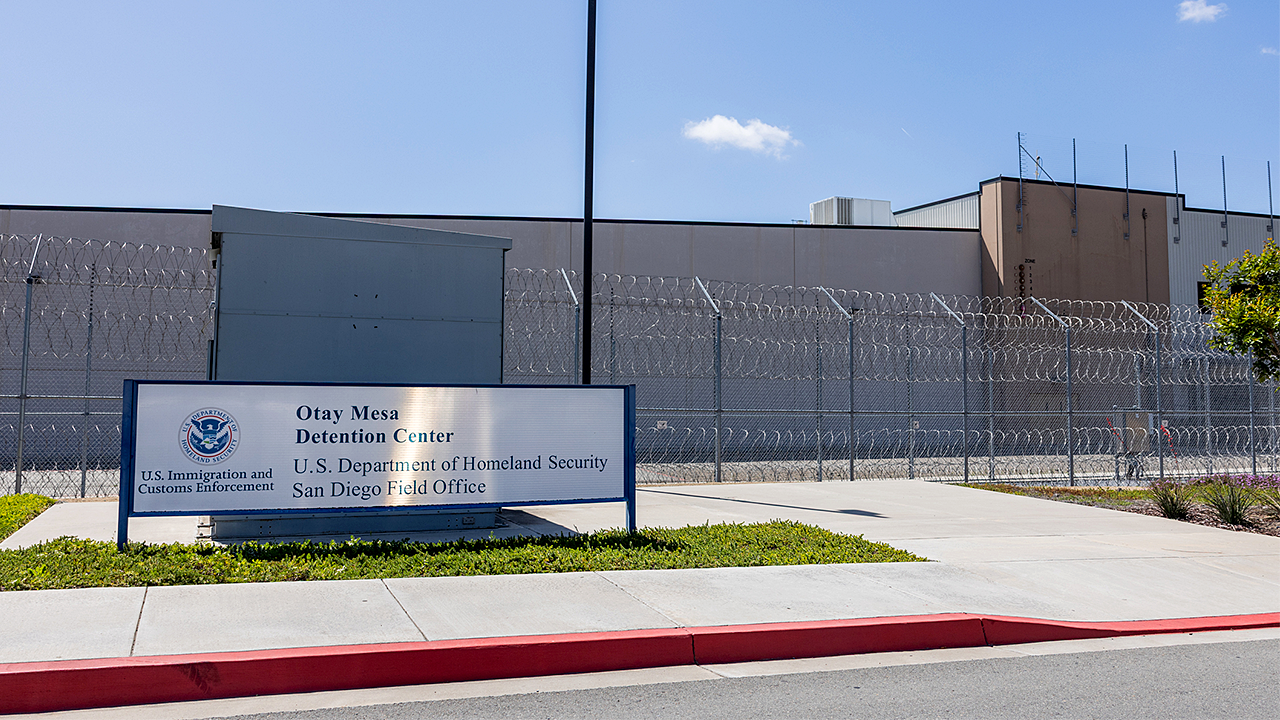
The Department of Homeland Security (DHS) has officially finalized the acquisition of two of California’s most expansive migrant detention centers from CoreCivic, a prominent private prison corporation, for a staggering $1.5 billion. This major real estate transaction includes the 2,560-bed California City Detention Facility and the 1,994-bed Otay Mesa Detention Center in San Diego. Funded through President Donald Trump’s expansive federal spending bill passed last summer, the strategic acquisition is designed to solidify federal control over immigration enforcement infrastructure on the West Coast. By transitioning these massive facilities from private to public ownership, the administration is securing a permanent foothold to execute its highly publicized and controversial mass deportation agenda, ensuring that regional enforcement capabilities remain intact.
This transition of ownership is a direct and calculated response to California’s strict sanctuary state policies, which have long sought to phase out private immigration detention facilities and limit cooperation with federal authorities. While Immigration and Customs Enforcement (ICE) heavily relies on municipal and county partnerships to secure detention space in politically conservative states like Florida and Oklahoma, California’s progressive legislative environment has made such local collaborations virtually impossible. Federal officials emphasized that as state politicians continue to introduce legislation aimed at outlawing or financially crippling private prison operators, direct federal ownership of these properties becomes a necessity. Establishing total federal jurisdiction over these critical facilities effectively renders them immune to state-level sanctuary laws, allowing ICE to maintain the localized capacity required to arrest, hold, and deport undocumented migrants.
For CoreCivic, the multi-million-dollar transaction represents a highly lucrative financial victory, yielding estimated net proceeds of approximately $1.1 billion after accounting for transaction expenses and income taxes. Patrick Swindle, the Chief Executive Officer of CoreCivic, expressed immense satisfaction with the sale, highlighting it as a prime example of the value inherent in the company’s real estate portfolio and its enduring role as a flexible, long-term solution provider for government agencies. Swindle noted that while the transaction dramatically improves the company’s balance sheet flexibility and enhances value for its shareholders, it does not mark the end of their operational footprint. Under current agreements, CoreCivic will continue to manage the day-to-day operations of both locations under existing ICE contracts, though these agreements may undergo future modifications to reflect the shift to federal property ownership.
The operational timeline for these facilities remains secure for several years, ensuring that the federal government’s deportation network suffers no immediate disruptions. CoreCivic’s current management contract for the California City facility extends until August 2027, while the agreement for the Otay Mesa site runs through December 2029, featuring a built-in option for a five-year extension. Furthermore, this $1.5 billion deal may just be the beginning of a larger real estate shift, as CoreCivic confirmed it is actively engaged in preliminary discussions with ICE regarding the potential sale of additional detention centers across the country. Currently, California hosts eight active ICE detention facilities that collectively house nearly 9,000 detainees, making the state a crucial, highly contested battleground in the ongoing national conflict over immigration enforcement and federal overreach.
Beyond the political and financial maneuvering, both of the acquired facilities have historically been flashpoints for intense humanitarian and legal controversies. Over the years, the California City and Otay Mesa locations have faced numerous lawsuits and formal complaints filed on behalf of detainees who alleged systemic mistreatment, unsafe conditions, and inadequate medical care. While CoreCivic has consistently and vehemently denied all allegations of wrongdoing, advocacy groups argue that the transition to federal ownership fails to address the underlying humanitarian concerns inherent in mass detention. This deal underscores a deep societal divide: while the administration views the purchase as a necessary logistical victory to restore law and order, human rights advocates view it as a troubling entrenchment of a punitive system that prioritizes deportation quotas over human dignity.
Ultimately, this monumental acquisition signals a new chapter in the complex dynamics of American immigration enforcement, where federal authority directly clashes with state-level resistance. By purchasing these facilities outright, the federal government has insulated its deportation pipeline from local legislative interference, ensuring that its operations can continue unabated regardless of California’s political climate. As CoreCivic pockets over a billion dollars and prepares for future property sales, the lives of thousands of migrants detained within these walls remain caught in the middle of a high-stakes tug-of-war. The deal sets a powerful precedent for how the federal government can bypass local opposition, reshaping the physical and legal landscape of immigration enforcement for years to come.