



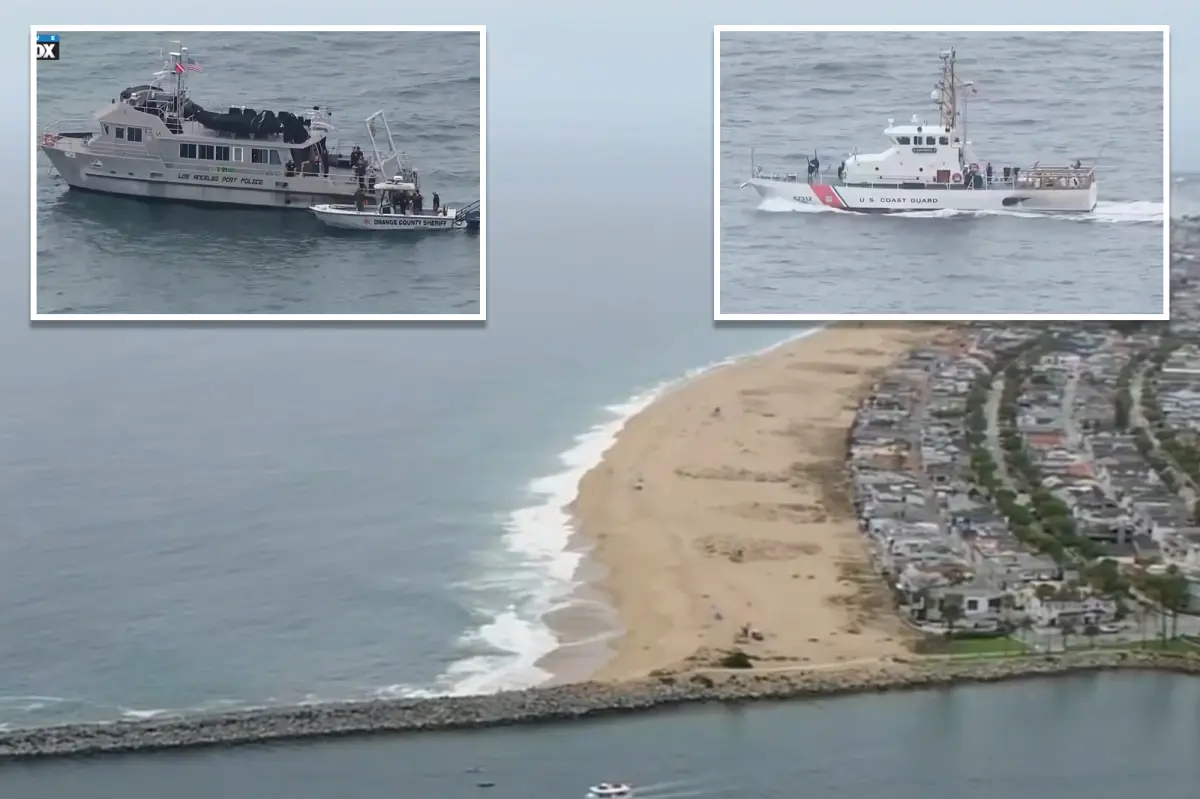
The ocean has an extraordinary way of masking its inherent dangers behind a veil of serene, shimmering beauty, drawing us to its shores with the promise of peace, recreation, and effortless escape. On what began as a routine Monday morning in the idyllic coastal haven of Newport Beach, California, this deceptive tranquility was abruptly shattered by a chilling reminder of the sea’s unpredictable and uncompromising power. At approximately 7:45 a.m., when the morning marine layer was still lifting off the cool water and the first footprints were being pressed into the damp sand, emergency dispatchers received a frantic call reporting that a swimmer had suddenly vanished into the vast expanse of the Pacific. The missing individual was soon identified as 47-year-old Wesley Alan Macfarland, a man whose sudden disappearance has cast a heavy shroud of profound anxiety over the local community and left his loved ones gripped by an agonizing search for answers. For those who know him, the morning of his disappearance transformed a familiar, beloved coastline into a scene of desperate speculation, raw fear, and quiet prayers. Underneath this beauty, however, lies an ocean that does not negotiate. This was no longer just a scenic harbor where sailboats gently bobbed in the marina; it had quickly become the epicenter of a frantic, race-against-the-clock rescue mission. The transition from a peaceful morning swim to a full-scale emergency is a terrifyingly swift phenomenon that highlights the fragile boundary between human recreation and natural catastrophe. As the hours began to tick away, the initial shock transitioned into a deeply coordinated effort, with rescue vessels cutting through the gray, saltwater waves and helicopters scanning the coastline from high above. The emotional weight of such an event ripples far beyond the immediate family of the missing swimmer, touching neighbors, beachgoers, and the brave first responders who understand all too well that every passing second is critical in the fight against the merciless ocean currents.
In the immediate wake of the terrifying report, the United States Coast Guard (USCG) instantly mobilized its formidable resources, joining forces with local partner agencies to initiate an extensive and exhausting search-and-rescue operation in the vicinity of Newport Harbor. Releasing an urgent public appeal to the community and media, the USCG Southwest command center shared Wesley Alan Macfarland’s name and age, pleading with anyone who might have been near the harbor or who has even the slightest shred of information regarding his whereabouts to contact the Coast Guard Sector Los Angeles-Long Beach Command Center at 310-521-3805. The mechanics of a maritime search of this scale are both highly technical and deeply emotional, requiring complex navigational coordinates to be constantly plotted and adjusted against shifting tides, wind speeds, and water temperatures. Marine patrol units, highly trained divers, and aerial spotters searched the choppy, swelling waters, scanning the horizon for any sign of life, a discarded piece of clothing, or a break in the waves. Despite the high-tech equipment, thermal imaging, and decades of rescue doctrine deployed by the Coast Guard, the ocean remains an immense, three-dimensional maze that does not easily relinquish those it claims. For the rescue crews, this is never merely a professional assignment; it is a deeply human endeavor fueled by the collective hope that Macfarland can still be brought home safely to his family. The stark lack of immediate details surrounding the circumstances of how he entered the water or what went wrong only intensifies the mystery, leaving a tight-knit community suspended in a painful state of limbo while authorities exhaust every possible avenue in their search. Every resource is deployed, and every heart is heavy.
To truly comprehend the gravity of Wesley Macfarland’s disappearance, one must examine the complex, often paradoxical relationship between Southern California residents and their beloved coastline, which serves as a communal backyard, a physical outlet, and a spiritual sanctuary. Newport Beach is renowned worldwide for its beautiful sandy shores, historic wooden piers, and vibrant surf culture, attracting millions of visitors who seek solace, exercise, and adventure in its waters. However, this idyllic reputation often fosters a dangerous, false sense of security, leading even highly experienced swimmers to underestimate the sheer, relentless physical force of the Pacific Ocean. Underneath the sun-drenched, sparkling surface lies a dynamic and volatile environment dominated by powerful rip currents, sudden shelf drops, and unpredictable undertows that can overpower a swimmer in an instant. This stark contrast between coastal beauty and lethal vulnerability lies at the heart of the region’s relationship with the sea, where a pleasant day of recreation can instantly devolve into a desperate struggle for survival. Swimmers often do not realize they are in serious danger until they are already exhausted, struggling unsuccessfully against a current that slowly but surely pushes them further away from the safety of the sandy beach. When a tragedy like Macfarland’s occurs, it serves as a sobering reminder that the ocean is not a controlled, human-friendly swimming pool, but a wild, untamed wilderness that demands utmost respect, humility, and constant vigilance from everyone who dares to step into its surf. It requires us to listen to the ocean’s warnings before we step off the dry sand.
This painful lesson was driven home with devastating clarity just weeks prior, in early June, when another coastal tragedy played out only ten miles south of Newport Harbor in the neighboring city of Laguna Beach. In that heartbreaking incident, a routine family beach day turned into an absolute nightmare when a mother and her two young children were suddenly swept off the shore and into the violent, churning surf at Treasure Island Beach. While beachgoers and rescue personnel reacted with heroic speed, successfully rescuing the mother and her seven-year-old son from the waves, the ocean ultimately exacted a horrific toll, claiming the life of her younger, five-year-old child. The profound grief of a mother surviving a disaster that stole her young child sent shockwaves of sorrow and sympathy through the coastal community, leaving an indelible scar on the collective hearts of Orange County residents. It highlighted the terrifying truth that the coastline does not discriminate based on age, swimming strength, or innocent intent, and that a single rogue wave or a sudden, unexpected surge can rewrite a family’s history in a matter of seconds. The raw sorrow of the Laguna Beach tragedy was still casting a long shadow over the region when the shocking news of Wesley Macfarland’s disappearance broke, reopening fresh wounds and amplifying the communal sense of dread, empathy, and vulnerability that has defined this unusually perilous coastal summer. The pain of the past aligns with the anxiety of the present.
The dangers of this particular season have been significantly compounded by a series of extraordinary environmental factors that have kept Southern California beaches under strict ocean safety warnings throughout the month of June. Local meteorologists, lifeguards, and oceanographers had previously warned of a series of exceptionally high “king tides”—a natural phenomenon where the gravitational pull of the moon and sun aligns perfectly with the Earth to create extreme tidal fluctuations—which occurred mid-month. The City of Newport Beach actively advised its residents to brace for these powerful tides, warning that evening high tides could cause localized flooding in low-lying harborfront neighborhoods and create unusually strong, deceptive currents along the beaches. These astronomical tides do not merely flood coastal streets; they fundamentally and violently alter the daily dynamics of the shoreline, creating deceptively high water levels closer to the sea wall and generating powerful rip currents that can swiftly drag unsuspecting swimmers out to sea. When these high tides collide with seasonal ocean swells, the coastal environment becomes highly unstable and unpredictable, turning otherwise manageable swimming zones into treacherous traps even for the experienced. For swimmers like Macfarland, navigating these shifting, turbulent waters requires a level of physical stamina and luck that even the most physically fit individuals may find themselves lacking when confronted with the full, unbridled force of a changing tide. Nature remains the ultimate arbiter of our safety.
The staggering scale of the danger along the coast is further illustrated by eye-opening statistics from nearby San Diego, where local lifeguards were pushed to their absolute physical limits, performing more than 385 ocean rescues in the span of just one single week during this turbulent month. This astonishing surge in emergencies underscores a broader regional crisis, highlighting the relentless pressure faced by maritime first responders who risk their own lives daily to pull struggling swimmers from the jaws of the surf. These figures serve as a powerful testament to the absolute necessity of rigorous beach safety education, the presence of trained lifeguards, and the critical importance of paying close attention to posted warning flags and weather advisories. As the search for Wesley Alan Macfarland continues to unfold in Newport Beach, his disappearance stands as a deeply personal tragedy within a wider sea of seasonal emergencies, prompting a collective plea for caution and self-awareness from everyone who interacts with the ocean. He is not merely a name on a Coast Guard bulletin, a point on a map, or a statistic in a rescue log; he is a father, a husband, a friend, and a human being whose absence leaves a profound, aching void. While the search continues against the backdrop of shifting tides and fading light, the thoughts of an entire community remain anchored to those searching the waves, hoping against hope for a miracle on the water and urging a profound, renewed respect for the beautiful yet perilous ocean that defines life on the Southern California coast. In the end, we are all at the mercy of the water.