


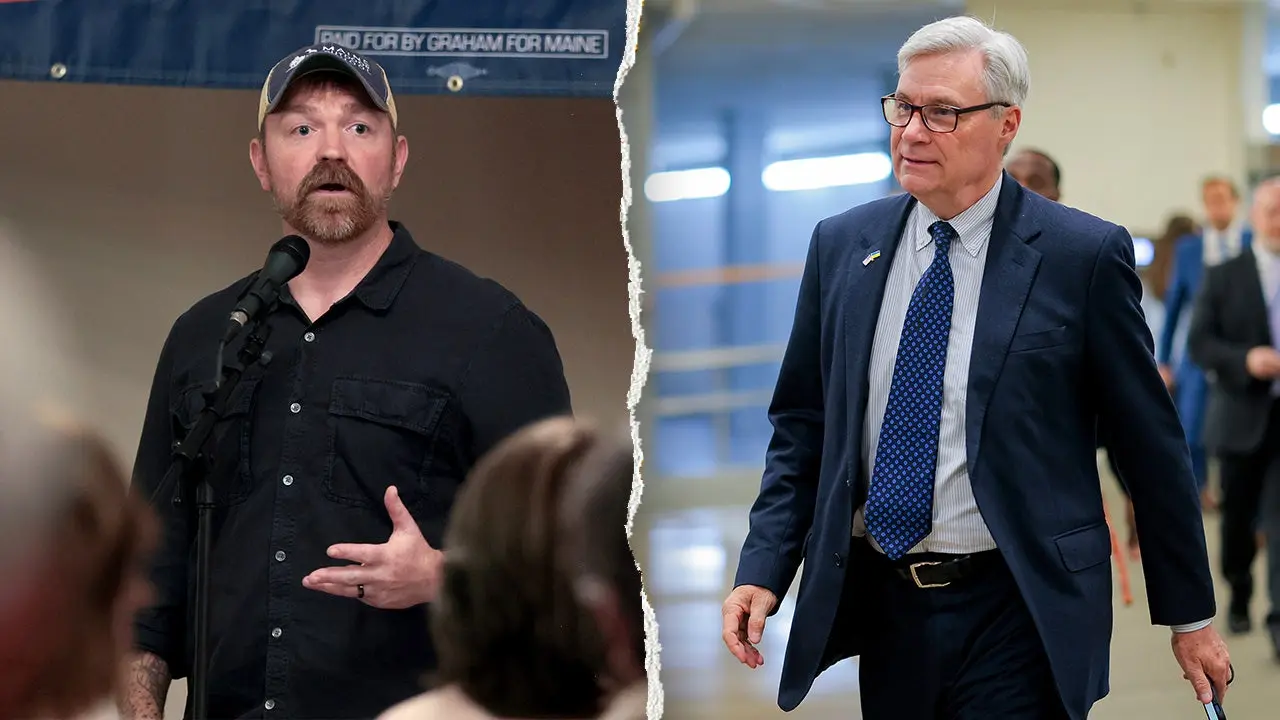
The morning sun rises on an American political landscape fraught with intense personal drama, escalating campaigns, and shifting alliances that constantly test the trust of voters nationwide. At the very center of this swirling media storm is the highly controversial campaign of Maine Democratic Senate candidate Graham Platner, whose aspirations to represent his home state are currently being rocked by serious, deeply unsettling domestic abuse allegations alongside troubling claims regarding a Nazi-themed tattoo. This unfolding, multi-layered controversy has sent successive shockwaves through both local and national political arenas, creating a deep sense of unease among his colleagues and raising difficult questions about candidate vetting in the modern digital age. While some local Democratic leaders and campaign strategists have attempted to downplay the severity of these allegations to preserve their party’s electoral prospects in a highly competitive Senate landscape, high-profile national figures are finding it increasingly difficult to avoid the glaring lens of the media spotlight. For example, progressive firebrand Representative Alexandria Ocasio-Cortez was recently observed actively dodging pressing questions from reporters eager to hear her stance on the abuse allegations and the symbolic controversy clouding Platner’s campaign run. In a desperate effort to regain control of his rapidly plummeting public image, Platner sat down for his first national interview, where he vehemently defended his character, calling his former partner a liar regarding an alleged wrist-grabbing physical confrontation and framing the heavy accusations as a coordinated political hit job designed to derail his campaign at a critical juncture, leaving voters to weigh the messy intersection of personal integrity and public service.
As these personal scandals dominate the media headlines, the historic halls of Congress are witnessing massive legislative maneuvers aimed at addressing some of the nation’s most pressing structural and security crises. In a major bipartisan show of legislative force, the United States Senate has successfully passed a monumental seventy-billion-dollar funding package specifically earmarked for Immigration and Customs Enforcement (ICE) and the Border Patrol, a move that highlights the ongoing national urgency surrounding border security, processing efficiency, and immigration reform. This massive legislative effort also includes a critical allocation of over one hundred and eight million dollars explicitly designated to recruit and train two hundred new specialized agents tasked with the solemn, vital duty of fighting international child sex trafficking. This legislative push comes at a time when raw human crises are actively unfolding on the high seas, characterized by the U.S. Coast Guard’s recent dramatic interception of an incredibly overloaded, unsafe migrant vessel carrying two hundred and forty people searching for safety and opportunity. At the same exact time, the geopolitical landscape shifted dramatically on Capitol Hill when the House of Representatives defied former President Donald Trump’s veto threats to pass a comprehensive Ukraine aid package, exposing deep, fractured lines within the Republican party as rebel lawmakers broke ranks to vote alongside their Democratic peers. This complex web of national defense and foreign policy is further complicated by Florida Senator Marco Rubio’s aggressive moves to sanction a sophisticated, alleged Cuban intelligence and influence operation that has successfully cultivated deep ties with various influential domestic organizations.
Beyond the borders of the Capitol, the global ideological chess match continues to evolve with high-stakes international security concerns and shocking revelations of domestic espionage. Former President Donald Trump recently injected himself into the global conversation by boldly declaring that only the United States and China possess the highly specialized technology and military capability required to safely retrieve enriched uranium from the volatile territory of Iran, a statement that underscores the delicate and incredibly dangerous nature of nuclear non-proliferation in the twenty-first century. The terrifying reality of foreign threats hitting close to home was made starkly clear by the stunning admission of an American citizen who confessed to living a dangerous double life as a spy for the Chinese government, successfully infiltrating elite political circles and receiving over one hundred thousand dollars in exchange for classified or highly sensitive information. Yet, sometimes the most immediate and terrifying challenges to public safety happen right on our local paved streets rather than overseas, as evidenced by a shocking video out of Dallas, Texas, where a handcuffed suspect managed to slip his restraints, overpower the police officer inside a cruiser, and hijack the vehicle with the law enforcement officer still trapped inside, illustrating the split-second dangers that officers face daily. Amidst these security concerns, Donald Trump is also looking ahead to the nation’s future celebrations, officially announcing a massive new rally in Washington, D.C., to kick off America’s historic 250th anniversary, aiming to rally his base around a grand vision of national heritage.
Beneath the macro-level headlines of geopolitics and sweeping federal legislation lie the profoundly personal human stories of tragedy, loss, and the endless pursuit of justice that capture the hearts and minds of communities everywhere. The entertainment world was plunged into deep mourning following the tragic and untimely death of beloved “Jumanji” actor James Handy, who was allegedly killed under mysterious and devastating circumstances that have left family, friends, and legions of fans searching for answers in a sudden fog of grief. Meanwhile, the legal world is preparing for a potential earthquake as South Carolina’s infamous Murdaugh murder saga threatens to drag the public back into the tense environment of the courtroom; the possibility of an official retrial for convicted murderer Alex Murdaugh has intensified as legal teams prepare to unseal secret transcripts involving the notorious “egg juror,” whose sudden dismissal sparked intense rumors of jury tampering and clerk misconduct. These stories serve as a powerful reminder that behind every legal file, dramatic courtroom transcript, and shocking true-crime headline is a very real path of human grief, a tireless search for truth, and a system of justice that is as fragile as it is essential.
Cultural and economic institutions are also undergoing their own major periods of dramatic reinvention and introspection as they attempt to navigate a rapidly changing social landscape. In the corporate sector, Nike’s newly appointed Chief Executive Officer, Elliott Hill, has laid out an aggressive, sports-focused turnaround strategy aimed at revitalizing the legendary footwear and apparel giant after a period of lagging sales and stiff competition from agile newcomers. Simultaneously, the Department of Education has stepped directly into the cultural arena, firing back at the Associated Press for what it claims was a highly biased and inaccurate framing of standard federal civil rights investigations as explicitly racial battlegrounds. These institutional clashes align with fierce ideological debates taking place across opinion pages, exemplified by John Tillman’s sharp critique of Alexandria Ocasio-Cortez’s regular verbal assaults on the wealthy, which he argues serves only to sell Gen Z a much smaller, sadder, and less ambitious version of the traditional American Dream. This warning about ideological shifts is echoed by commentator Douglas MacKinnon, who recently urged readers to watch Danny DeVito’s classic 1991 film, arguing it served as an accurate, early warning system about the creeping and patient influence of communist ideals waiting in the wings of our modern sociopolitical system.
Finally, as the long week draws to a close, we find ourselves turning to sports, history, and the simple elements of community that connect us all and ground our shared human experiences. New York Yankees fans received a disheartening blow with the announcement that superstar slugger Aaron Judge has been diagnosed with a painful stress fracture in his rib, sidelining the powerhouse home-run hitter indefinitely and leaving the team’s championship aspirations in a state of anxious limbo. In contrast to this modern athletic setback, historians and culinary enthusiasts alike are celebrating an extraordinary step back in time as researchers have successfully revived George Washington’s personal “small beer” recipe from 1757, offering modern-day Americans a literal taste of the founding father’s daily lifestyle. This blend of passion and historical legacy is mirrored on the basketball court, where Caitlin Clark’s highly publicized and emphatic chest bump with her coach speaks far louder than any critic’s pen, demonstrating the raw, unapologetic joy and unity that sports can bring to our lives. As you step out into your world today, perhaps taking a moment to test your own knowledge with Fox’s weekly digital news quiz or listening to the latest broadcast, you are reminded that our world is a complex, beautiful tapestry composed of hard-fought victories, unexpected tragedies, and the enduring resilience of the human spirit.