




The quiet autumn air of Washington, D.C., just steps from the iron gates of the White House, is usually filled with the murmurs of tourists, the rustle of falling leaves, and the steady, reassuring footsteps of those sworn to protect the cradle of American democracy. Yet, last November, this iconic landscape of peace and governance was violently shattered by a sudden, ambush-style assault that transformed a routine military deployment into a heartbreaking tragedy. Sarah Beckstrom, a bright, dedicated 20-year-old Specialist with the West Virginia National Guard, was stationed in the nation’s capital, embodying the selfless spirit of a young patriot who had stepped forward to serve her country. Beside her was Andrew Wolfe, a fellow Guardsman committed to the same noble calling of safeguarding the heart of the republic. For these young soldiers, the assignment was an honor, a quiet testament to their readiness and civic duty. But on that fateful day, their dedication was met with an act of unimaginable, cold-blooded violence that would forever alter the course of their lives and leave a devastating, permanent void in the hearts of their loved ones. The shooter’s bullets struck both Beckstrom and Wolfe in the head, inflicting catastrophic injuries that immediately plunged their families, comrades, and the entire nation into a state of profound shock and mourning. Specialist Beckstrom fought bravely for her life, but on Thanksgiving Day—a time normally reserved for family warmth, gratitude, and togetherness—she ultimately succumbed to her wounds, leaving behind a legacy of youthful courage marred by senseless hostility. Meanwhile, Wolfe was left to begin a grueling, uncertain journey toward physical and emotional rehabilitation, bearing the deep physical and mental scars of an event that proved to be a direct assault on the very uniform he wore. This terrifying incident did not merely represent a localized crime; it stood as a jarring, deeply personal tragedy that highlighted the persistent vulnerabilities faced by service members on domestic soil, turning an ordinary station of duty into a tragic crucible of sacrifice and grief.
In a tense, somber federal courtroom on Tuesday, the stark physical and legal realities of this devastating event came to a head as the accused shooter officially faced the weight of the American justice system. Rahmanullah Lakanwal, a 30-year-old Afghan national, made his appearance dressed in a bright orange prison jumpsuit and a traditional skullcap, confined to a wheelchair as he continues to recover from injuries sustained during his violent subdual at the crime scene. Lakanwal sat quietly before U.S. District Judge Amit Mehta to enter a plea of not guilty to all charges detailed in a newly unsealed, comprehensive 17-count federal superseding indictment. The severity of the charges laid out by the Department of Justice is immense, reflecting the extreme gravity of the attack; they include first-degree murder while armed, assault with intent to kill while armed, and multiple counts of possessing a firearm during a crime of violence. Because of the targeted, cold-blooded nature of the assassination-style shooting, federal prosecutors wasted no time in announcing that the case is fully eligible for the death penalty. U.S. Attorney for the District of Columbia Jeanine Pirro spoke with fierce determination about the government’s resolve, describing the attack not merely as a heinous local crime, but as a direct, major offense against the sovereignty and integrity of the United States. Pirro emphasized that Beckstrom was a young woman of exceptional character who had traveled to the capital to serve her country, only to be executed in cold blood by an individual who drove across the continent to carry out the deed. As the Department of Justice initiates its rigorous death penalty review process—with the final decision resting in the hands of Acting Attorney General Todd Blanche—the legal proceedings are set to be a grueling, highly scrutinized search for accountability, with the next critical status hearing scheduled for September 16, as a grieving nation demands justice for the lives so violently disrupted.
As investigators work to uncover the complex web of motives behind this horrific incident, the background of the suspect, Rahmanullah Lakanwal, has emerged as one of the most troubling and enigmatic aspects of the entire case. Before arriving in the United States and settling in Bellingham, Washington, the 30-year-old Afghan national had maintained a direct and significant relationship with U.S. government entities operating in his war-torn homeland. Most notably, Lakanwal had previously worked as an asset or contractor for the Central Intelligence Agency (CIA) in Afghanistan, a detail that was recently brought to light and confirmed by national security officials, including former Director of National Intelligence John Ratcliffe. This revelation introduces a deeply unsettling layer of psychological and geopolitical irony to the tragedy. An individual who was once trusted to work alongside elite American intelligence networks, presumably assisting in the fight against extremism and contributing to tactical operations abroad, had somehow transitioned into an alleged domestic terrorist targeting the very soldiers who represent the nation that once employed him. This painful paradox raises urgent, difficult questions regarding the vetting processes, mental health evaluations, and long-term monitoring of foreign nationals who transition from high-stakes military theaters to peaceful American communities. Lakanwal’s journey from the covert, high-stress landscapes of Afghan operations to a quiet life in Washington State, and ultimately to a violent path of radicalization or deep-seated hostility in D.C., represents a systemic failure that national security experts are now scrambling to analyze. For the victims’ families and the military community, the knowledge that the accused shooter was a former U.S. government affiliate adds an extra layer of betrayal to their grief, transforming an already senseless act of violence into a complex, haunting puzzle about trust, allegiance, and the unseen scars of foreign conflicts brought directly to the steps of the White House.
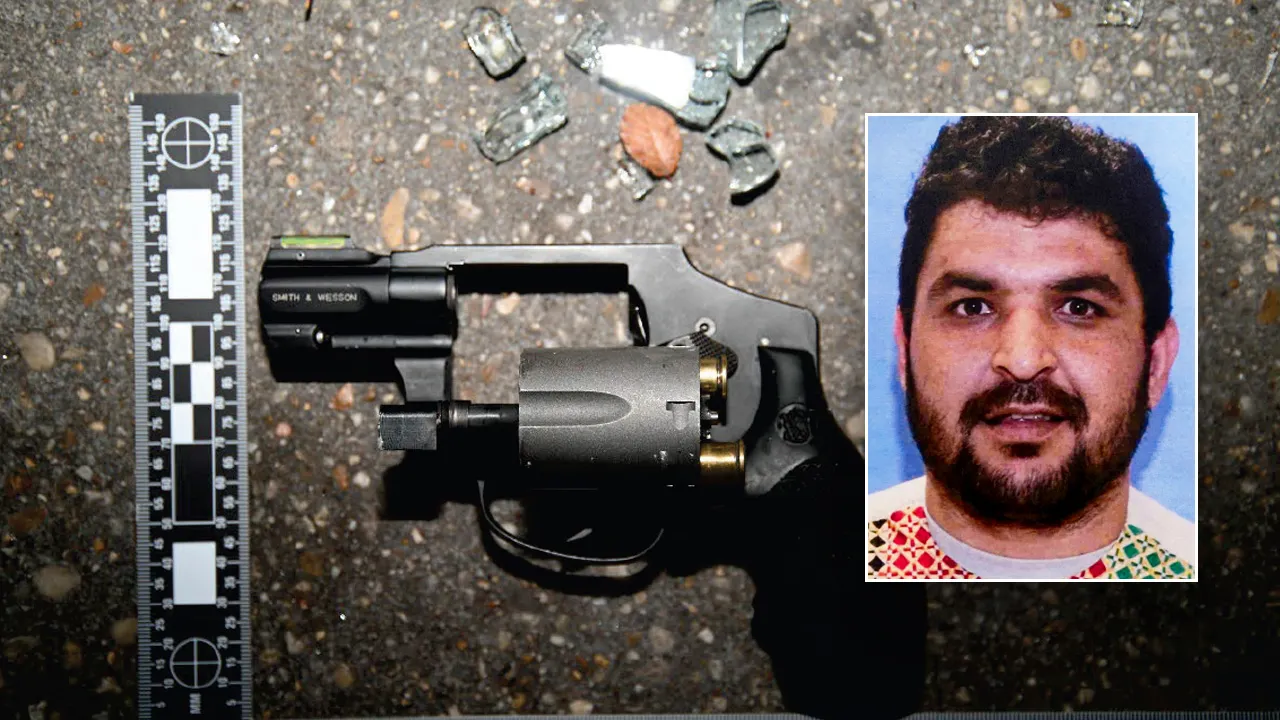
The cold, calculated logistics of the crime, as meticulously detailed in the unsealed court documents, paint a chilling picture of premeditation and single-minded determination. According to federal prosecutors, Lakanwal did not act on a sudden, impulsive whim; instead, he embarked on an arduous, cross-country journey, driving his Toyota Prius over two thousand miles from his residence in the Pacific Northwest city of Bellingham, Washington, all the way to the District of Columbia. Sheltered within his vehicle was a lethal instrument of violence: a .357 Smith & Wesson revolver that investigators later discovered had been reported stolen in Seattle in 2023. This long, solitary drive across the heart of the American continent suggests a deliberate and chillingly focused mindset, as Lakanwal bypassed countless cities and communities to deliver his deadly intent directly to the geographic center of American power. Upon his arrival in the capital, he positioned himself near the National Guard post and initiated his swift, devastating ambush, targeting the heads of Beckstrom and Wolfe with lethal precision. The terror of that moment was instantaneous, but it was quickly met by the extraordinary courage and training of neighboring service members. Before Lakanwal could claim more victims or escape into the surrounding streets, two nearby West Virginia National Guard members reacted with heroic speed and selflessness, putting their own lives at immediate risk to physically tackle and subdue the armed assailant directly at the scene. This rapid, decisive intervention undoubtedly prevented further loss of life, but it also left Lakanwal with the physical injuries that now confine him to a wheelchair, serving as a visceral reminder of the violent struggle that took place on that pavement and the immense courage of the soldiers who stood their ground.
Beyond the legal battles, national security debates, and logistical timelines lies the true, beating heart of this tragedy: the human lives that were shattered in an instant. Sarah Beckstrom was more than a statistic or a name in a federal indictment; she was a vibrant, 20-year-old daughter, friend, and sister who possessed an infectious enthusiasm for life and a deep-seated desire to help others, which had led her to enlist in the West Virginia National Guard. Her loss has left a devastating, unimaginable void in her tight-knit Appalachian community, where her memory is cherished by those who remember her laughter, her resilience, and the bright promise of her future. The grief of her family is compounded by the painful timing of her passing, forever linking the Thanksgiving season—a time of joy and gratitude—with the devastating anniversary of her final breath. Alongside the mourning for Sarah is the ongoing, quiet battle being fought by Andrew Wolfe, whose life was radically derailed by the shooting. Wolfe represents the silent, enduring casualties of modern violence; though he survived the horrific physical trauma of a brain injury, his daily existence is now defined by a grueling regimen of physical therapy, medical appointments, and the invisible, heavy burden of survivor’s guilt. The emotional toll of this tragedy extends far beyond the immediate victims, deeply impacting the entire West Virginia National Guard family, who must continue their service with the heavy remembrance of a comrade lost and another severely wounded. This human cost serves as a powerful reminder of the true sacrifices made by citizen-soldiers who leave their civilian lives behind to stand watch over the nation, showing that the wounds of war are not confined to foreign combat zones but can hit home with devastating precision.
As the legal system slowly grinds forward, the upcoming status hearing on September 16 before Judge Mehta marks the next chapter in a long, painful quest for justice and closure. The impending decision by Acting Attorney General Todd Blanche regarding whether to pursue the death penalty carries immense moral, legal, and political weight, highlighting the complexity of a case that intersects national security, international relations, and domestic criminal law. For the prosecutors, pursuing the maximum penalty under the law is a necessary measure to demonstrate that attacks on the nation’s service members will be met with the absolute fiercest response the justice system can muster. Yet, for those who loved Sarah Beckstrom and those who stand by Andrew Wolfe during his agonizing recovery, no courtroom verdict, regardless of its severity, can truly restore what was stolen on that dark November day. The path forward for the victims’ families, their fellow Guardsmen, and a watchful public is one that must be paved with remembrance, support, and an unwavering commitment to holding those who commit such atrocities accountable. As the nation reflects on this tragedy, the hope remains that the lessons learned from this security failure will pave the way for better protections for domestic service members, ensuring that those who stand sentinel over our freedom are never again left vulnerable to the very threats they have sworn to defend against. Ultimately, this trial stands not just as a prosecution of a single, deeply disturbed individual, but as a solemn reaffirmation of the country’s enduring vow to honor its fallen heroes, support its wounded warriors, and strive endlessly for a peace that is as secure as it is just.