

Paragraph 1: The Cold Finality of a Bright Life
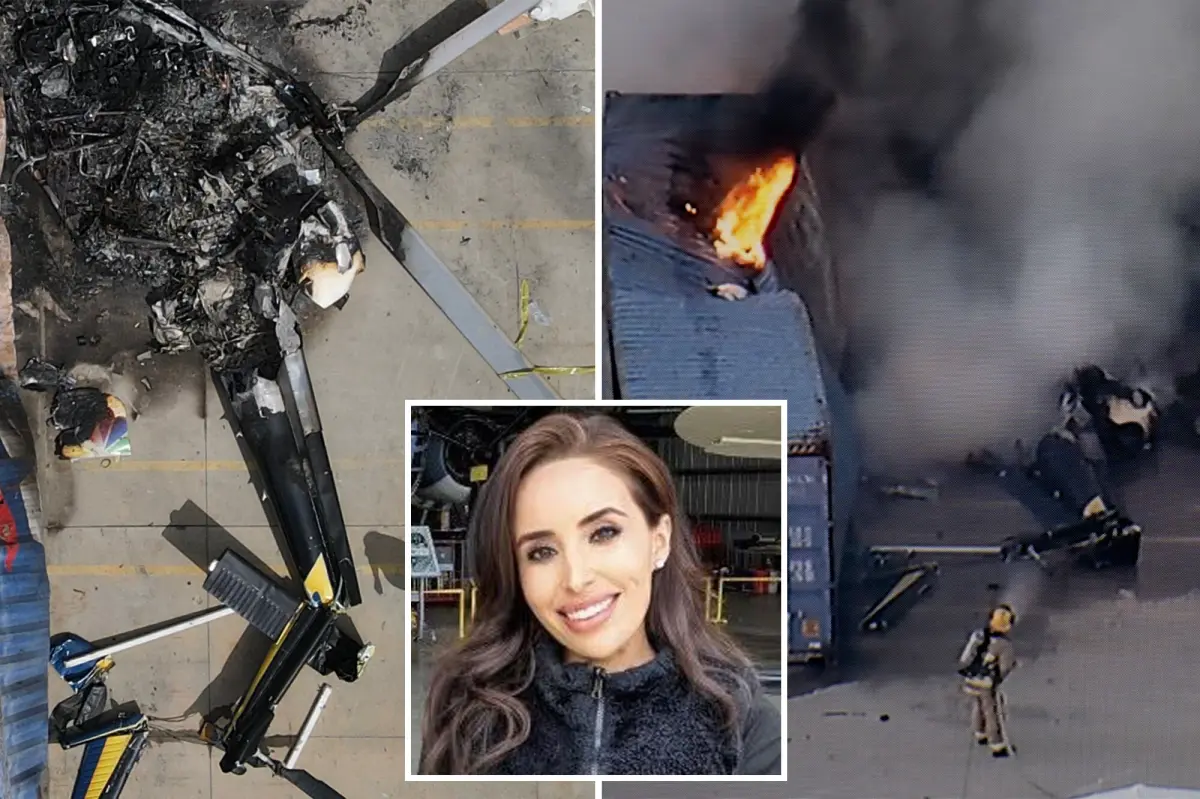
In the stark, fluorescent-lit corridors of the Los Angeles County Medical Examiner’s Office, the bureaucratic reality of a sudden, devastating loss was finally reduced to a few clinical, detached words. The official determination for Eliana Moreno, the 38-year-old aerial reporter whose vibrant life was extinguished last week, was listed as blunt force trauma. It is a phrase so precise, so scientifically sterile, that it feels almost insulting when weighed against the image of the woman who once soared above the sprawling metropolis, bringing breaking news to the living rooms of Southern California. The date—September 15th—now carries a permanent scar on the collective memory of the city, marking the moment when a routine assignment covering a deadly Metro bus collision in Chatsworth turned into a catastrophe of its own. Moreno and her pilot, George Marciniw, were in the NewsChopper4, a familiar sight in the Los Angeles skies, reporting on one tragedy when they became victims of another. The medical examiner’s report, however, did not stop merely at the blunt force trauma. In a chilling addition that speaks to the harrowing final moments of the descent, the report also listed “thermal injuries and inhalation of products of combustion” as significant contributing conditions. This clinical mention of fire and smoke suggests that the impact was not the end; rather, the violent crash was accompanied by flames, creating a hellish scenario where the wreckage became a pyre, leaving an indelible image of horror for the first responders who arrived too late to help.
Paragraph 2: The Dancer of the Skies
To truly understand the weight of this loss, one must understand the unique and perilous art of aerial reporting. Eliana Moreno was not merely a journalist with a microphone; she was a dancer of the skies, a keen-eyed observer who navigated the ethereal domain above the concrete jungle. She sat harnessed into a helicopter, often with the door open, feeling the rotor wash on her face and the vibration of the machine in her bones, as she translated the visual chaos below into coherent, urgent narratives for NBCLA and Telemundo 52. Her job required an immense, almost telepathic trust in the pilot—a trust that George Marciniw, a seasoned professional, undoubtedly earned over countless flights. Together, they formed a symbiotic team, orbiting like a hawk over wildfires, police chases, traffic snarls, and tragic accidents, providing a perspective that ground-bound reporters could never achieve. For Moreno, this was not just a career; it was a calling. She was known for her ability to remain calm and articulate while hanging a thousand feet in the air, her voice steady as she described the scenes unfolding beneath her. She was a storyteller who used the sky as her canvas, and her authoritative yet compassionate delivery made her a trusted figure across two networks. Her colleagues knew her as a dedicated professional, a warm presence in the newsroom, and a person who understood that the helicopter was not a thrill ride, but a tool for public service. Her death has shattered that illusion of safety, reminding everyone in the industry that the sky, while beautiful, is also an unforgiving, indifferent operator.
Paragraph 3: A Tragedy Wrapped in Irony
The circumstances of Moreno’s death are wrapped in a brutal, tragic irony. She and Marciniw had taken to the air that Sunday morning specifically to cover a horrific event: a deadly Metro bus collision on the ground. In their professional capacity, they were doing what they always did—carrying the burden of information so that the public could understand the scope of a crisis. They were documenting the work of paramedics and police officers tending to the victims of the bus crash, likely circling the scene to give viewers an overhead view. It is a grim paradox that those who report on death and destruction are often only a heartbeat away from experiencing it themselves. As they hovered or maneuvered in the vicinity of the initial accident, something went catastrophically wrong. The helicopter began to fail, spinning or plummeting before slamming into the ground in Chatsworth. The impact was so severe that it shook the neighborhood, drawing the attention of residents who rushed to the scene, only to be met with a column of smoke and the twisted wreckage of what was once a state-of-the-art news machine. The crash did not just claim the lives of Moreno and Marciniw; it also claimed the life of a 29-year-old bystander on the ground named Edy Gutierrez Mejia, who was simply in the wrong place at the wrong time. The irony is suffocating: a mission to illuminate the consequence of a public transit tragedy turned into a source of three additional, shocking fatalities, leaving the community to grapple with the senselessness of a secondary disaster that eclipsed the first.
Paragraph 4: The Human Toll and the Paperwork of Grief
While the cause of death for Moreno has been released, the investigation into the crash itself is a separate, painstaking process. The National Transportation Safety Board (NTSB) and the Federal Aviation Administration (FAA) have descended upon the scene, meticulously combing through debris fields, analyzing flight data, and interviewing witnesses to determine the mechanical or human factor that led to this fall from grace. For Marciniw’s family, the wait continues, as his cause of death remains pending pending further forensic analysis. For the family of Edy Gutierrez Mejia, the announcement from the coroner confirmed their worst fears: he died from blunt force trauma to the head, a brutal end for a young man who was likely on his daily walk, heading to work, or perhaps just stepping outside to see what the sirens were about. The juxtaposition of these three deaths—two in the sky and one on the ground—paints a stark picture of the random, arbitrary nature of tragedy. For the community, the pain is multi-faceted. There is the profound grief for the journalists who served the public’s right to know, the sorrow for the pilot who devoted his career to aviation, and the searing, senseless loss of a civilian whose life was stolen by falling metal and fire. The medical examiner’s reports, with their dry language of “thermal injuries” and “combustion,” serve as a brutal administrative aftermath to a visceral, human tragedy, forcing the families to reconcile the vibrant, loving people they lost with the forensic evidence of their final, violent seconds.
Paragraph 5: The Unanswered Questions Hanging in the Air
As the NTSB begins its exhaustive investigation, the most agonizing aspect for the surviving family, friends, and the entire Southern California news community is the silence regarding the root cause. Was it a mechanical failure—a faulty tail rotor, a bearing that gave way, a fuel line that clogged? Was it a catastrophic weather event, a sudden microburst of wind that pushed the chopper beyond its limits? Or was it a pilot error, a momentary lapse in judgment at a critical altitude? These questions gnaw at the psyche of the industry. Aerial journalists across the country are watching the investigation closely, heartbroken yet acutely aware that this could have been any of them. The tragedy has cast a pall over newsrooms, where reminders of the danger are usually overshadowed by the adrenaline of the chase. Moreno’s death serves as a stark reminder that the “eye in the sky” is not omniscient nor immortal; it is a fragile machine operating in a hostile environment. While the official report may take months, the immediate aftermath has been one of profound mourning and gratitude. Local stations have paused their broadcasts to honor the fallen, holding tributes and sharing tearful remembrances. Support groups and psychological counselors have been dispatched to newsrooms to help colleagues process the trauma of losing a teammate in such a public, violent manner. Until the NTSB releases the factual data, the rumor mill will spin, but the only concrete truth right now is the absence left by three individuals who went about their day expecting to return home.
Paragraph 6: The Legacy of Flight and Loss
In the end, the story of Eliana Moreno, George Marciniw, and Edy Gutierrez Mejia is not merely a data point in aviation history; it is a poignant meditation on mortality, duty, and the fragile thread that separates the ordinary from the catastrophic. Moreno’s legacy will be that of a brave woman who chose to look down at the world from above to help those below. She will be remembered at the storyboards where her final flight was tracked, in the news archives where her voice crackles with urgency, and in the hearts of the viewers who trusted her. Marciniw’s legacy is that of the silent guardian, the pilot whose steady hands kept the camera steady and the reports safe, until they tragically weren’t. Mejia’s legacy is a sobering reminder that the collateral damage of an aerial crash extends far beyond those on board, impacting innocent lives on the ground without warning. The sky above Los Angeles will feel quieter for a while, but the industry will adapt, regulations may tighten, and safety protocols will be scrutinized. Yet, no rulebook can remove the element of risk inherent in hovering over a busy city. As the families bury their loved ones, they are left with the hollow echo of the last rotor spin. The official cause of death—blunt force trauma—has answered the question of how, but it can never answer the question of why. In the face of this triple tragedy, all that remains is a community holding its breath, waiting for answers, and honoring the memory of those who flew into the morning sun, unaware that their final broadcast had already begun.