


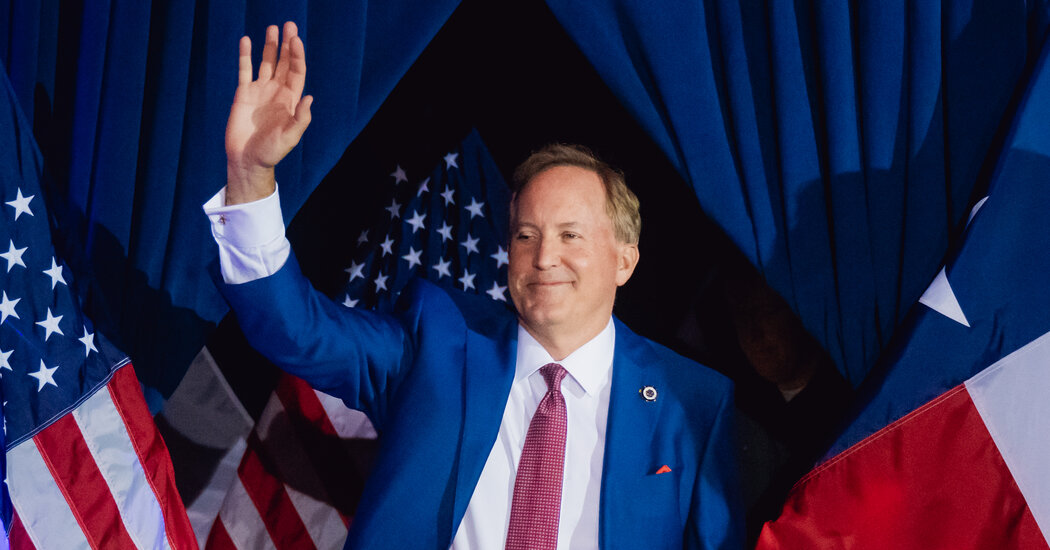
The political landscape of Texas was shaken to its core on a humid Tuesday evening, as Ken Paxton—the polarizing, Trump-endorsed insurgent whose career has been a dizzying roller coaster of scandals, indictments, and narrow escapes—pulled off a stunning runoff victory over the state’s senior statesman, Senator John Cornyn. This was not merely a defeat; it was a comprehensive, symbolic dismantling of the traditional Republican establishment. Cornyn, a silver-haired titan who for decades embodied the polite, business-friendly, and institutionalist wing of the Grand Old Party, found himself rejected in almost every one of Texas’s 254 counties, from the remote ranches of West Texas to the sprawling suburban developments encircling Dallas and Houston. Despite being backed by an astronomical, historic deluge of advertising money—outspending Paxton and his allies by a staggering $80 million—Cornyn’s well-oiled political machine proved entirely useless against the raw, emotional fury of a grassroots base that now demands absolute fealty to Donald J. Trump. For the average Texas conservative voter, the primary was not a policy debate or a performance review of Cornyn’s long legislative career; it was an ideological litmus test, a high-stakes choice between the protective, polite decorum of the old guard and the combative, unapologetic populism of the MAGA movement. By choosing Paxton, a man who has weaponized his personal and legal tribulations as evidence of a corrupt establishment trying to silence him, the state’s Republican base sent a deafening message to Washington: they no longer desire statesmen who seek to govern through compromise, but warriors who are willing to burn the institutions down.
This explosive internal warfare has left Texas Republicans deeply fractured and vulnerable just as they head into a general election that national Democrats are suddenly viewing with a mix of hunger and intense anxiety. For a generation, Texas has been the ultimate mirage for the Democratic Party—a tantalizingly massive prize, brimming with changing demographics, that always seems to slip away on election night. Enter James Talarico, the Democratic nominee who looks and sounds like he was bioengineered in a lab to reverse this decades-long losing streak. At 37 years old, Talarico is a smooth-talking, intellectually formidable state legislator and seminarian whose political rhetoric is infused with a deep, moral vocabulary that seeks to transcend traditional partisan divides. While the Republican primary was degenerating into a mud-slinging spectacle, Talarico was quietly building an unprecedented financial juggernaut, pulling in an astonishing $27 million in the first quarter alone—a massive sum that dwarfs any Republican Senate campaign in the nation. Yet, the road ahead for Talarico is fraught with immense human drama and political landmines. He must somehow heal the deep internal wounds of his own party, which suffered a racially charged and bitter primary battle of its own, while simultaneously bracing himself for a relentless Republican onslaught designed to paint his progressive values as dangerously out of step with the traditional heart of Texas. The stage is now set for a historic, high-stakes collision between Paxton’s raw populist anger and Talarico’s high-minded moral crusade, a battle that observers predict will come with a Texas-sized price tag of hundreds of millions of dollars.
The human cost of this brutal primary is written across the faces of those who must now pick up the pieces, as the personal animosity between the two Republican camps has created deep, bleeding wounds that may take years to heal. In the final hours of the campaign, there was no pretense of party unity; Cornyn launched raw, highly personal attacks against Paxton, openly calling him an “embarrassment” and dredging up painful, public accusations of marital infidelity and abuse of office on national television. This public bloodletting has sent shivers of anxiety through the halls of Capitol Hill, where Senate Republicans—already exhausted by the chaotic demands of Donald Trump’s second-term agenda—are beginning to show rare, quiet signs of rebellion. The ousting of a respected insider like Cornyn, following closely on the heels of other insurgent primary victories against establishment figures, has made many sitting senators realize that absolute loyalty to their institution offers no protection against the wrath of the MAGA base. This anxiety was put into colorful, defiant words by retiring North Carolina Senator Thom Tillis, who over the weekend compared Paxton to a cannibalistic serial killer, dryly suggesting that calling him ethically challenged was like saying Jeffrey Dahmer suffered from a mild eating disorder. With a razor-thin Republican majority in the Senate, the anger and resentment bubbling up from the Texas primary are threatening to spill over onto the Senate floor, transforming what should be a unified party into a hornets’ nest of fear, mutual distrust, and quiet mutiny.
While the Republican Party was undergoing a ideological civil war, Texas Democrats were experiencing their own quiet, profound transformation—one that reflects a broader, national anxiety about aging, power, and the inevitable passing of the torch. In Houston, 78-year-old Representative Al Green, a legendary and beloved figure of the civil rights-era old guard, became the first older Democratic incumbent to fall to a younger primary challenger, losing his seat to 38-year-old Representative Christian Menefee. The race was a heartbreaking consequence of a cold, calculated Republican gerrymandering effort that forced these two ideological allies into a direct, zero-sum conflict for the same congressional district. For the voters of Houston, the election was not an indictment of Green’s long and honorable service, but rather a bittersweet realization that a new generation of leadership is urgently required to fight today’s political battles. This generational changing of the guard is a sensitive, deeply human theme that is playing out across the entire country, as voters who watched the exhausting exit of older leaders like Joe Biden are increasingly eager to embrace fresh-faced, energetic brawlers like Menefee. In Dallas, a similar drama unfolded as Colin Allred successfully reclaimed his nomination in the 33rd District, demonstrating that in modern politics, the appetite for renewal and the ruthless desire for electoral viability are pushing even the most revered veterans out of the spotlight to make room for a younger, more aggressive class of politicians.
The shifting tides of this primary season were also driven by a silent, invisible, and terrifyingly powerful force: the sudden, massive influx of corporate cryptocurrency money into local grassroots races. Fairshake, a giant super PAC backed by the tech and crypto industries, decided to make a brutal example of Al Green, pouring a staggering $6.5 million into his district to ensure his defeat after the veteran congressman dared to voice skepticism about the unregulated digital currency market. The sheer scale of this spending transformed a local community race into a high-stakes corporate battlefield, demonstrating how easily faceless, billionaire-backed groups can drown out the voices of everyday citizens and lifetime public servants. Green fought back with every ounce of his remaining strength, taking to the House floor in a passionate, desperate speech to declare himself “unbought” and warning his colleagues against the rise of what he termed “cryptocrats.” Yet, the cold reality of modern political warfare became painfully clear as high-tech, highly produced advertisements—some even featuring popular local figures calling for a “new generation of fighters”—flooded the airwaves, effectively diluting Green’s decades of community goodwill. This terrifying display of financial muscle has sent a chilling message to lawmakers of both parties: in the new era of American politics, crossing powerful, deep-pocketed corporate interests can result in swift, devastating, and incredibly expensive political execution.
Nowhere was the bizarre, unpredictable nature of modern democracy more apparent than in a quiet, suburban Texas swing district, where a local deputy sheriff named Johnny Garcia found himself fighting for his political life against a truly surreal opponent. In an effort to secure an easy victory in the general election, a mysterious, Republican-linked super PAC spent nearly a million dollars attempting to hijack the Democratic primary by boosting Maureen Galindo, an eccentric, left-wing sex therapist whose extreme and highly controversial remarks about imprisoning “American Zionists” had drawn widespread condemnation and accusations of antisemitism. This high-stakes, cynical gambit to force Democrats into nominating an completely unelectable candidate put the local community through an intense, exhausting emotional trial, forcing ordinary working-class voters to navigate a minefield of bad-faith digital advertising, extreme rhetoric, and deep-seated fears about the rise of hatred in their own backyards. In the end, the common sense of the electorate prevailed over the dark-money manipulation; Garcia, a steady, unpretentious law enforcement officer, secured a decisive victory, offering a rare, comforting glimmer of hope that quiet public service and local connection can still triumph over expensive, cynical tricks. As the dust settles on this historic night of primaries, Texas stands at a fascinating, terrifying crossroads—a sprawling, passionate, and deeply divided kingdom where the old rules of politics have been completely rewritten, and where the upcoming battle for its soul will shape the destiny of the entire nation.